Diary of Seven Buses in One Day: August 17th, 2024
Twelve Hours and £14.00
Why I decided to travel from Northampton to Dorset using the local bus network.
Finances dictated that this year, the journey to my homeland of Dorset for the annual summer holiday would be taken via the local buses. On the plus side, this has been a bucket-list item for several years.
I don’t drive, so I’m a seasoned veteran of public transport, especially the local bus network. A few years ago, I thought, what an adventure it would be, and, after working out the rough timings in my head, considered it manageable. So when presented with skint circumstances, I thought, well, now is as good a time as any.
As a diarist, I wanted to document the whole event through lists, facts, writing and photographs of routes, places, people, buses and a ferry. For fellow bus geeks, I’ll list the travel data at the end.
Chapter One
It’s 6.38 am, and I am on the X6 Stagecoach bus from Northampton to Milton Keynes.
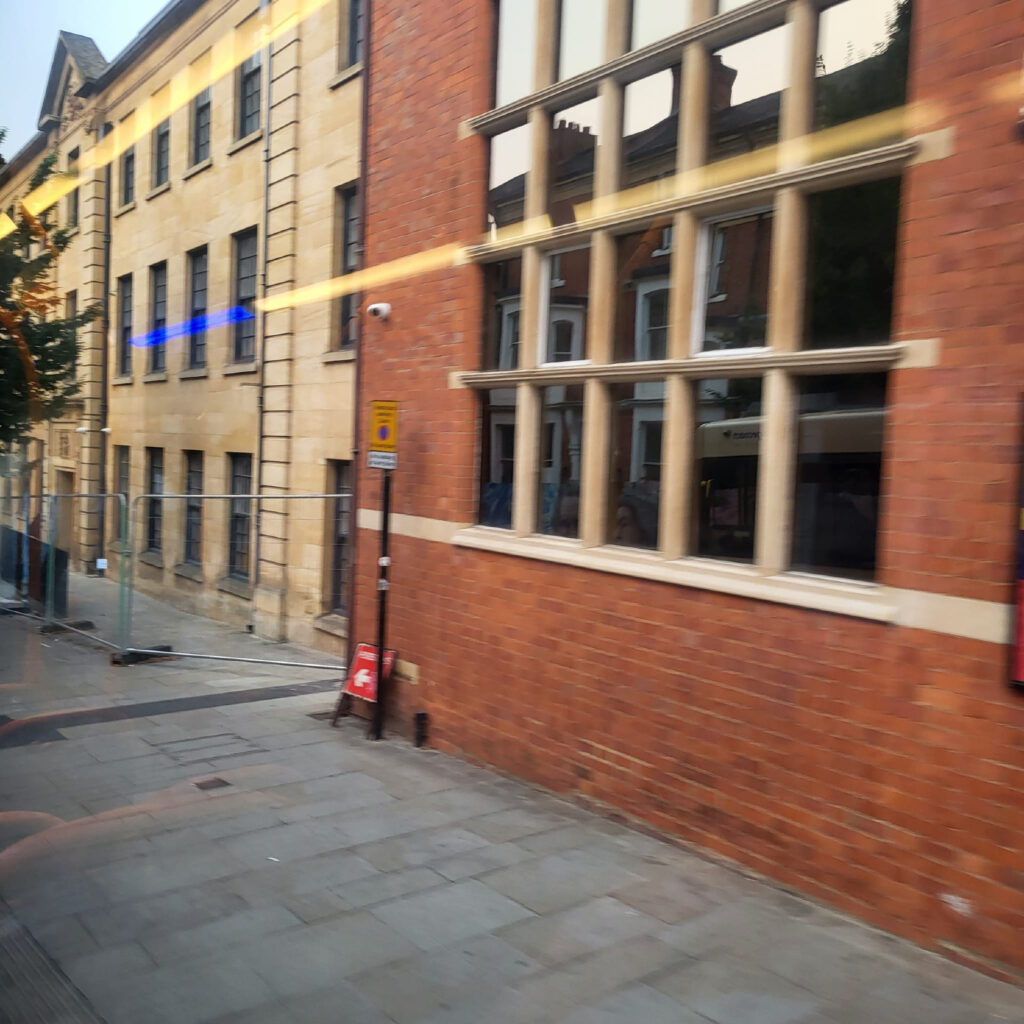
Northampton Museum and Art Gallery and Arts Collective (formerly NN Contemporary Art)
One minute in, we passed Northampton Museum and Art Gallery and Arts Collective, which was in the process of being refurbished. Past Delapre Abbey on London Road, along the A45 and onto the Junction 15 roundabout over the M1.
I see the site works in the distance; they are building a new rail freight interchange for the switching of goods between road and rail.
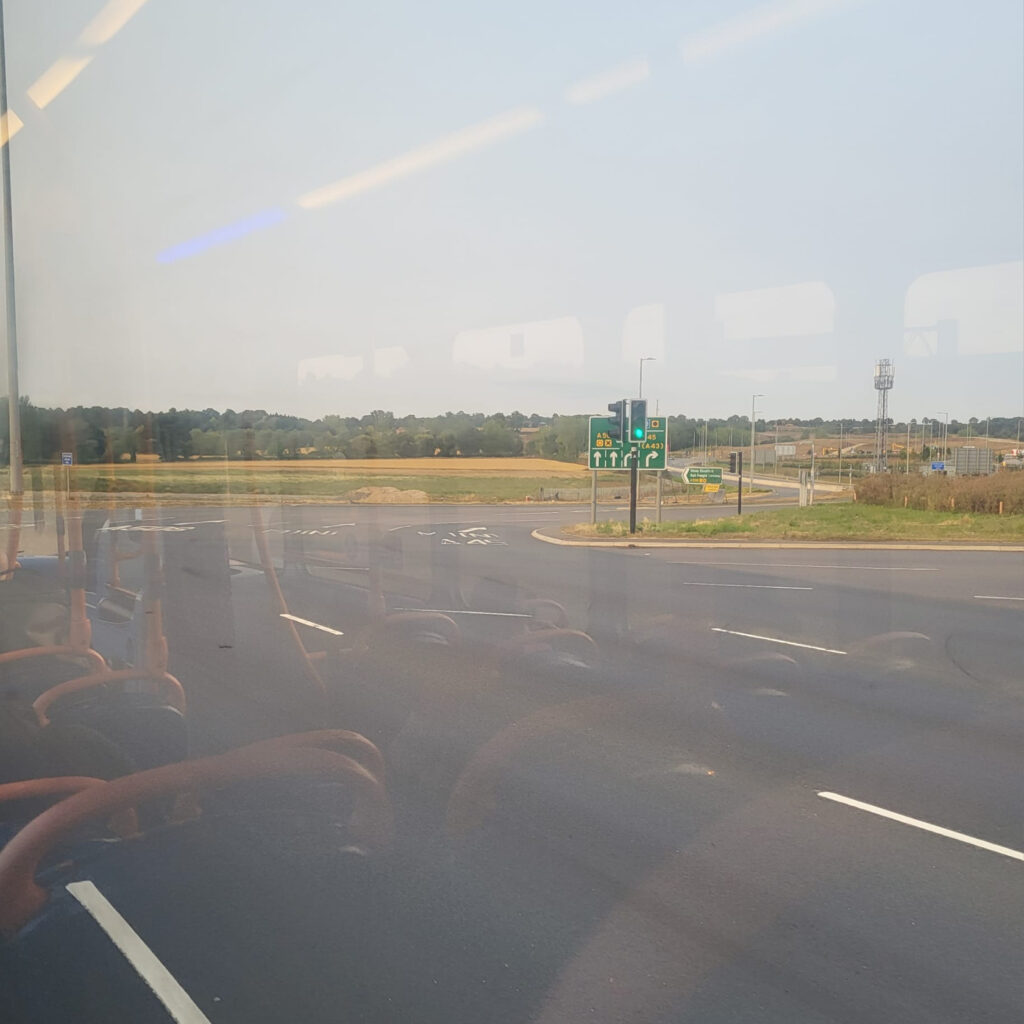
Junction 15 Roundabout, The A45, across the M1
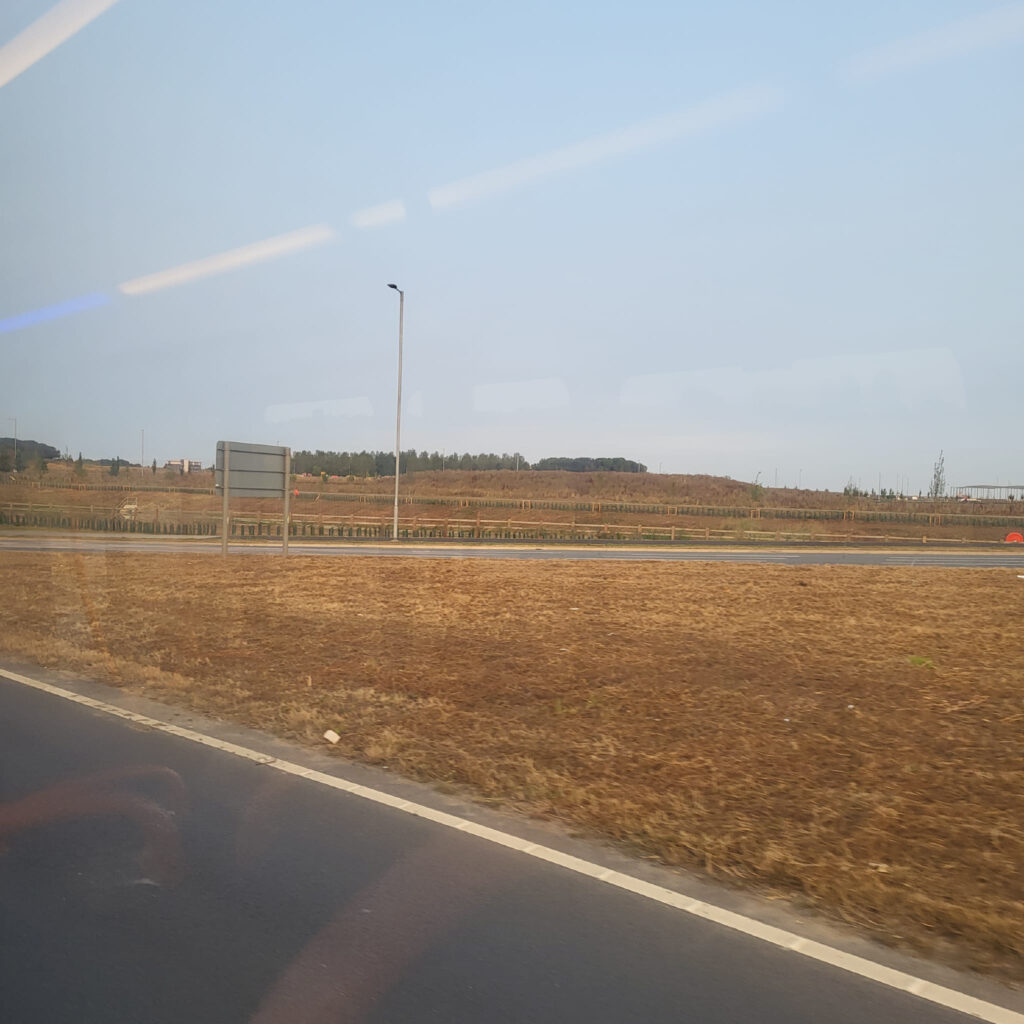
Northampton Rail Interchange
After a drive through Roade, we go past a sign for Stoke Bruerne, and the landscape opens. It’s 7.04 am.
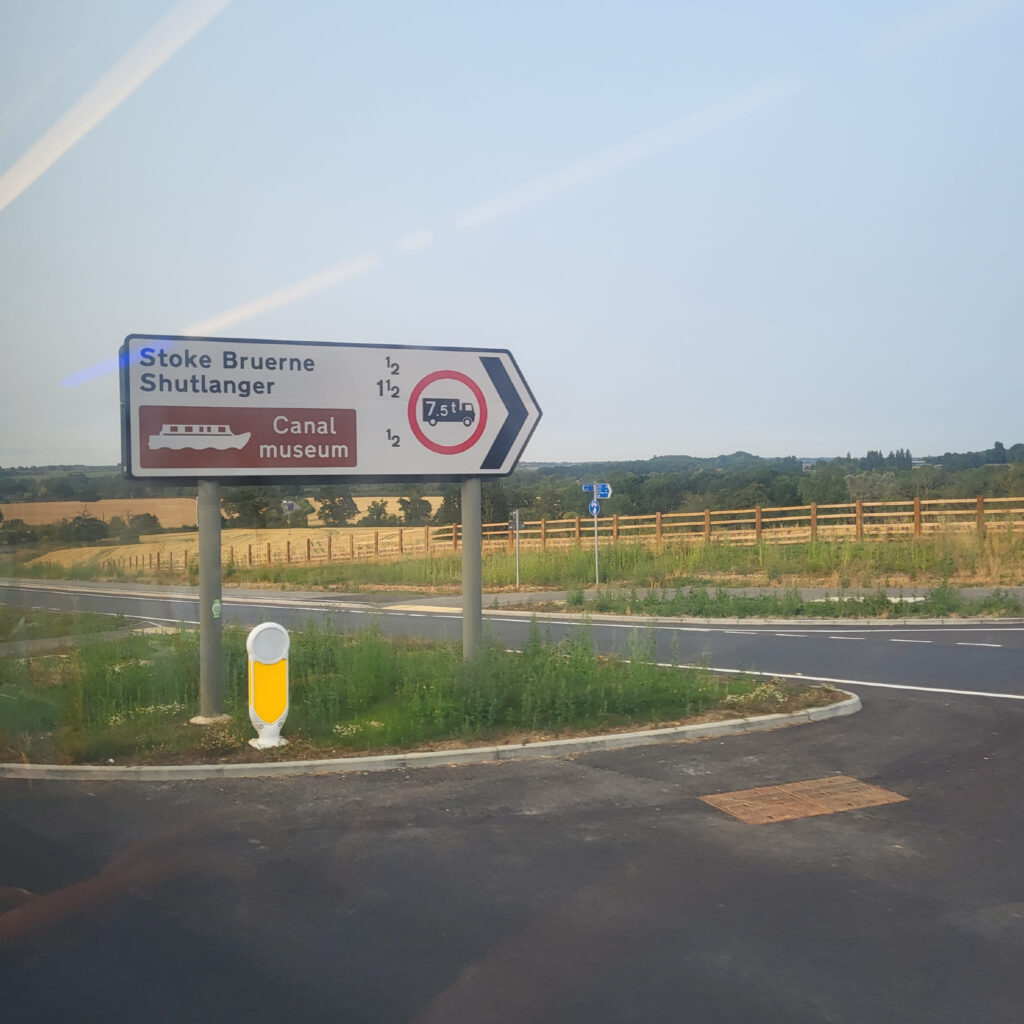
Sign for Stoke Breune, Northamptonshire
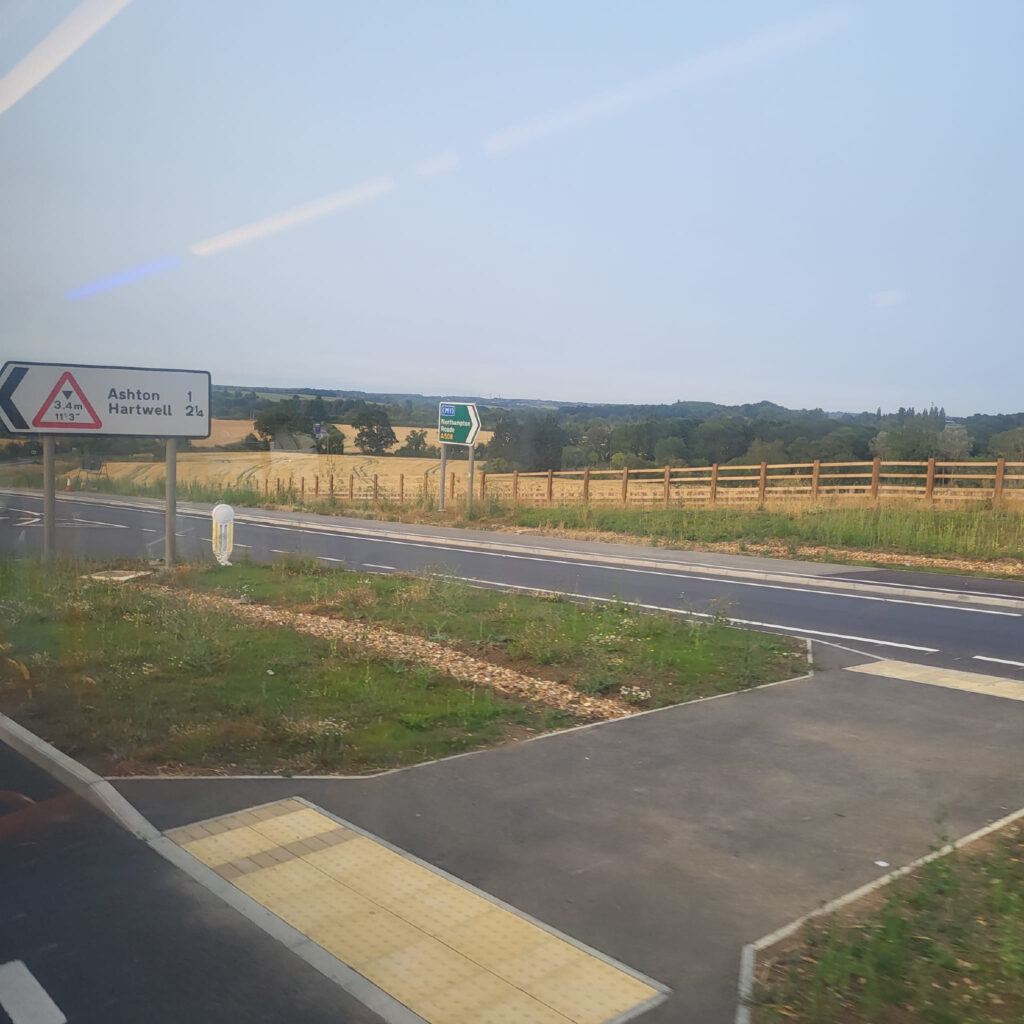
Landscape near Ashton and Hartwell, Northamptonshire
I rested the camera until we got to Milton Keynes, which turned out to be a feast for the eyes.
Approaching Milton Keynes on the X6, the city creeps up on you. Fields turn into roundabouts and road signs change from B123456 to V1 and H2.
The time is 7.22 am and, for all the criticisms Milton Keynes receives, I have to say, in this morning light, it has a serene quality I wasn’t expecting. Square and rectangular buildings sit within the sky’s negative spaces, their angles softened by wild verges.
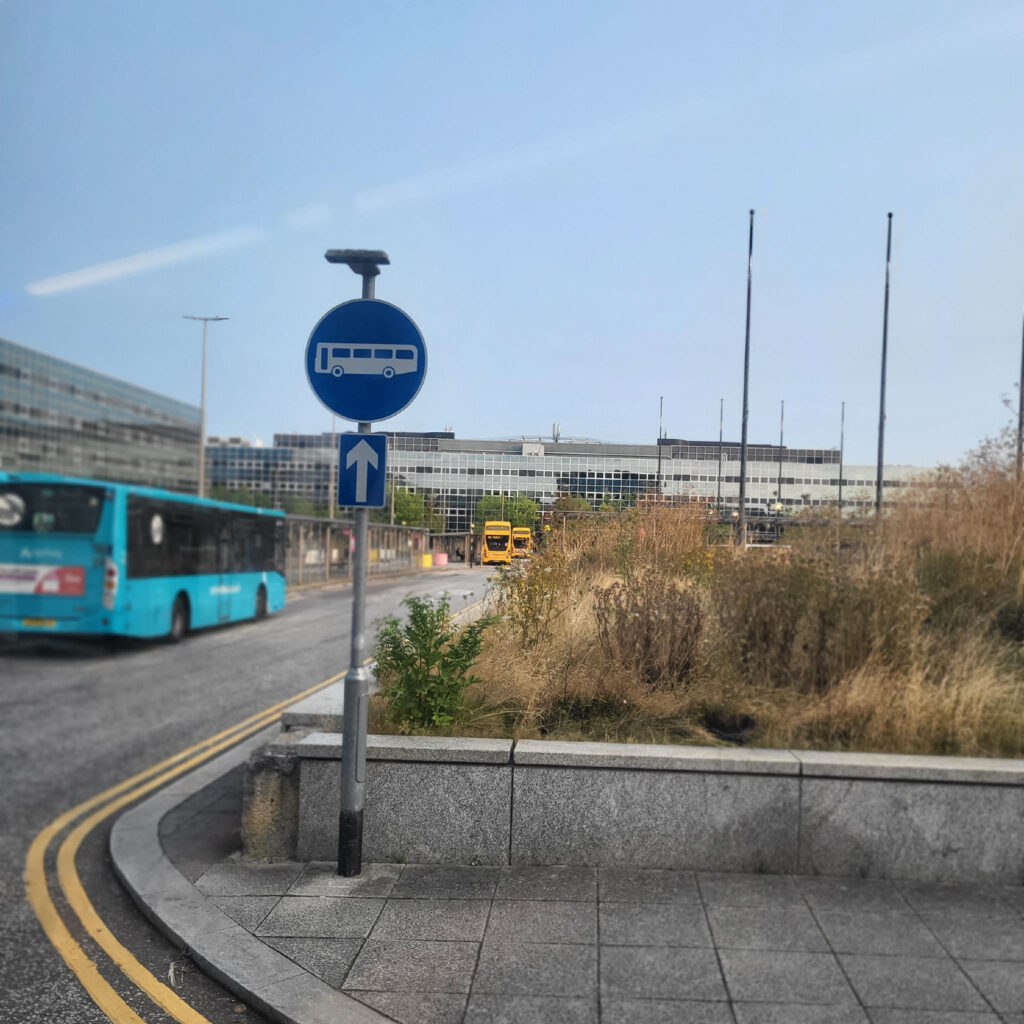
Milton Keynes Travel Hub
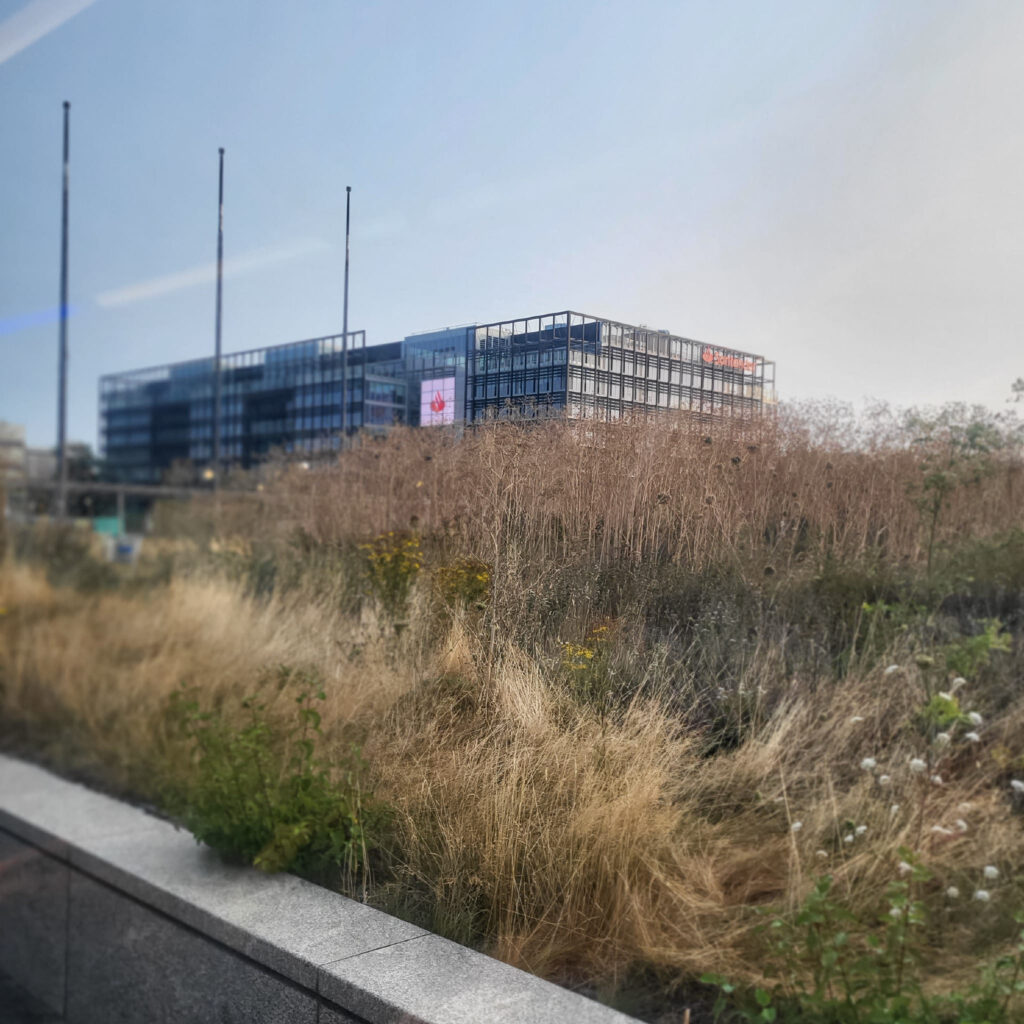
Milton Keynes Office Block
The square outside MK Central Railway station pops with colour and a bus stop requests me to look again.
I should have disembarked from the X6 here, but was so relaxed, I didn’t pay attention to my itinerary. But no matter, it just meant that I caught my next bus (to Oxford) at another stop further on.
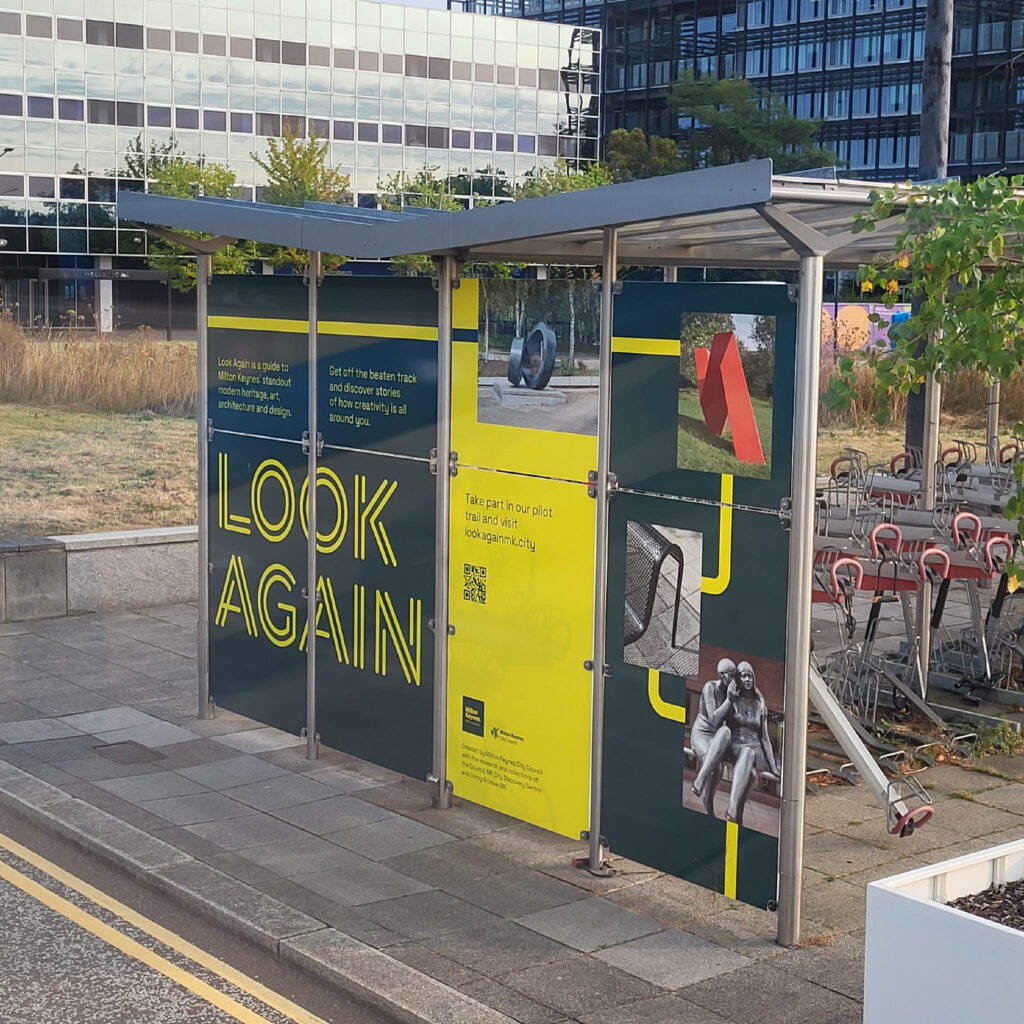
Milton Keynes Bus Stop, Central Railway Station’Look Again’
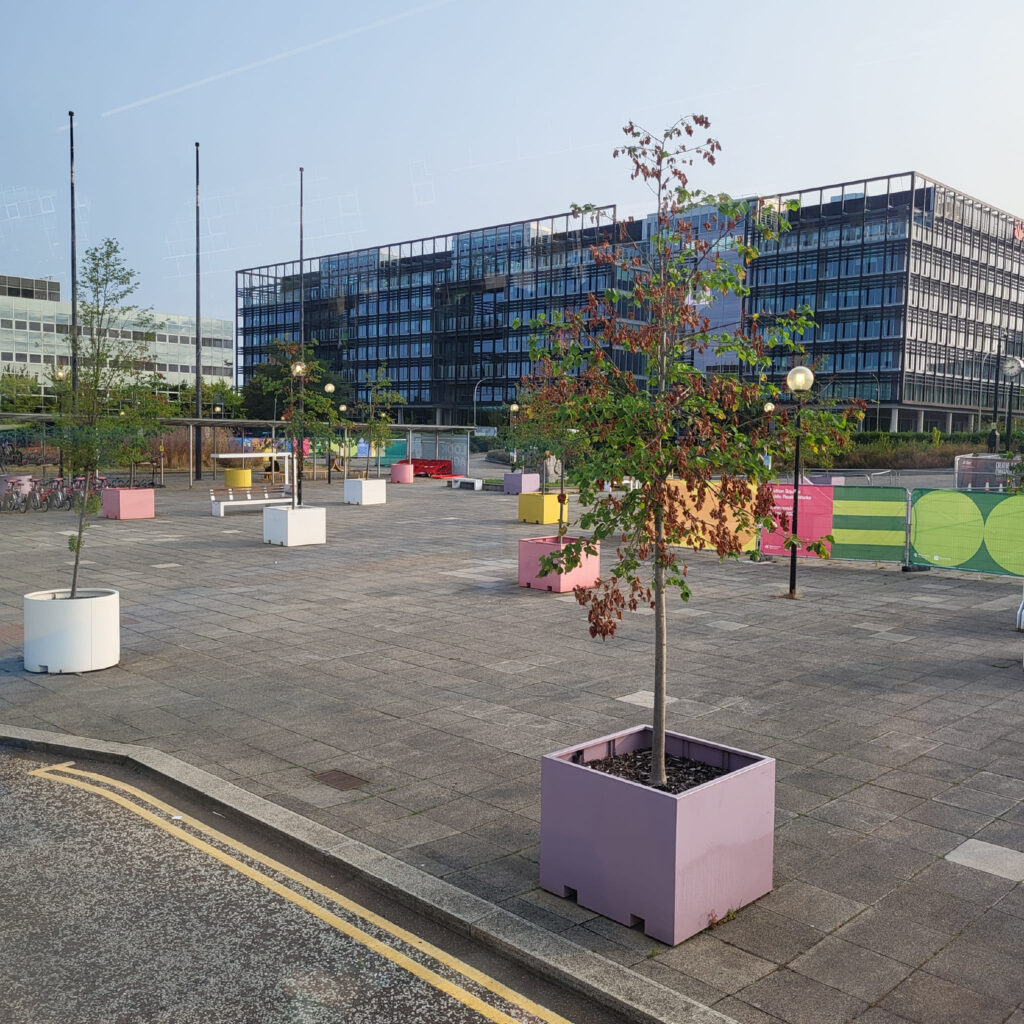
Station Square, Milton Keynes Central Railway Station
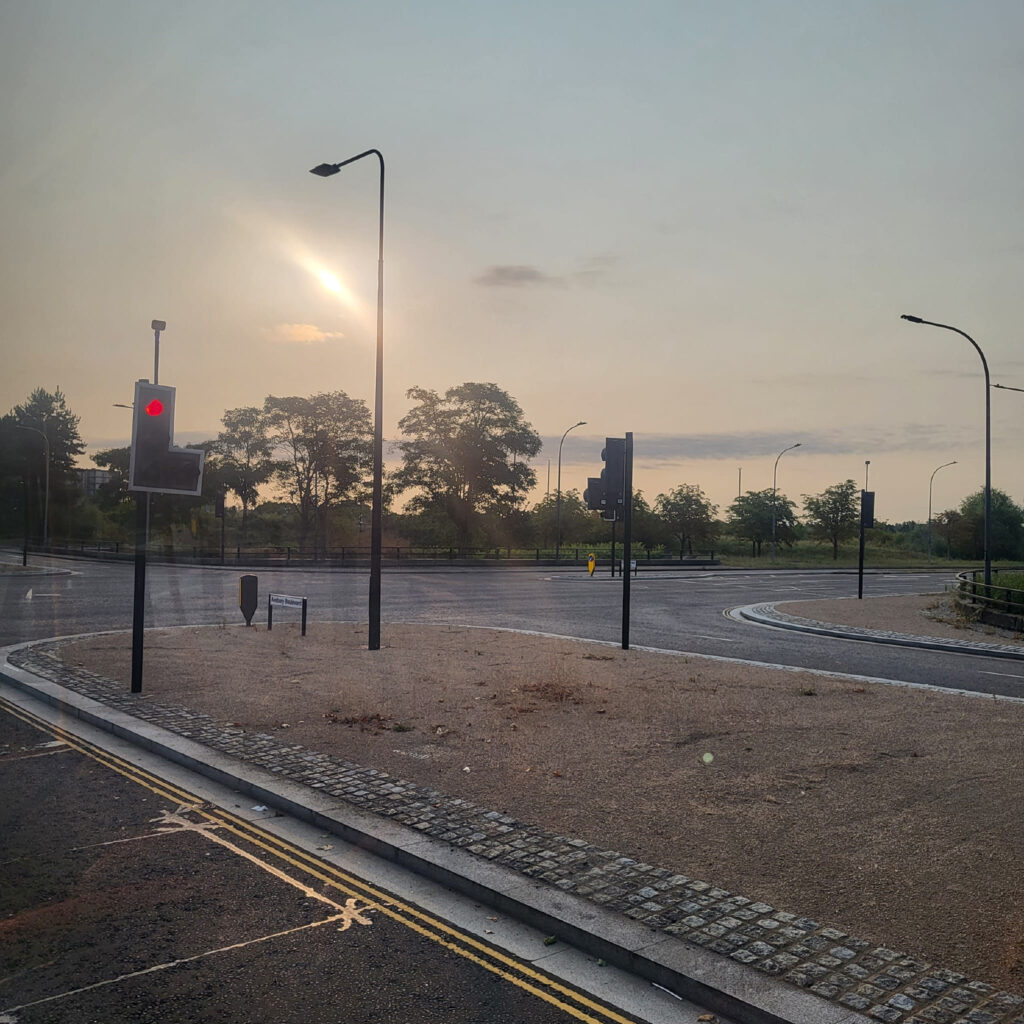
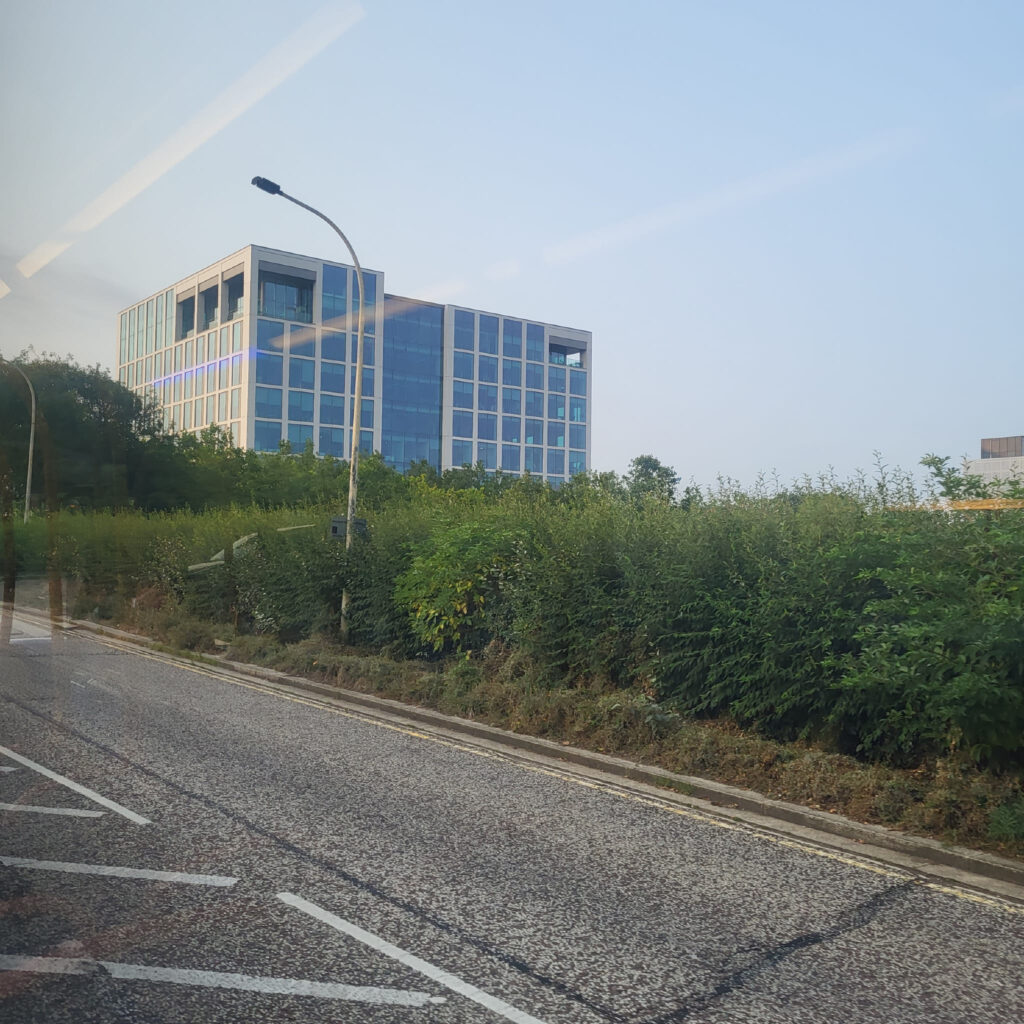
It is now 8.08 am, and I am safely ensconced in my seat upon the X5 bus from Milton Keynes to Oxford (which had initially started from Bedford).
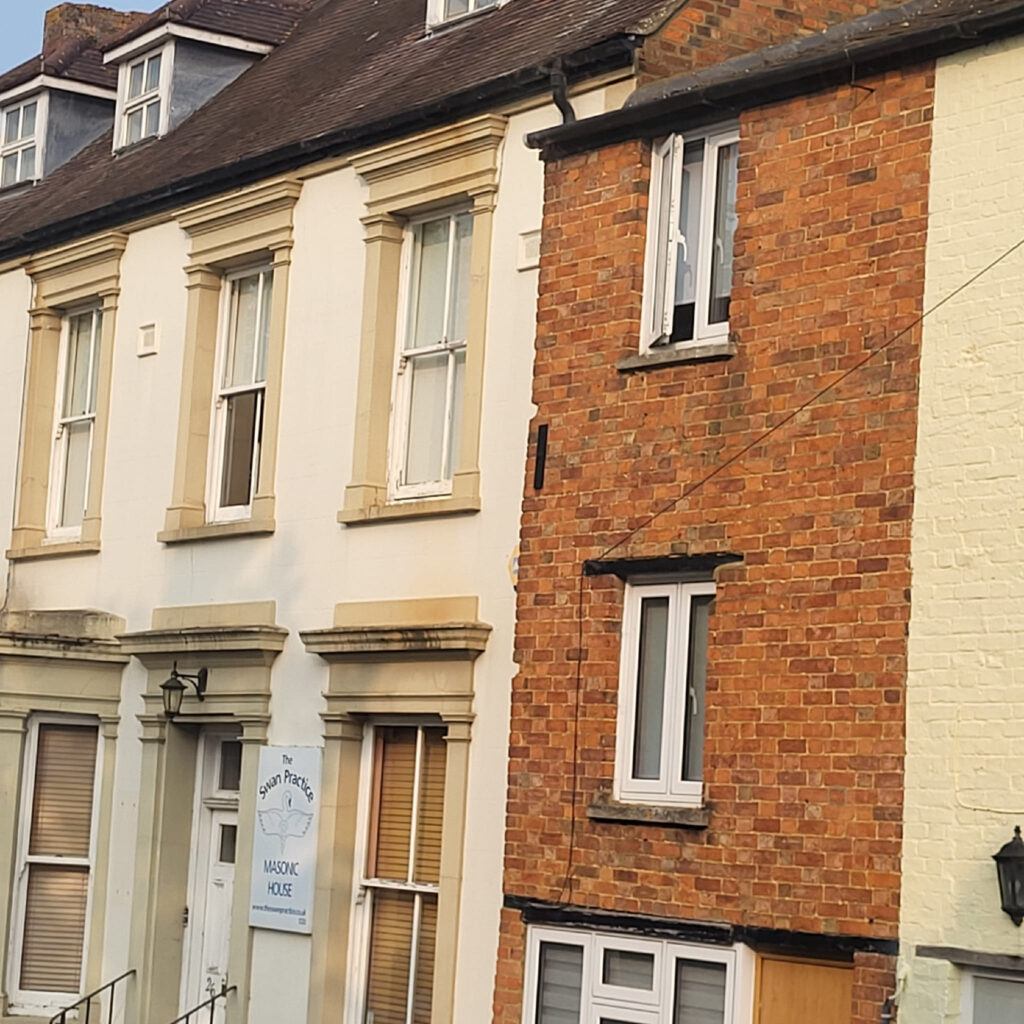
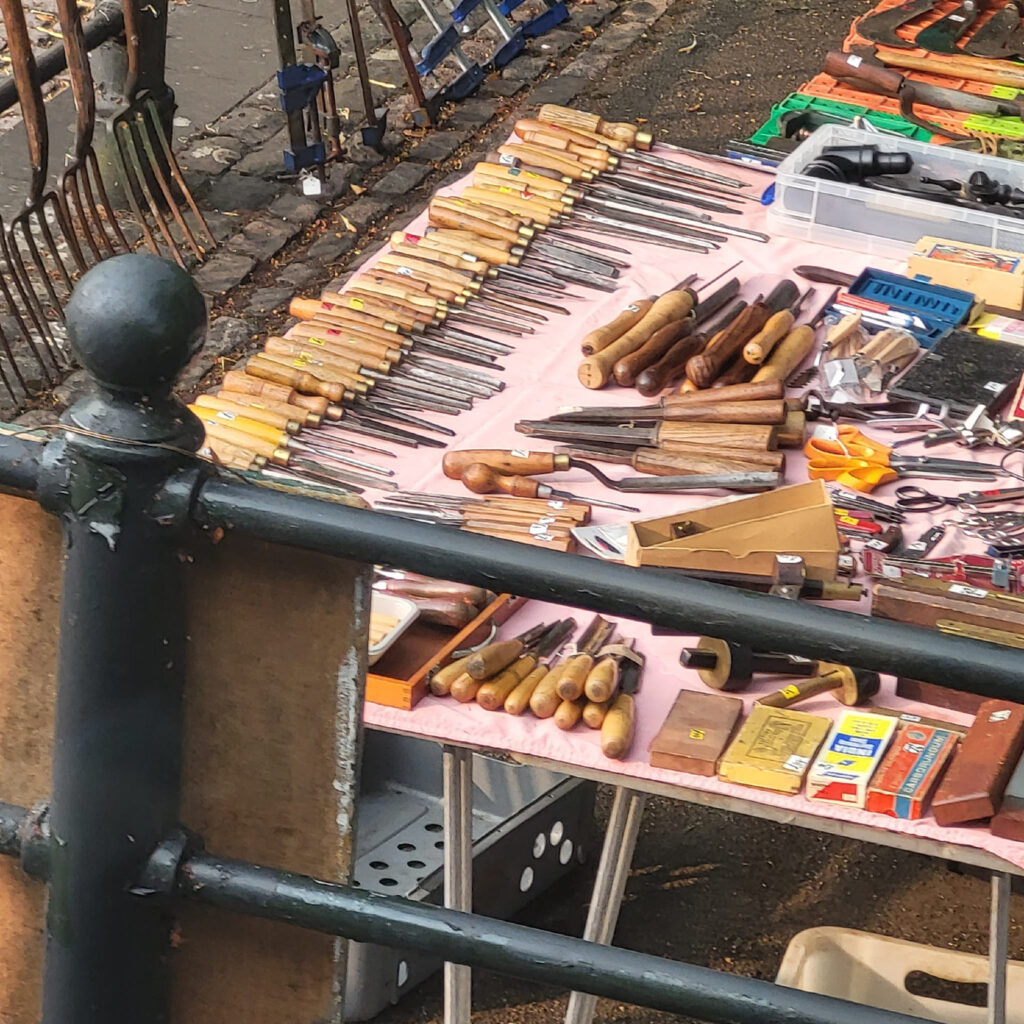
Our first point of call was Buckingham, and in quick succession, I saw the Buckingham branch of the Freemasons and a second-hand tool stall at the market. The tool stall was much more interesting, and I bemoaned the lack of stopping time at the junction to gaze at its splendours.
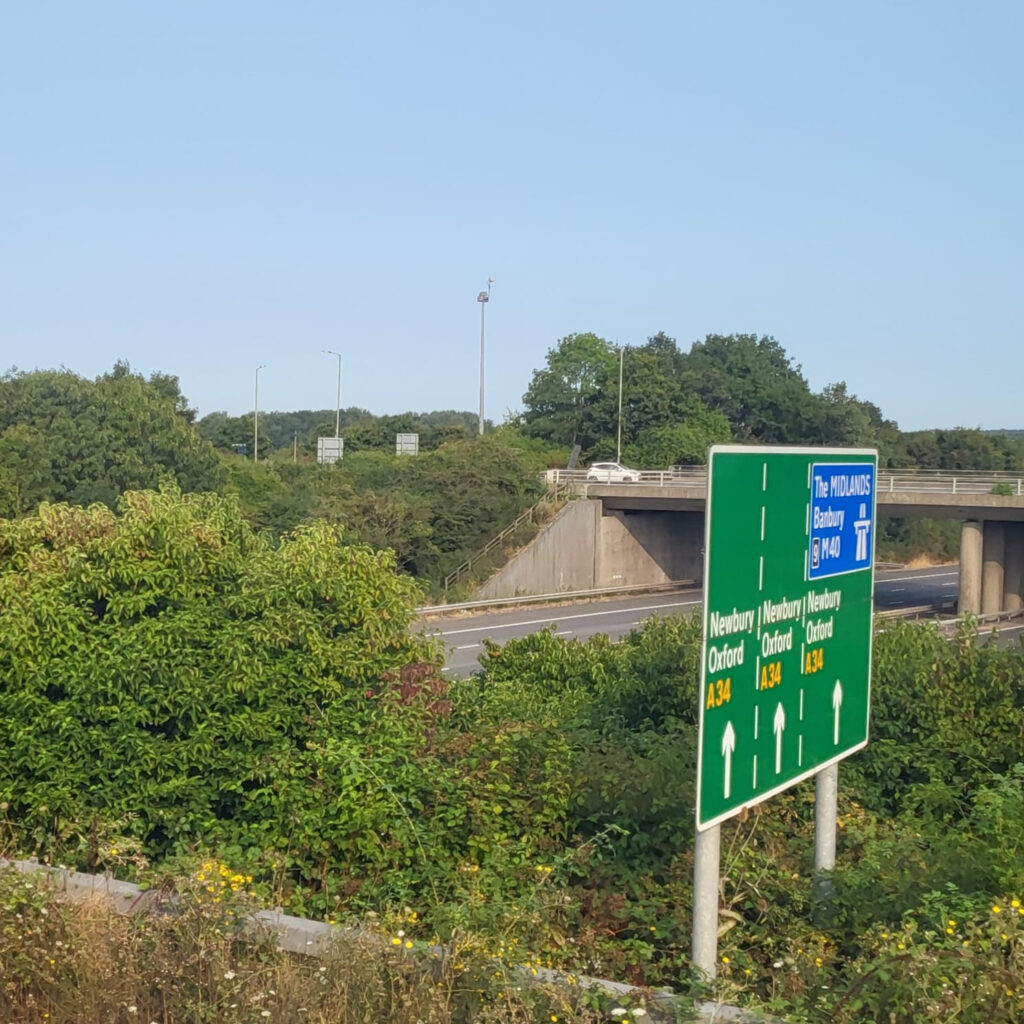
Soon out of Buckingham, we crossed the M40 onto the A34 to Oxford via Bicester.
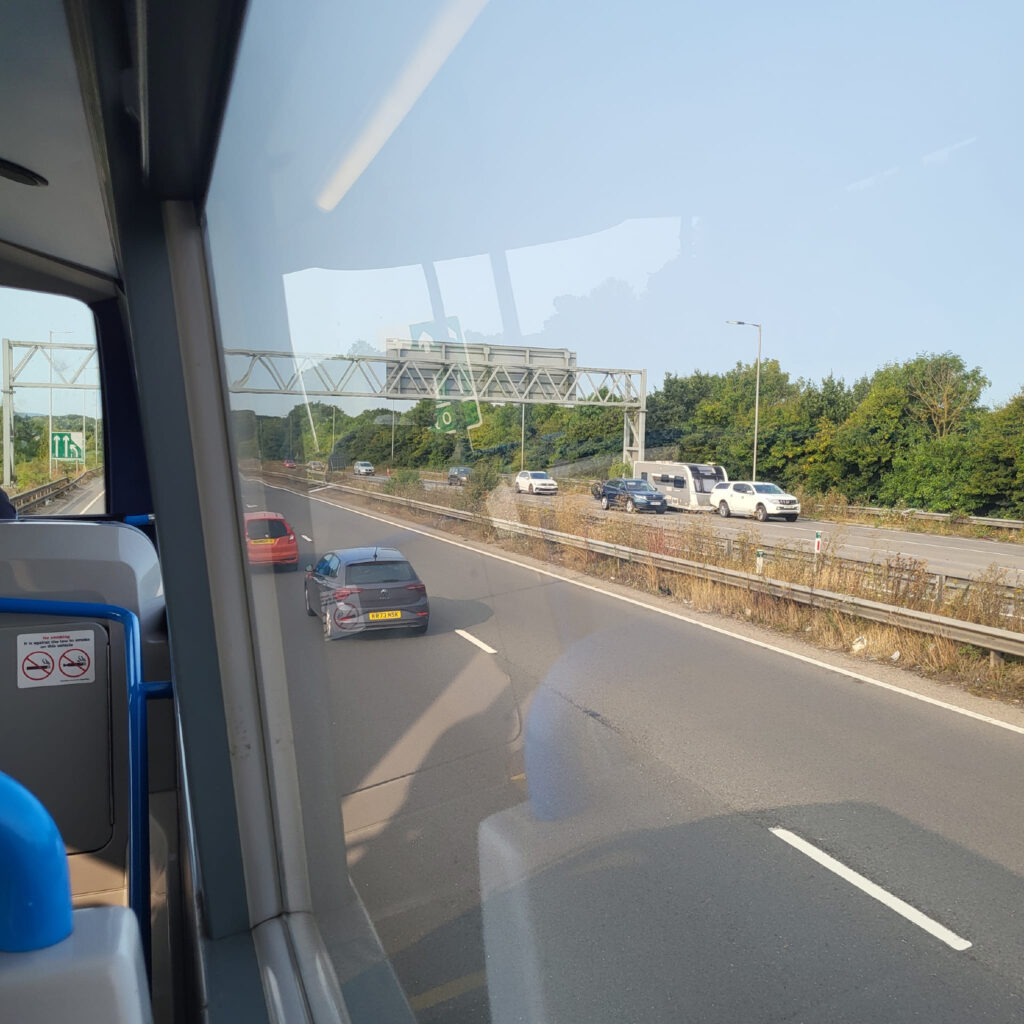
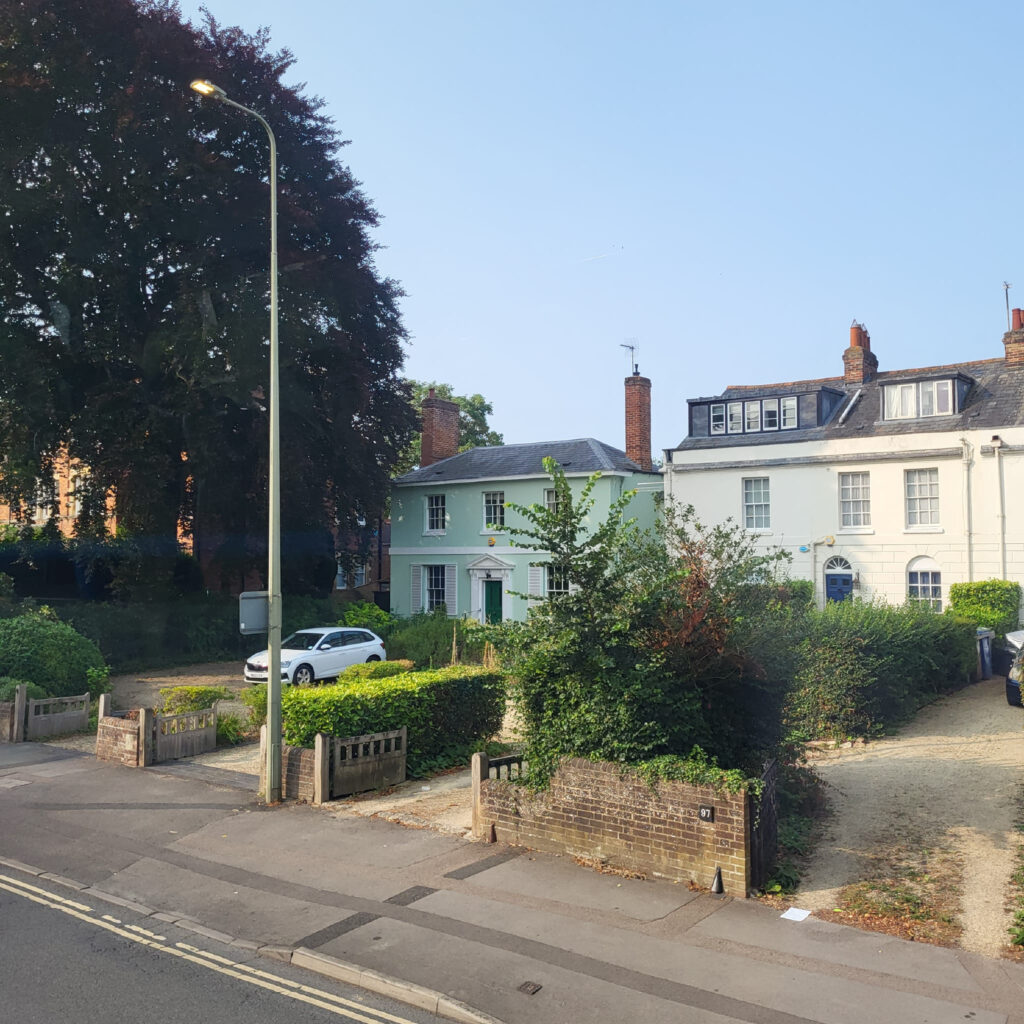
At 9.10 am, the bus was travelling along Botley Road in Oxford, where you can admire/long for/ grimace at the large pretty houses.
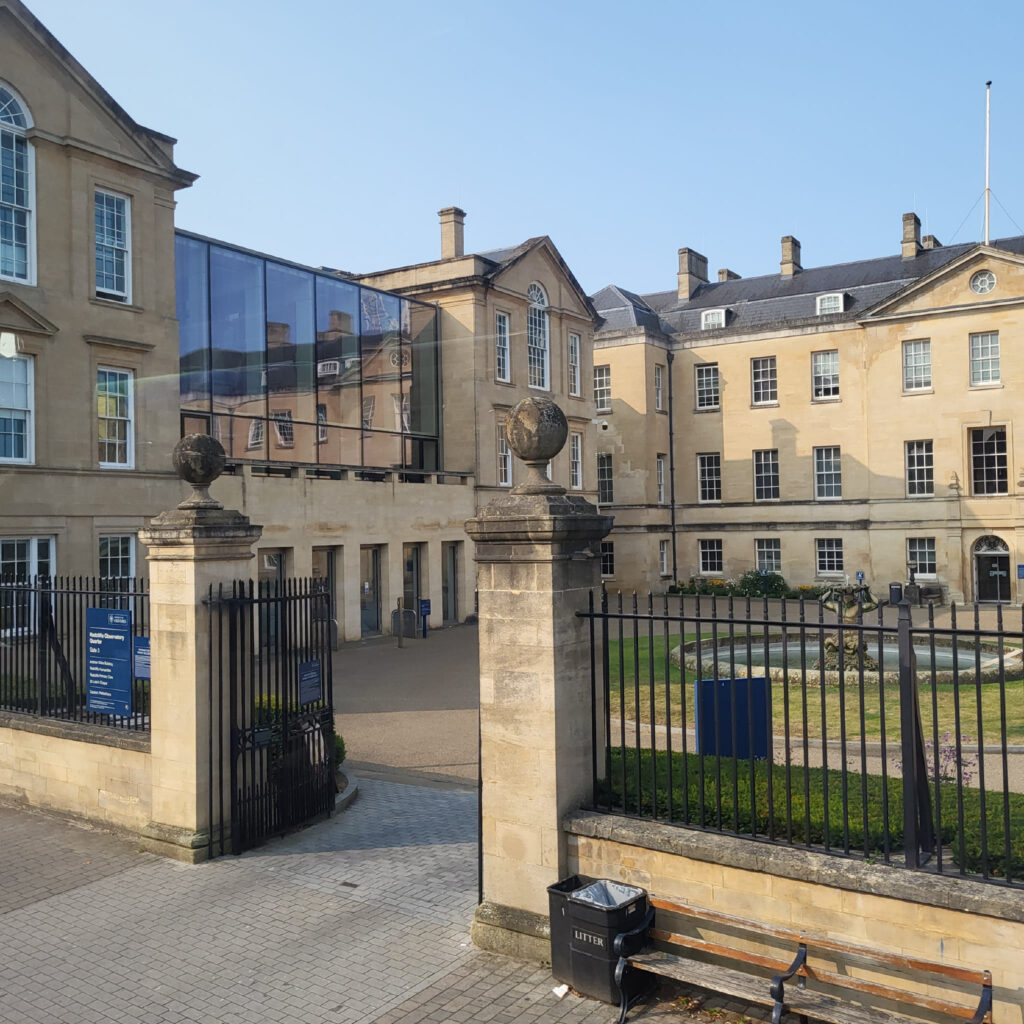
We go past the Radcliffe Observatory Quarter, part of the University of Oxford. You may be interested to know that the Radcliffe Observatory was an astronomical observatory from 1773 to 1934. Increasing light pollution in Oxford made astronomical observations difficult, so the Radcliffe site was sold by the Radcliffe Observatory Trustees. It moved to South Africa, and they built a new observatory in Pretoria, where the atmosphere was more suitable for astronomical study.
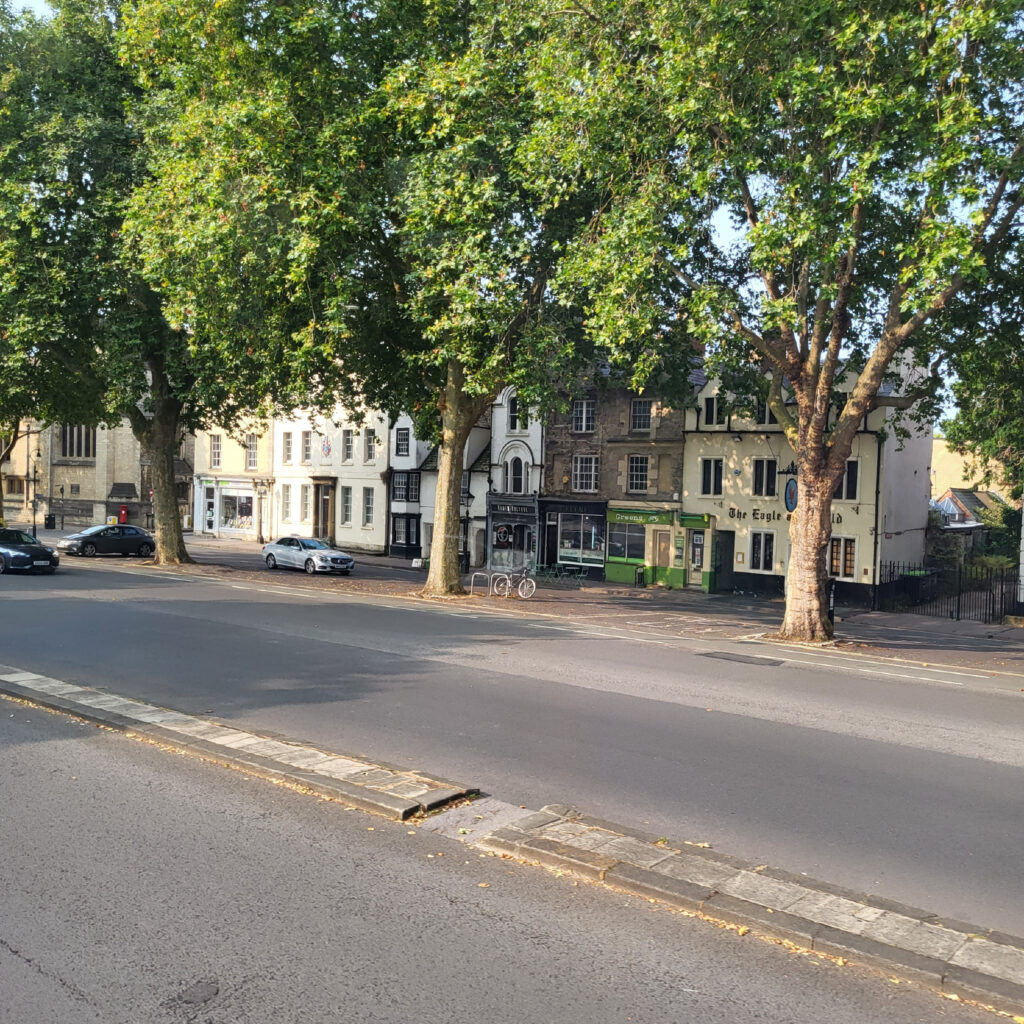
Next, we whizz past The Eagle and Child. I have visited this pub quite a few times over the years. I enjoy soaking up the ‘Inklings’ vibes. ‘The Inklings’ were a group of literary mates who, on Tuesday mornings during term time, hung out and road-tested ideas involving fantastical tales, some of which went on to become iconic novels, most notably by J.R.R. Tolkien and C.S. Lewis.
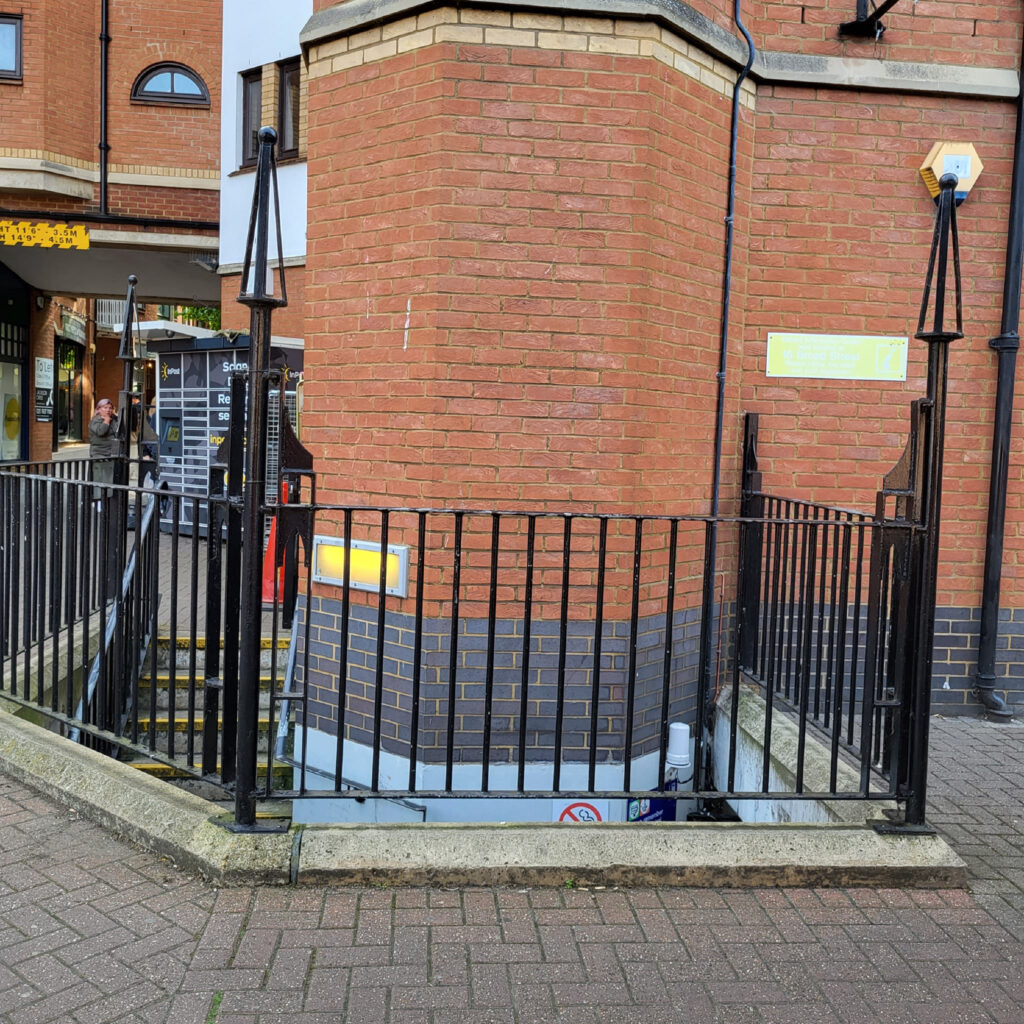
I alighted at Oxford Bus Station, and my first port of call was these railings. At this very spot, back in (possibly) 2012, while waiting for a connecting coach to London, my daughter announced that she no longer believed in Father Christmas. She had discussed it with her Grani and was nervous to tell me, but I felt relief, as she had unburdened me from having to start the conversation, although for a while I had been subtly dropping hints.
After a mini parenting lecture from Eleanor questioning the reasons parents lie to their children, we carried on our merry way to the South Coast.
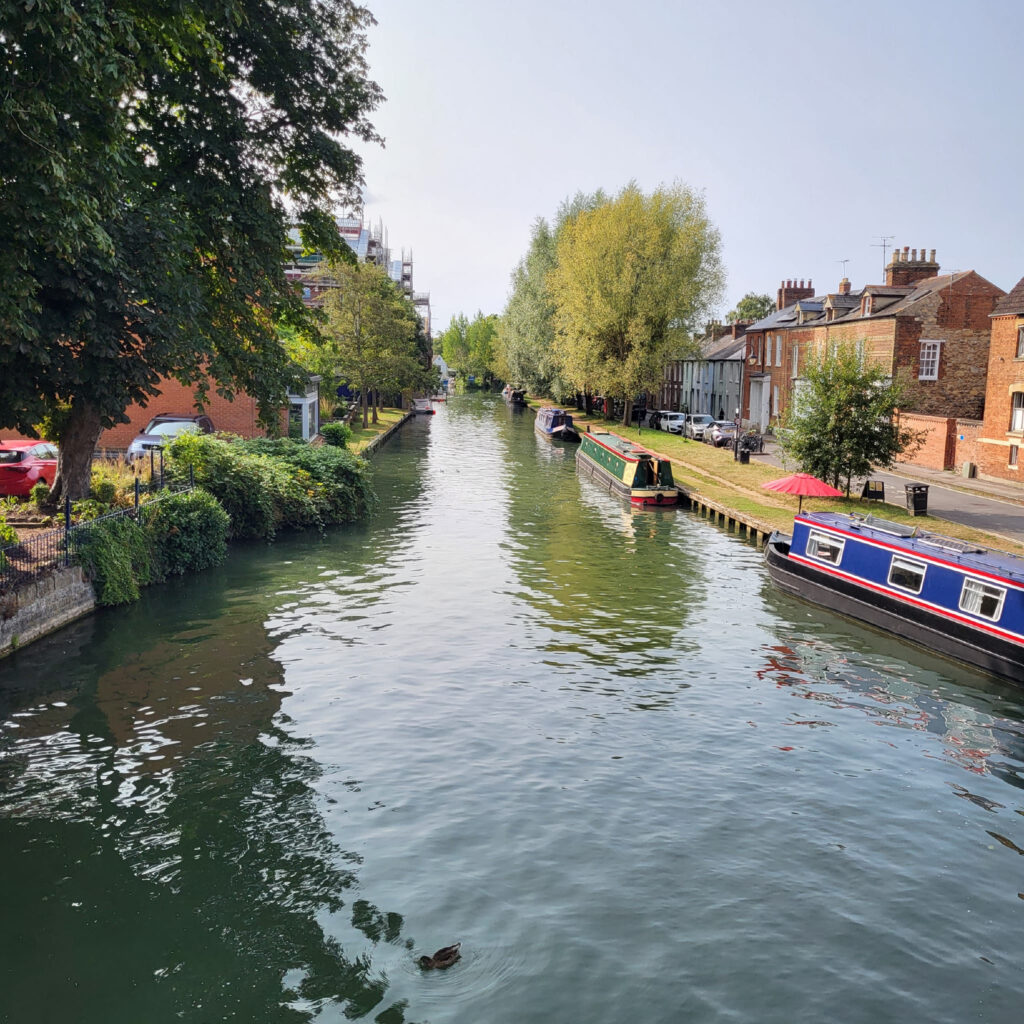
Back to 2024, and due to bridge works at Oxford Railway Station, to locate my next bus stop, I navigated a confusing alternative layout before crossing a bridge over the River Thames. I was on a narrow footpath next to Oxpens Road, which is part of the A420, and amongst a throng of other people doing the same.
Most people associate the River Thames with London; few realise it flows through Oxford, and fewer still that its source is at Thames Head in the Cotswolds.
It’s 10.53 am, and I’m on the S6 to Swindon from Oxford.
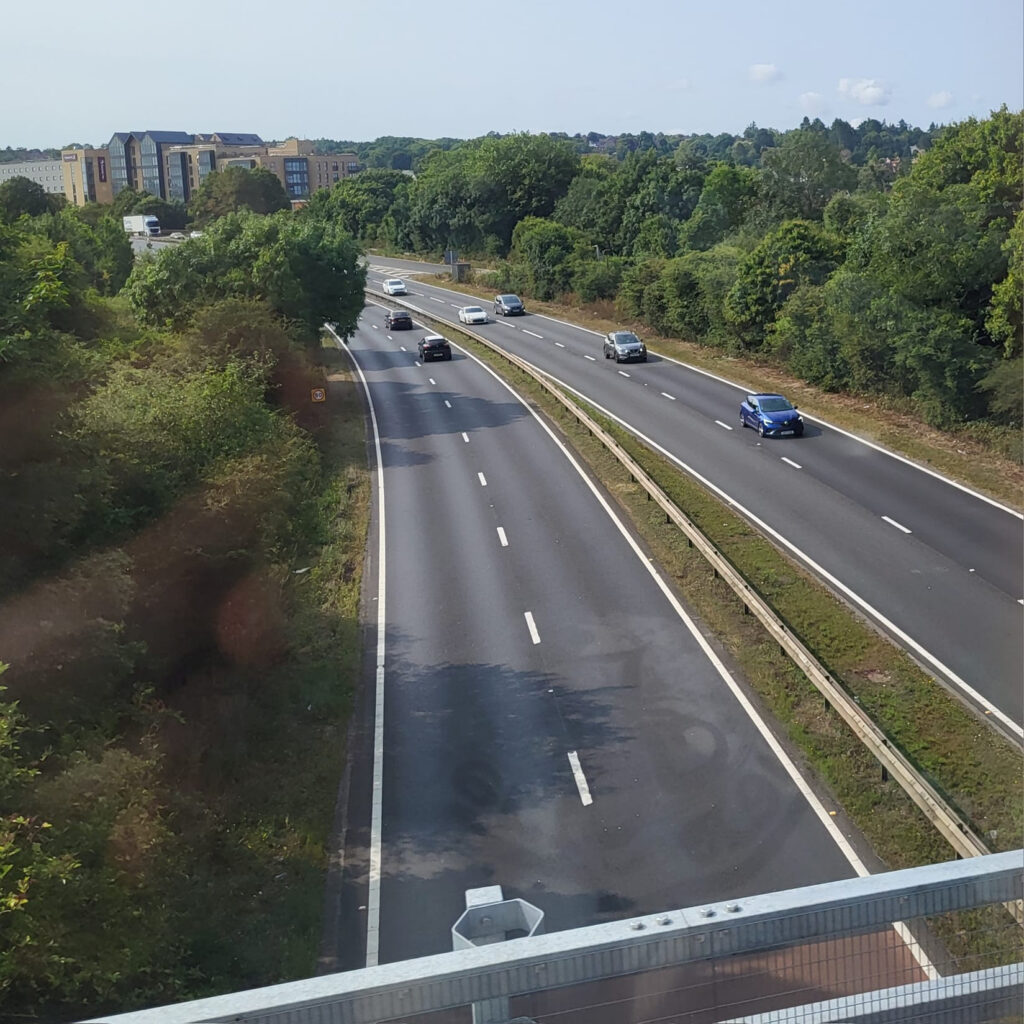
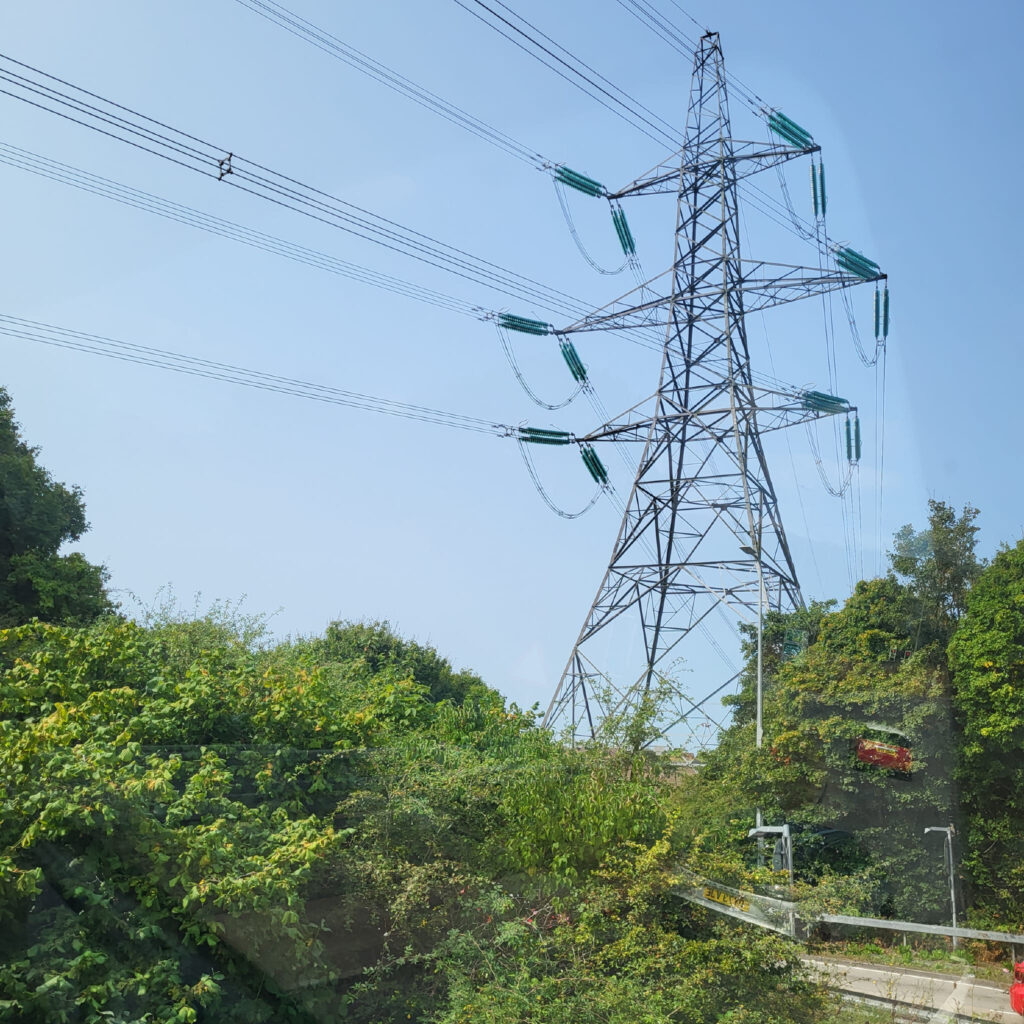
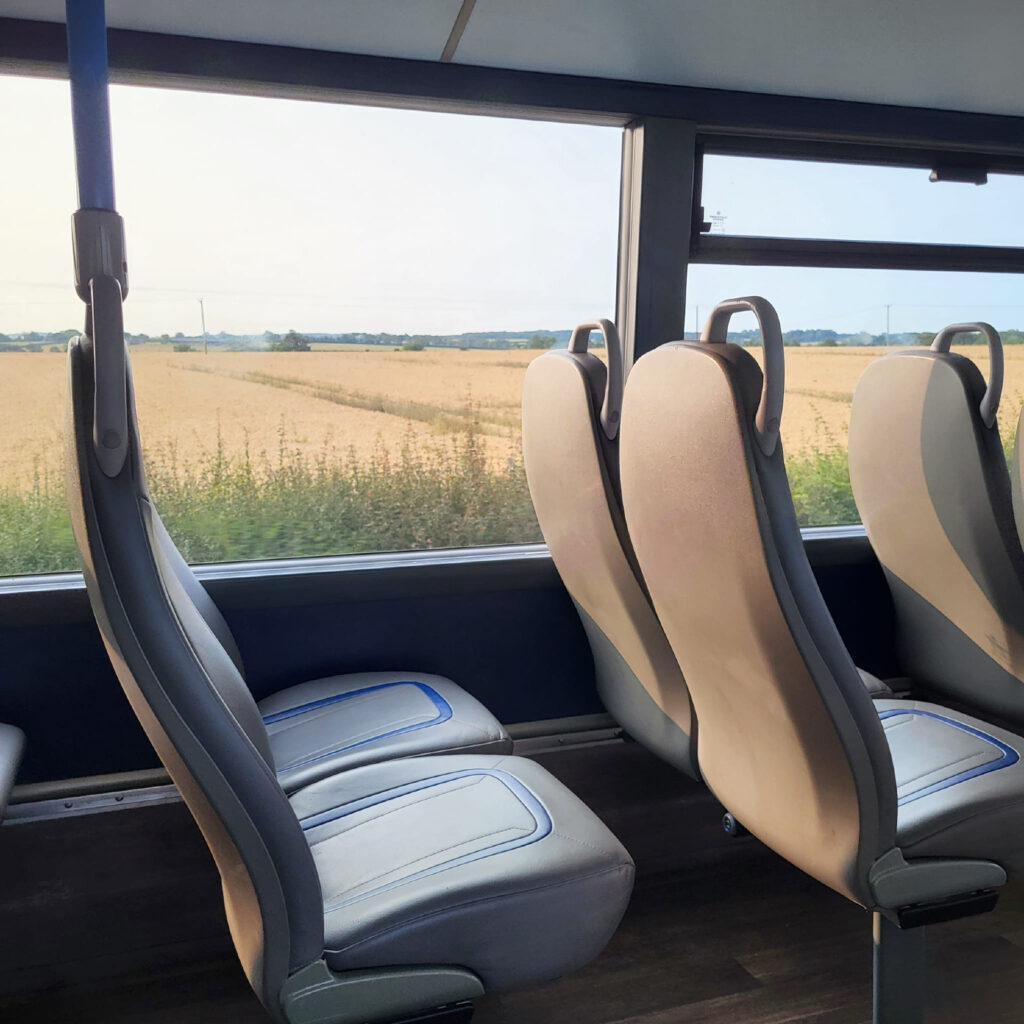
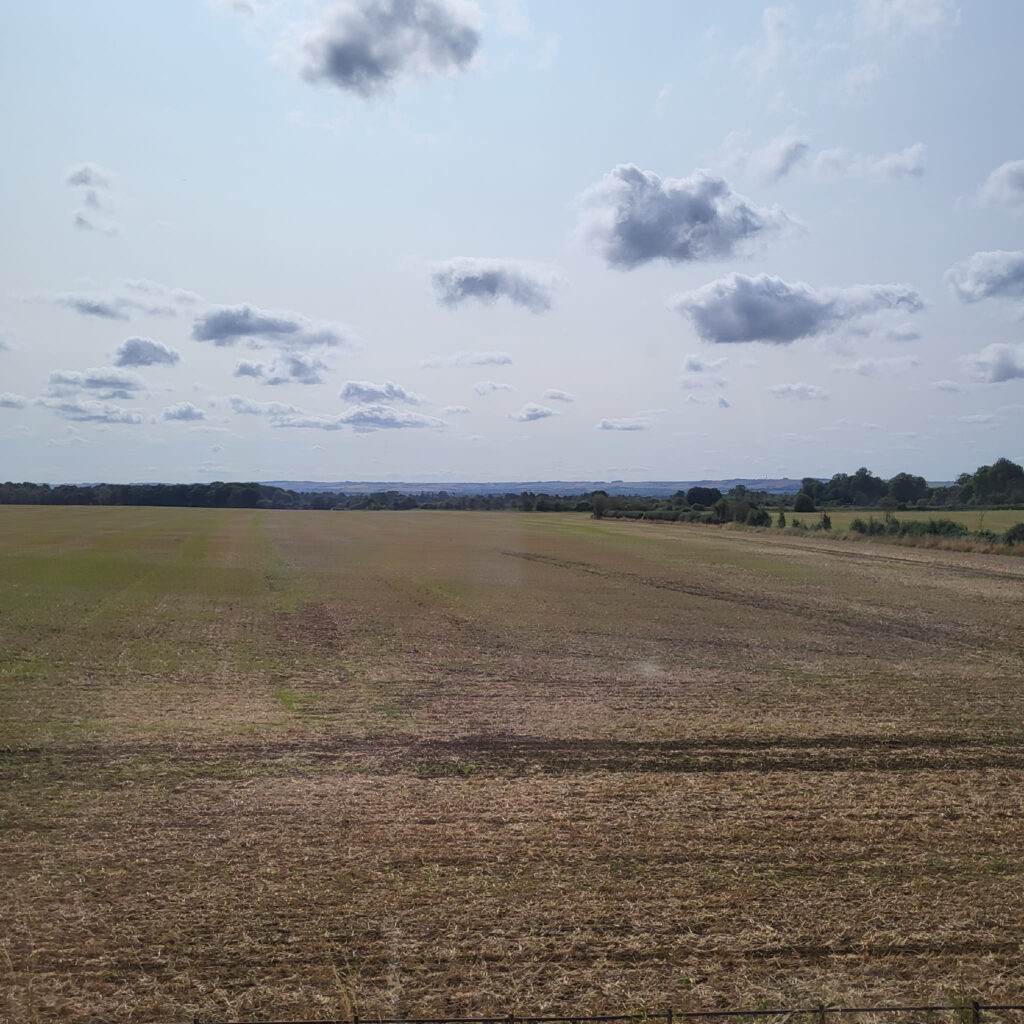
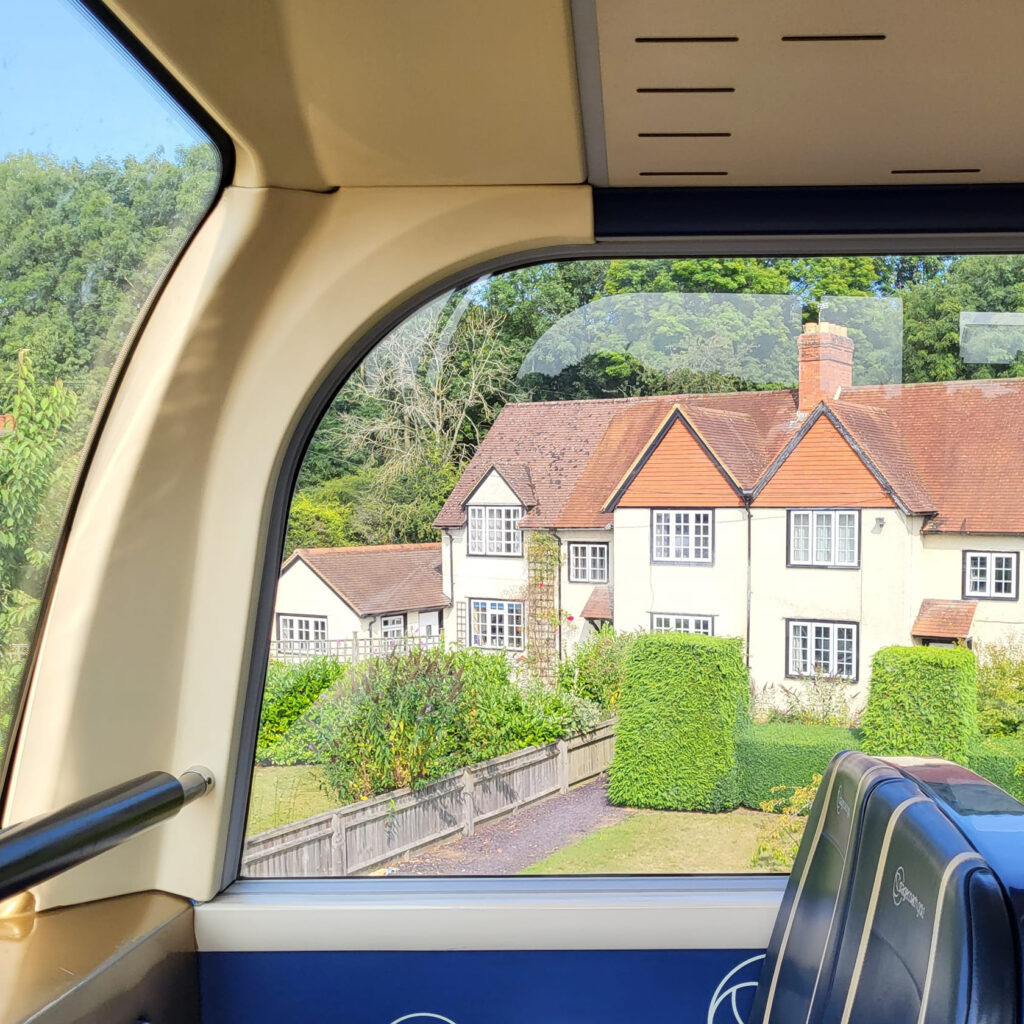
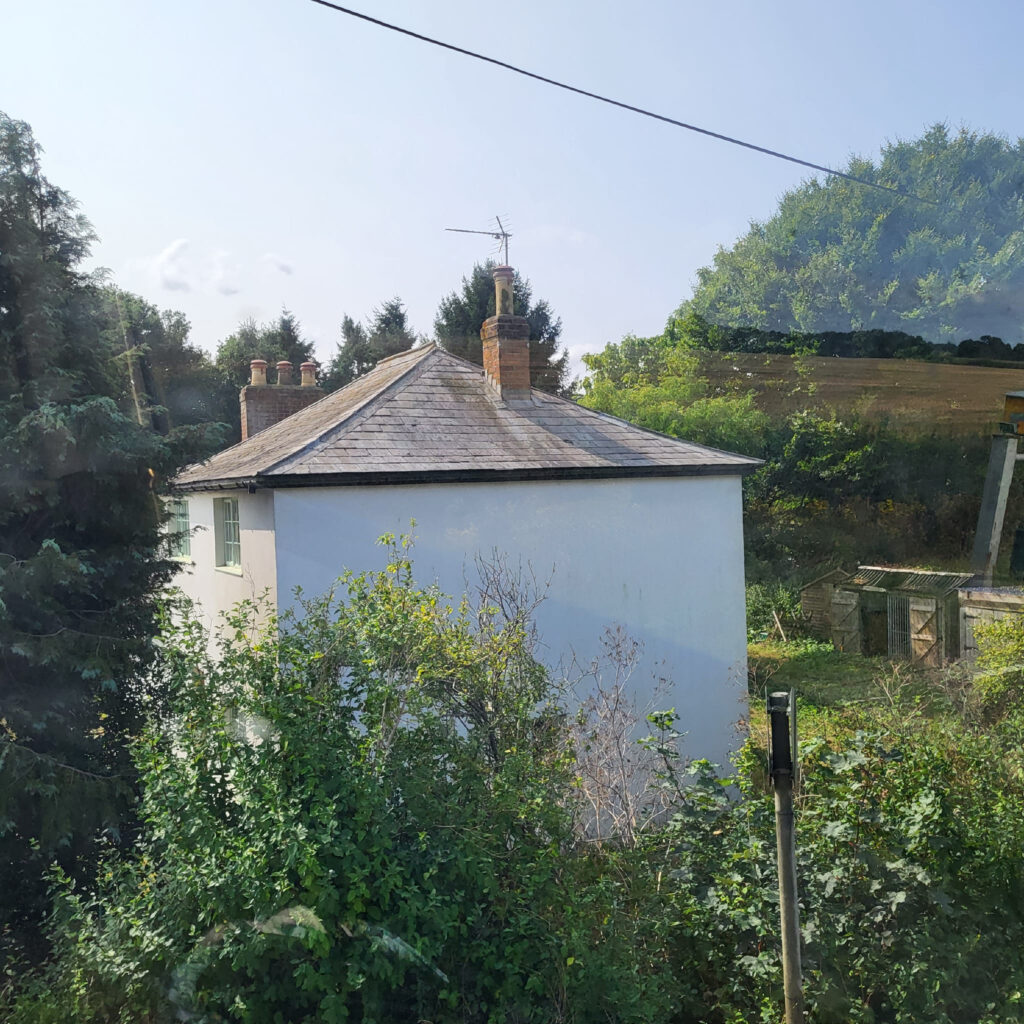
There were long stretches of open countryside on this route, and as we headed south, there was a sense of entering a more rural part of the country, the area being a gateway to idyllic pleasures beyond. Dotted here and there stood pretty cottages, serving as gateposts for the villages to which they belonged.
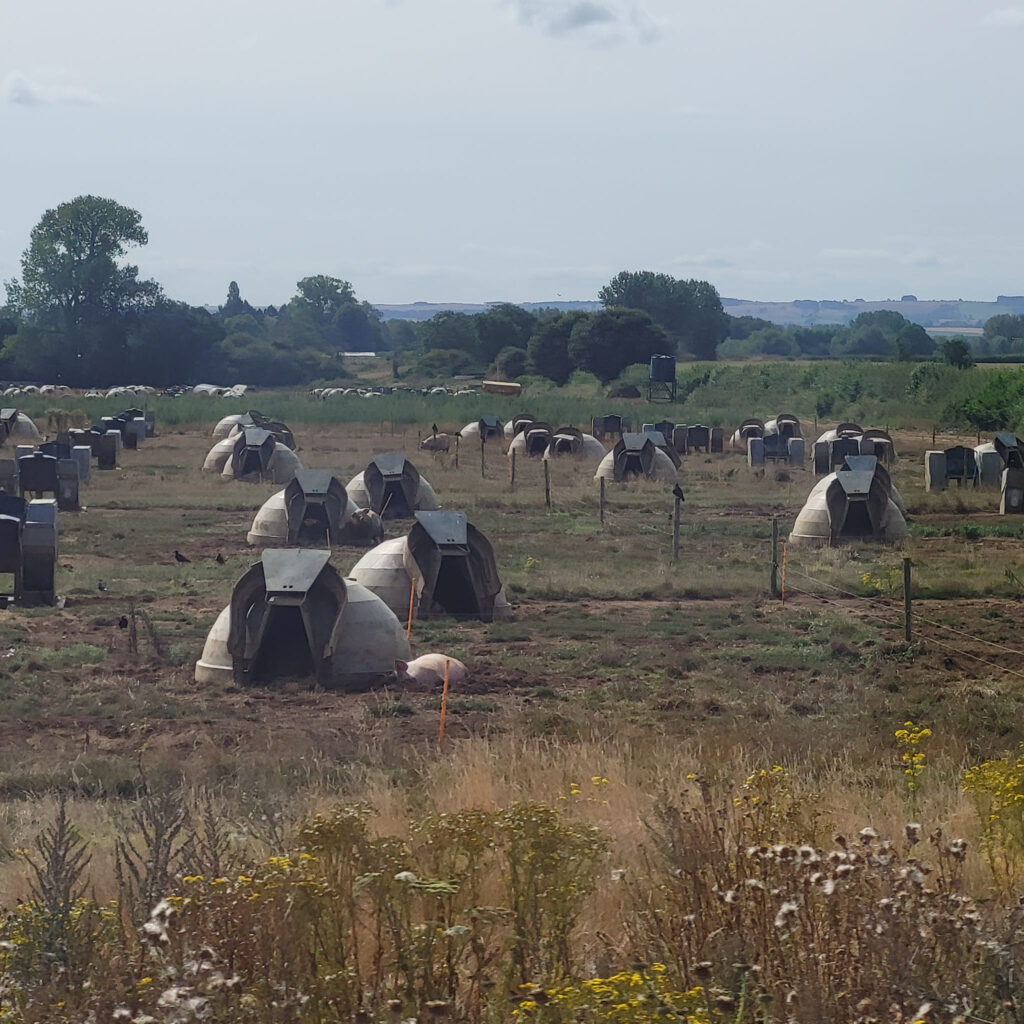
A housing estate for pigs came into view. The design of their houses was reminiscent of Luke Skywalker’s desert childhood home on Tatooine, and I wondered if the architects of the ‘pig houses’ were influenced by Star Wars architecture. If you look closely, you can see a pig watching the bus as it went by.
We are whizzing through the Vale of the White Horse towards Farringdon. You might be interested to know at this juncture that this particular leg of the journey takes an hour and a half and the distance travelled on the S6 is a little over 30 miles.
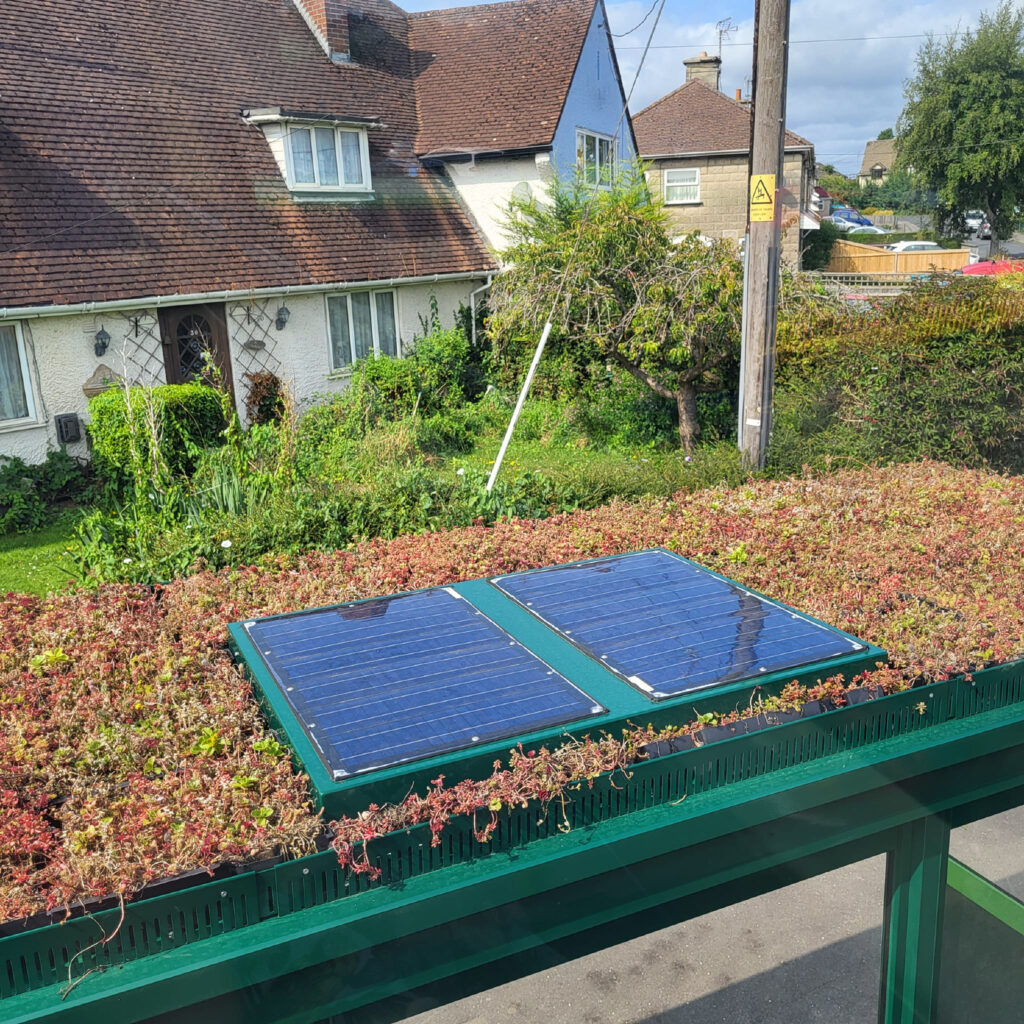
As we approach Farringdon town centre, we pass a ‘Living Roof’ bus shelter, complete with a solar panel. It is also known as a ‘Bee Bus Stop,’ and its roof is planted with sedum plants, which are rich in nectar for bees and other pollinating insects. Perhaps, seeing as it is one of the most air-polluted towns in the country, Northampton could do this with its bus stops, bringing a bit of kudos to bus travel and tempting car drivers off the roads.
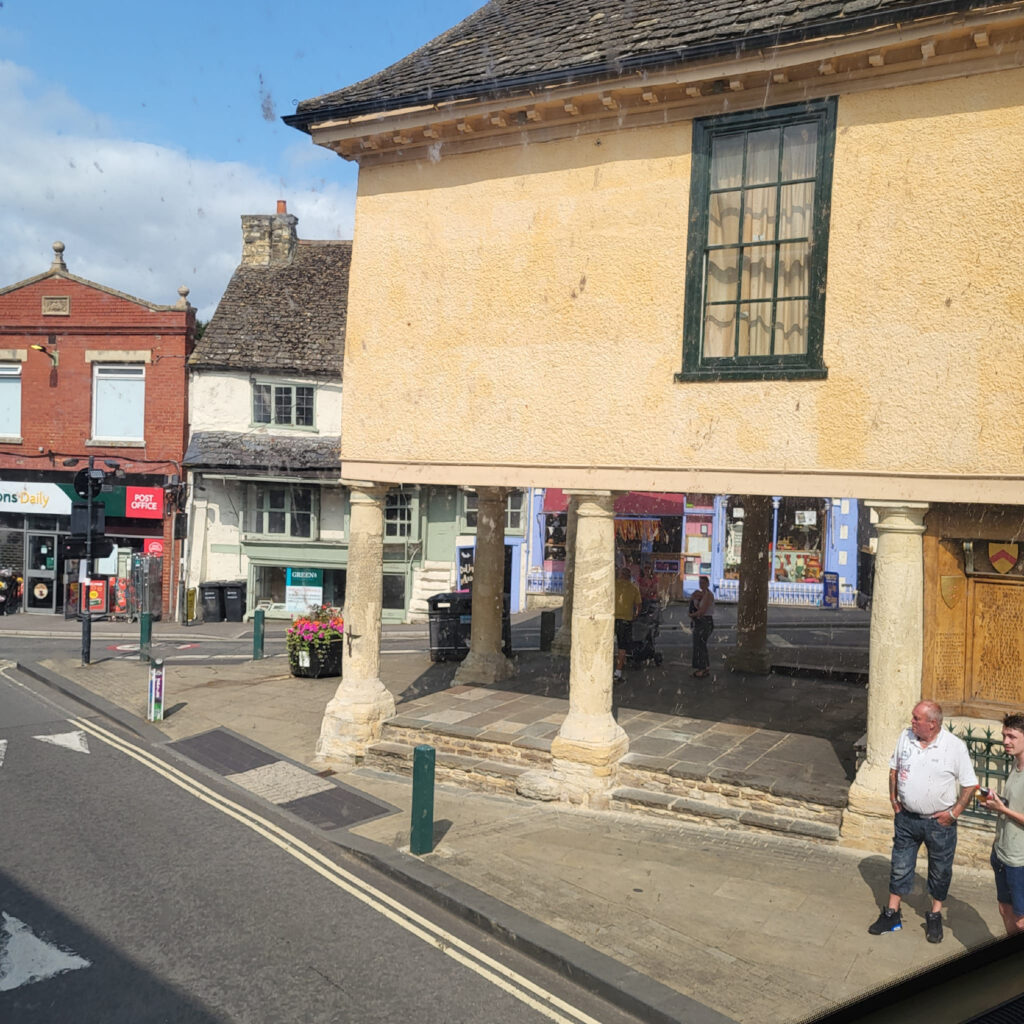
Farringdon is a pretty market town, with an old town hall, similar to the Old Grammar School in Market Harborough.
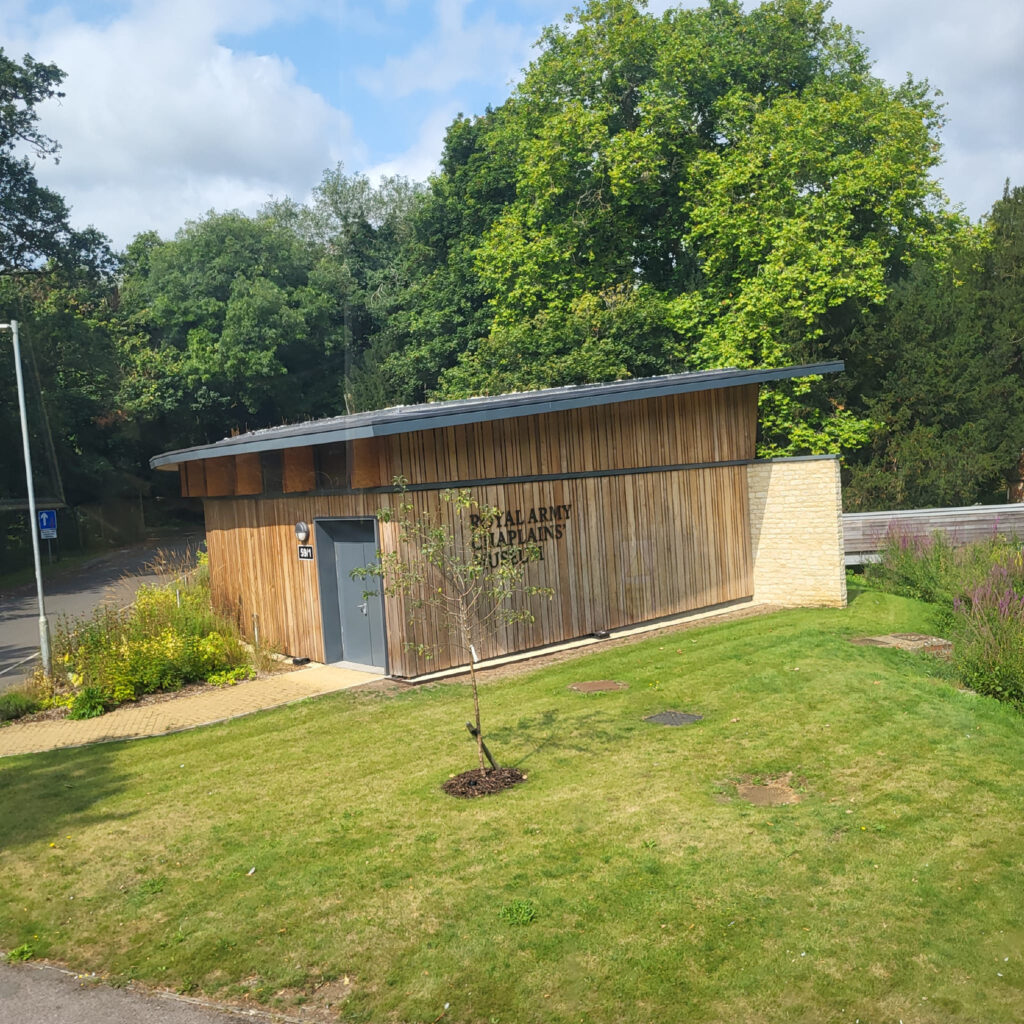
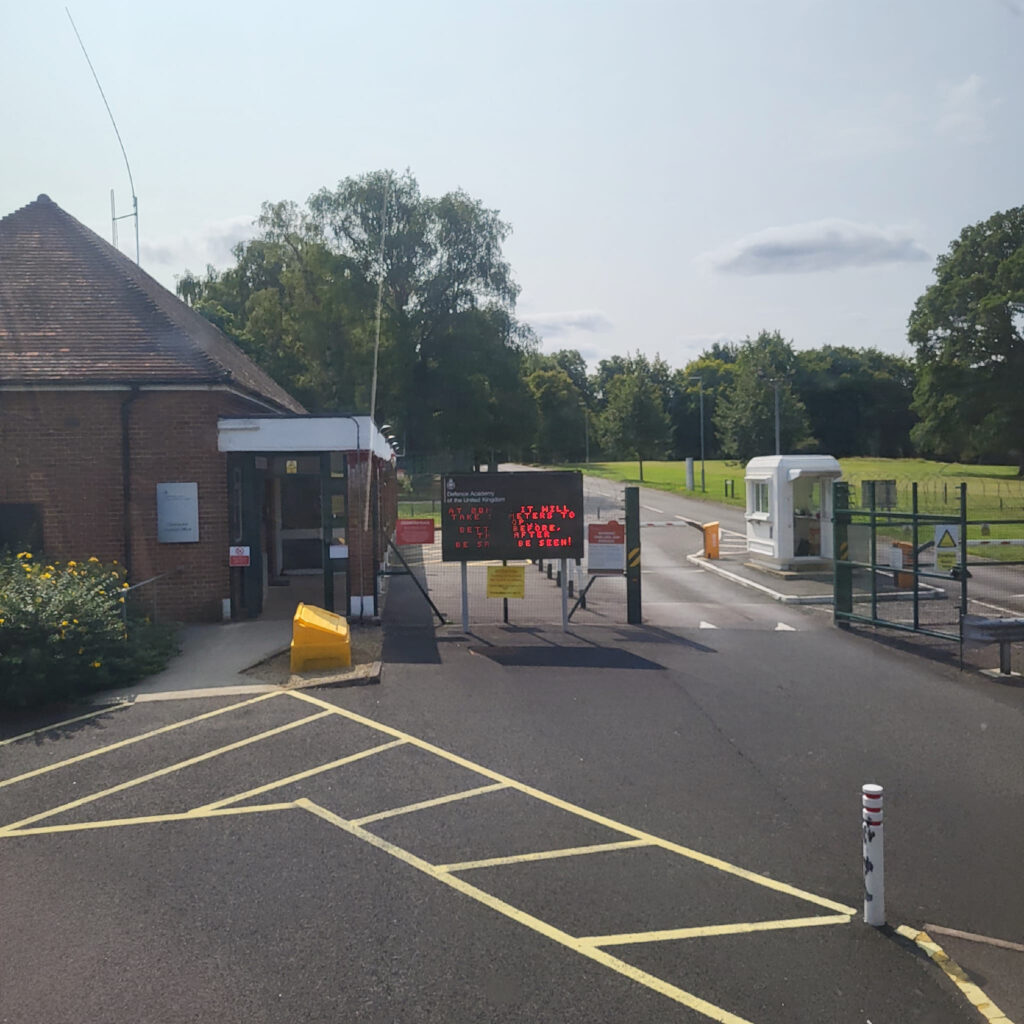
The next port of call is ‘Watchfield and Shrivenham’, two places which blend into each other. We passed the Army Chaplains Museum, which resides opposite the entrance of ‘The Defence Academy of the United Kingdom’. This part of the journey gave me the shivers. The latter’s gate leads to an education about military defence, while its neighbour educates us about recovery from the aftermath of such actions.
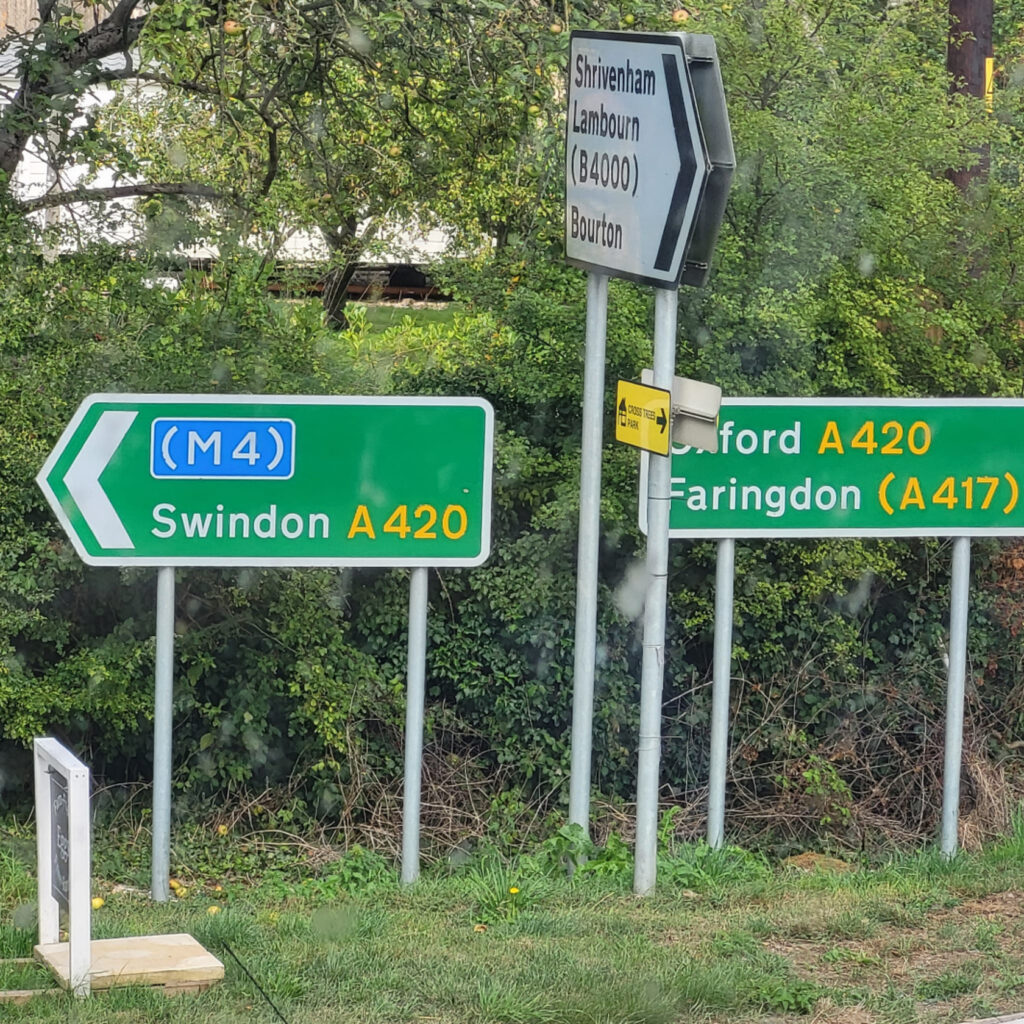
The junction back onto the A420 was a welcome sight, although at this point, I had forgotten, from a previous experience, what lay waiting for me in Swindon.
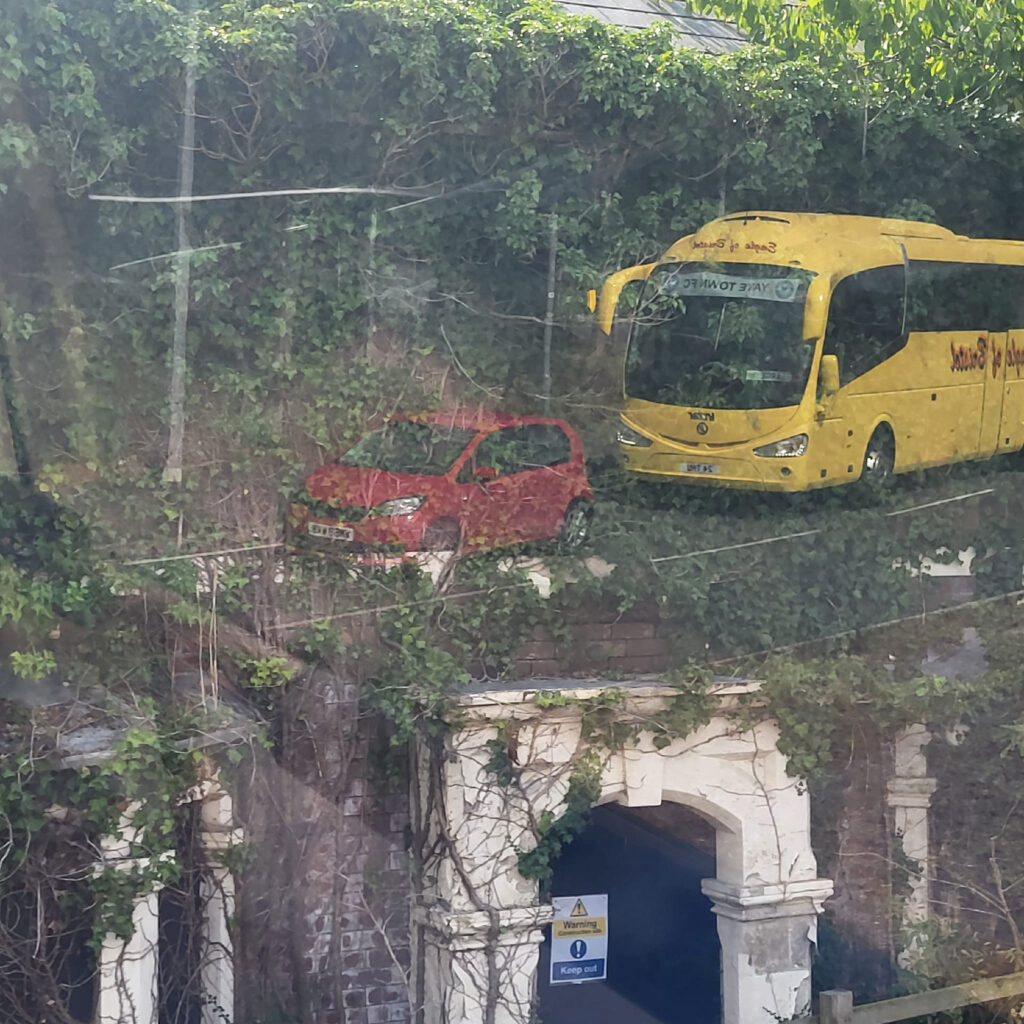
Shortly after turning onto the A420 to Swindon, we passed a train travelling adjacent to the road. On the left was a run-down, derelict building reminiscent of a grand entrance to a long-since abandoned country house. The image of it in the bus window is ghosted by a coach and car travelling on the opposite side, and it appeared as if we were in an episode of His Dark Materials, gazing from our world into another. The two images were in stark contrast to each other and helped to narrate the story of the road and a foretelling of what was to greet me further ahead.
On approaching the bus station, there was a tract of flattened ground surrounded by tatty hoardings and, beyond, signs of building work. As the bus pulled into Swindon Bus Station, there certainly wasn’t a sense of ‘Welcome to Swindon,’ and it got worse once I stepped off the bus.
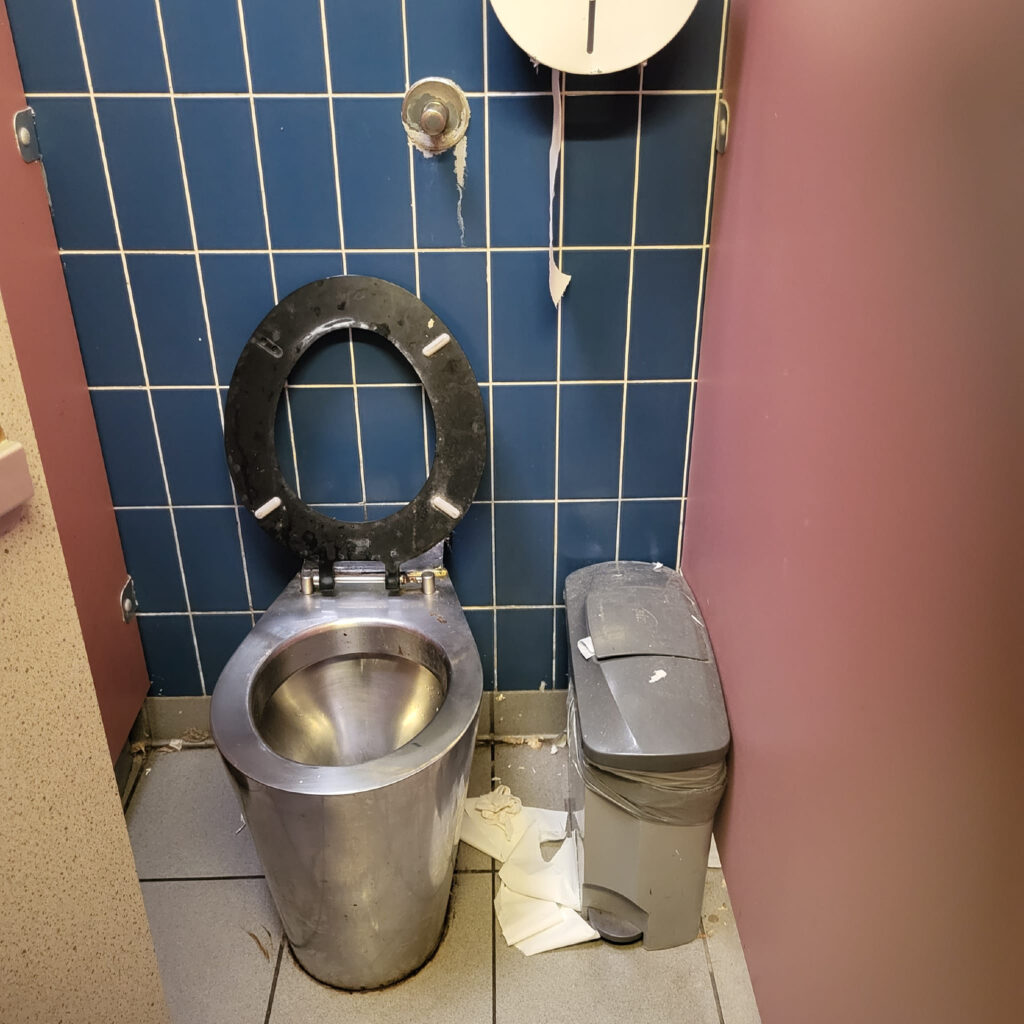
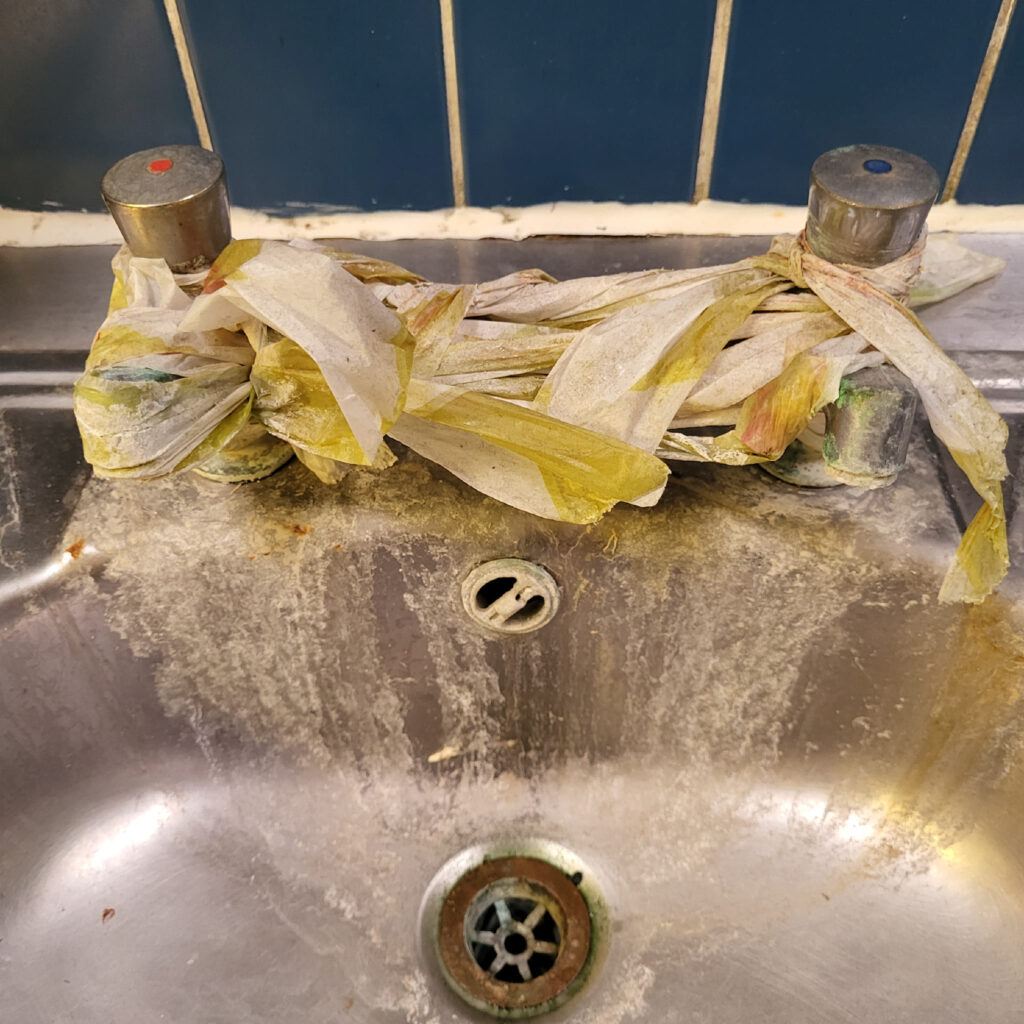
Knowing I had one and a half hours to rest and soak up the Swindon vibes, my priority was to find a toilet. Now I’ve relieved myself in a variety of places over the years (haven’t we all?) But these facilities are top of the plops. If you Google Swindon Bus Station reviews, you soon get the picture that this isn’t a welcome break for travellers. Blocked and broken toilets, smells, smells and more smells, overflowing bins and wet tissue everywhere. It was an in-and-out job in record time.
I then went in search of a cafe to while away the time in between journeys, but Swindon had other ideas. Minimal signposting, and what signposts there were, led nowhere. I joined fellow non-Swindoners in a remake of Jacques Tati’s ‘Traffic’, albeit involving pedestrians and not cars. It is best described by this guy, who, when walking past me, said to his friend, ‘It’s like a *ucking PS2 game!’ Now I haven’t played a PS2 game, and he probably hasn’t watched Jacques Tati, but at that moment we were occupying the same headspace.
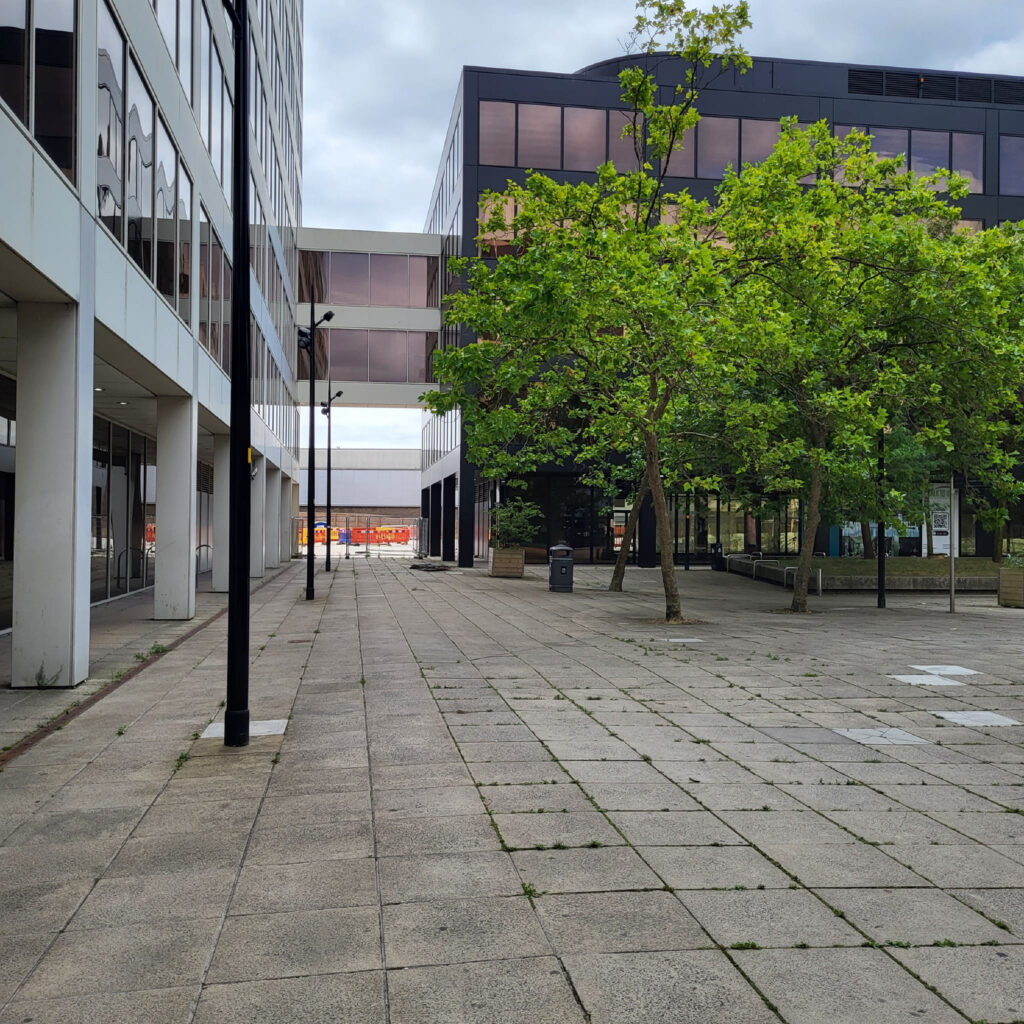
This fleeting moment of parallel experiences happened inside a deserted office block square circa the 1990s-2000s. In one world, it was a grotty, chipped, and stained bus station; walk through a graffitied brick portal and you arrive in a wannabe Milton Keynes. All of us lost travellers walked around and around this echoing square, watching each other to see if any of us had discovered an exit, a route out, a shop, a café, or anything at all other than what we were trapped in. But all routes seemed to only lead into aromatic alleys and dead ends.
Eventually, I found a way out and, after a bit more wandering, a good old Costa. I took my coffee back to ‘Ghost Square’ and urged the clock on my phone to whiz through its numbers to speed up departure time.
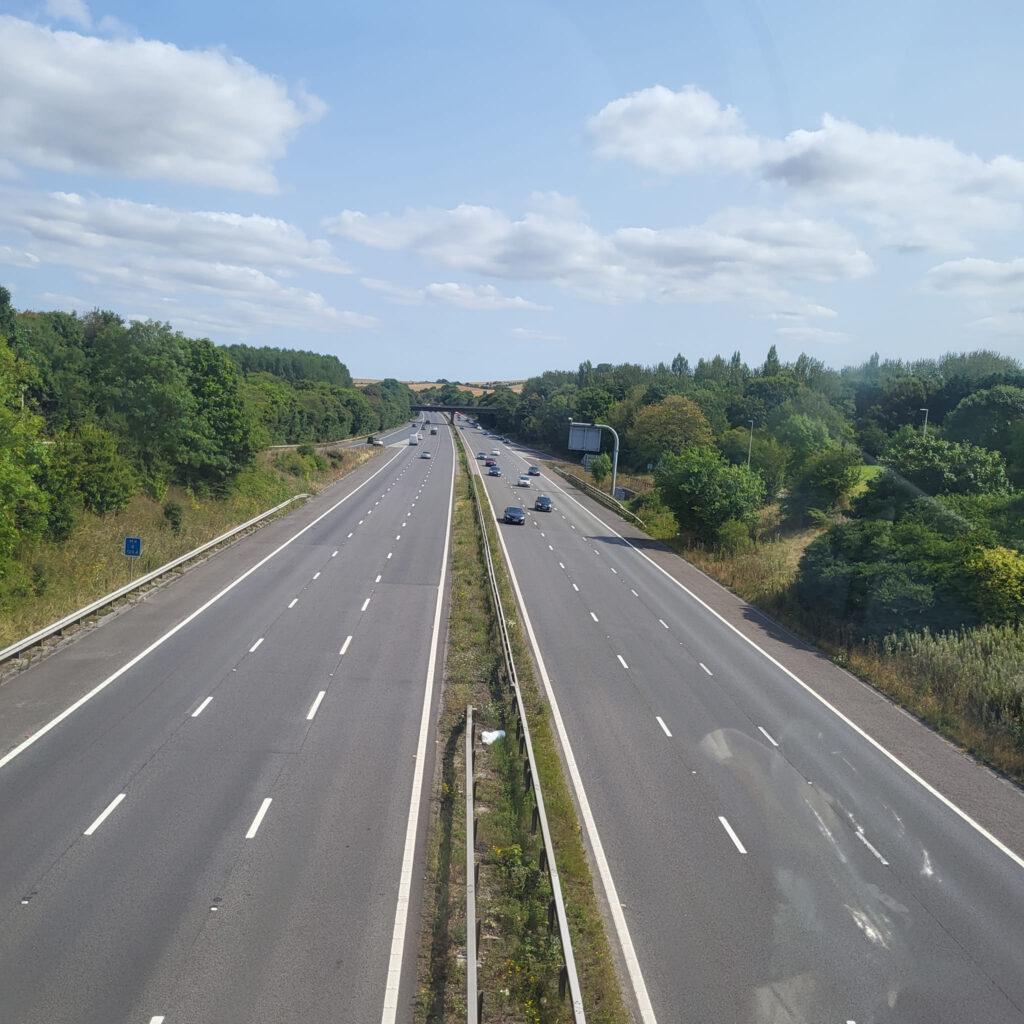
I’m on the X5, part of the ‘Salisbury Reds’ bus company, which operates around the Salisbury area and was born out of the Wilts & Dorset bus company, which I remember from my youth.
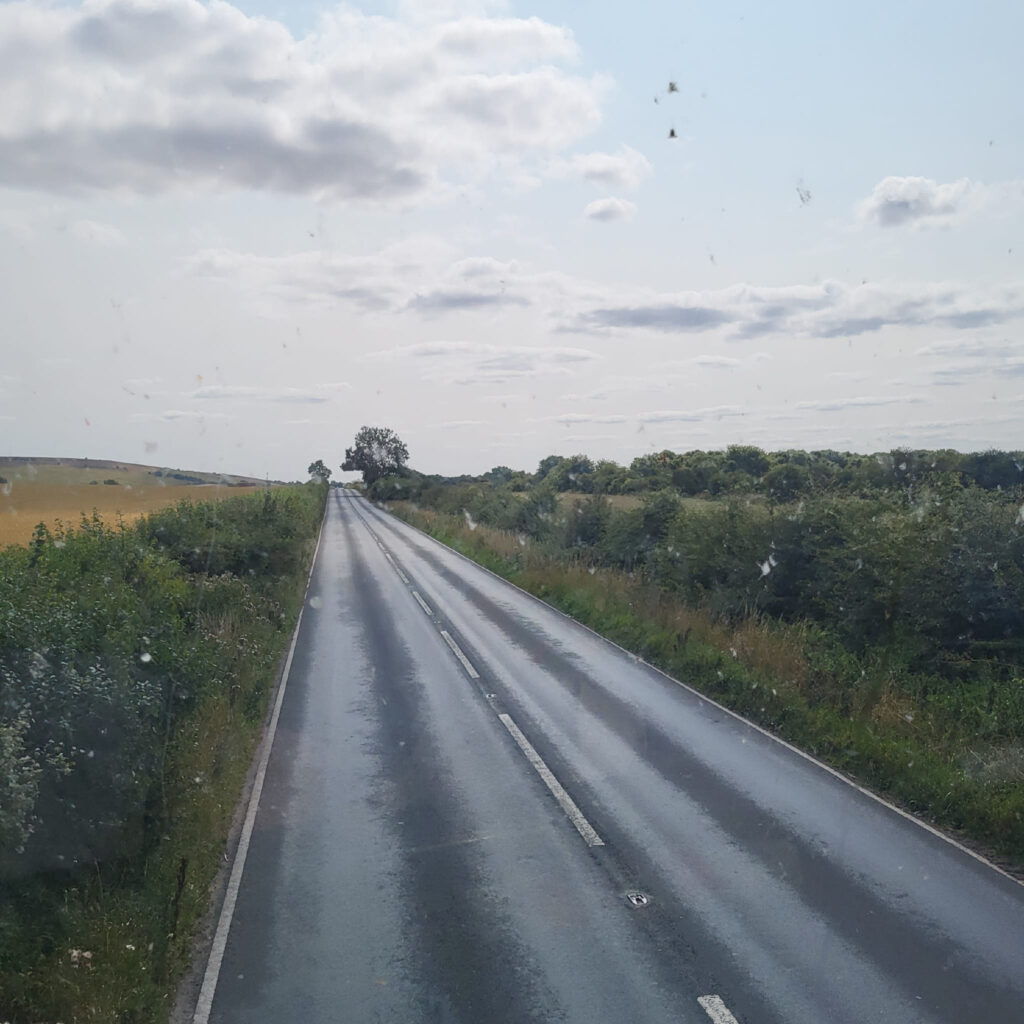
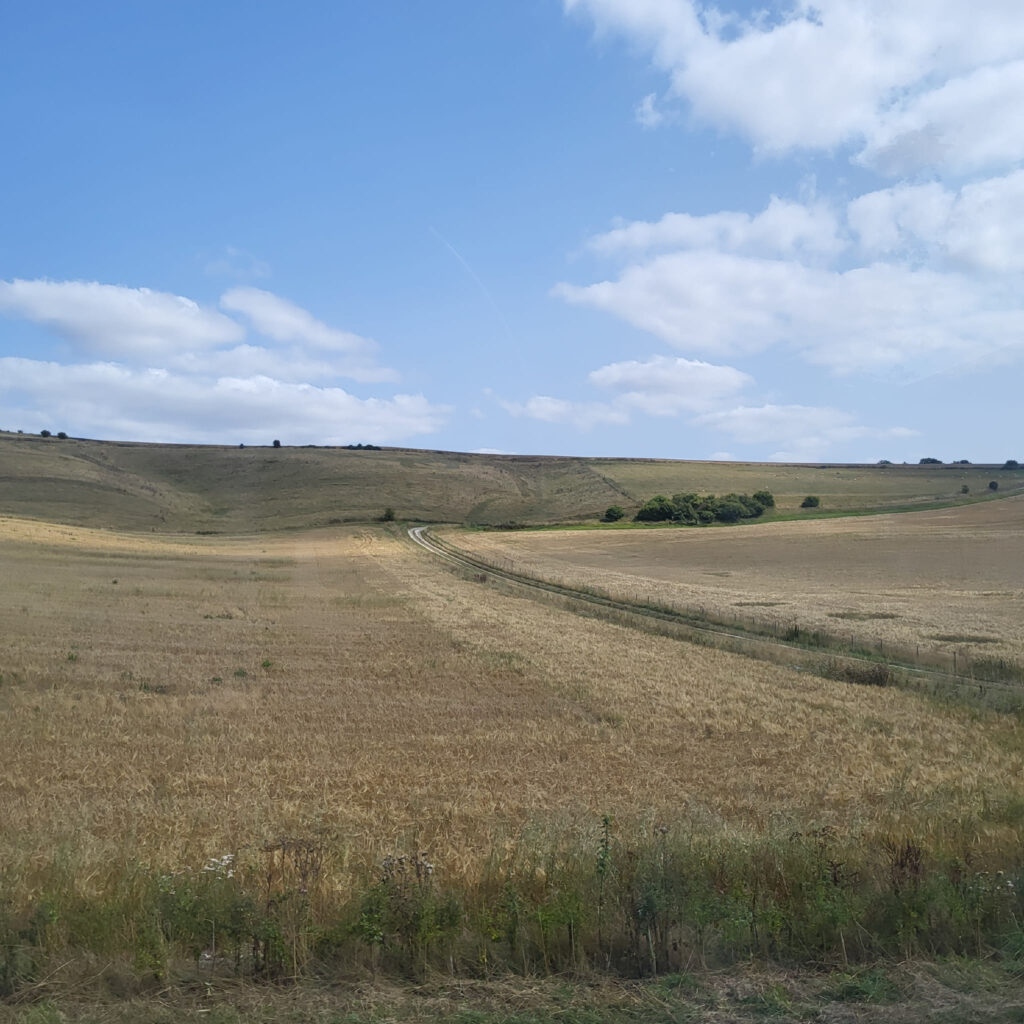
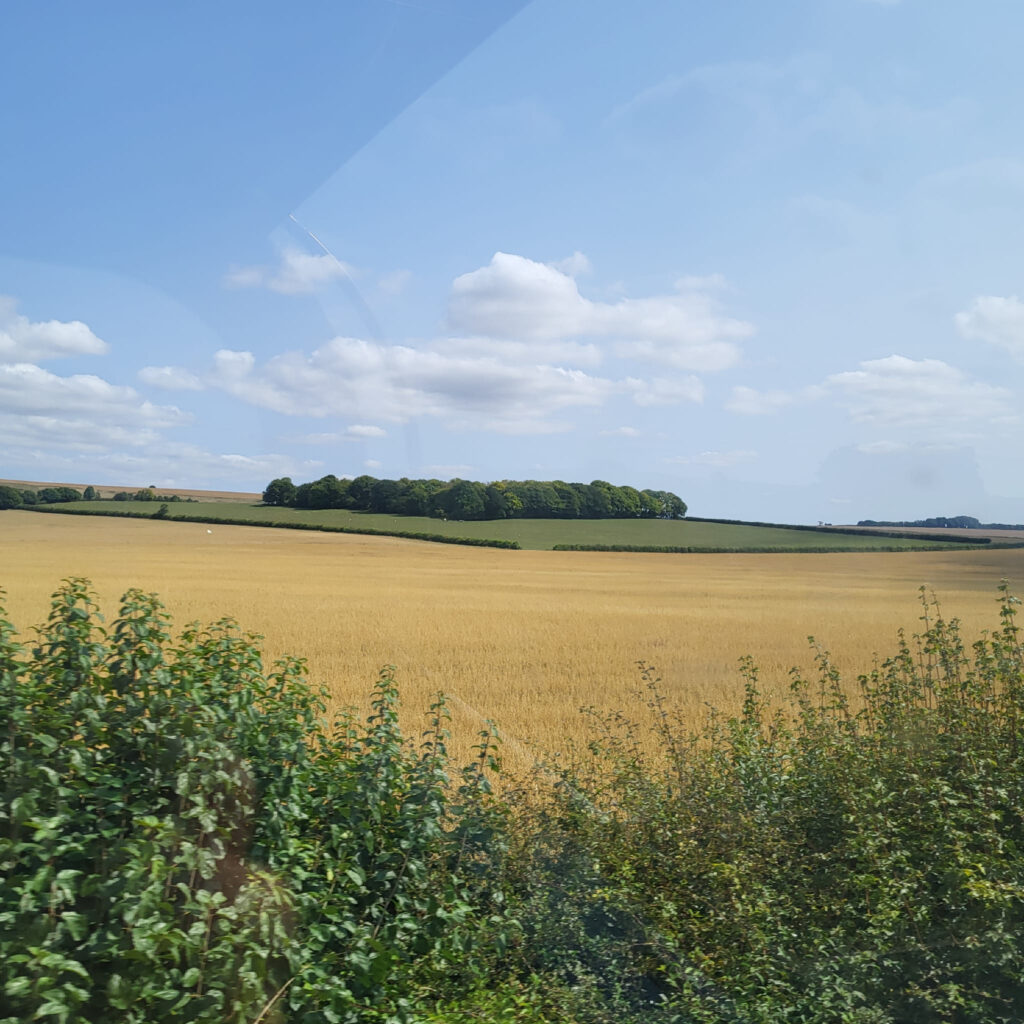
After travelling through the Marlborough Downs, we arrived at Marlborough, an old favourite haunt of my mother’s and home to the Rabley Drawing Centre (which I keep intending to visit).
With only 12.6 miles between Swindon and Marlborough, the contrast between the two places is glaring in all facets: town planning, socio-economic factors, size, culture, fashions and identity.
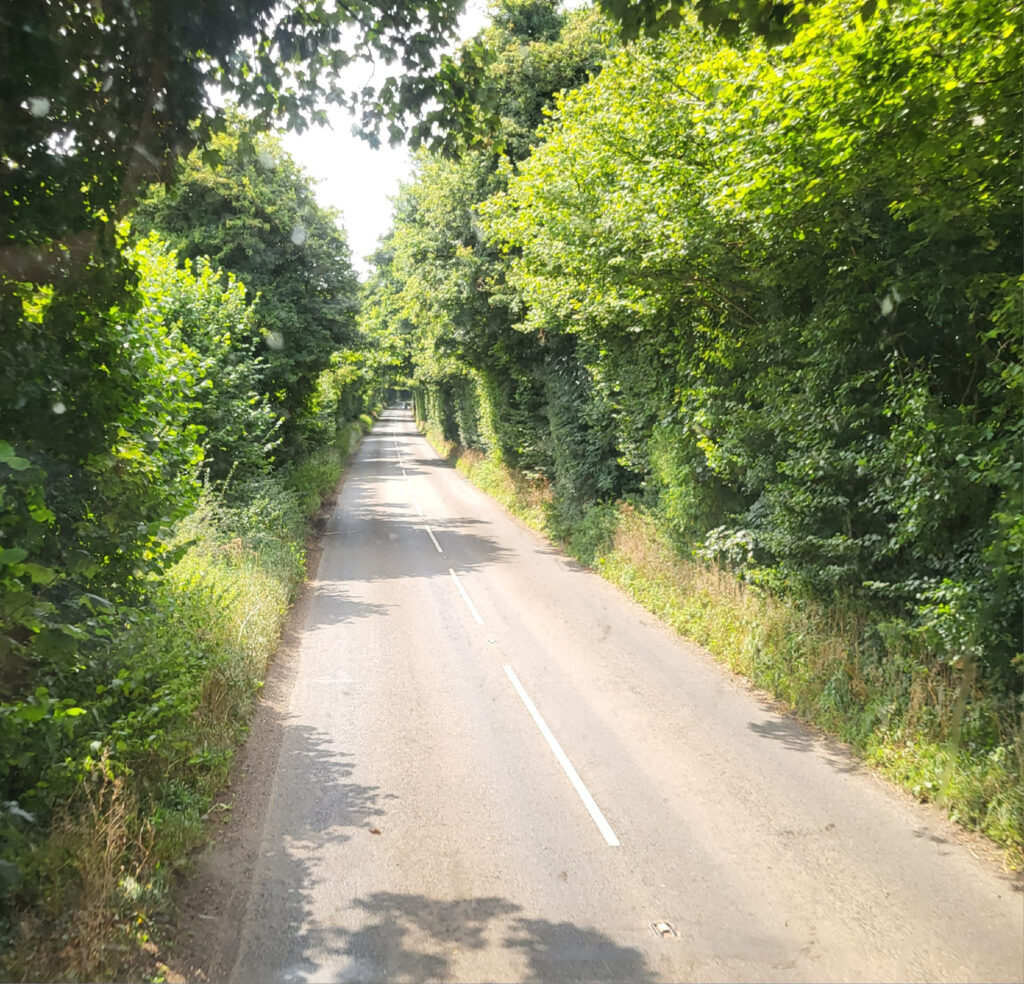
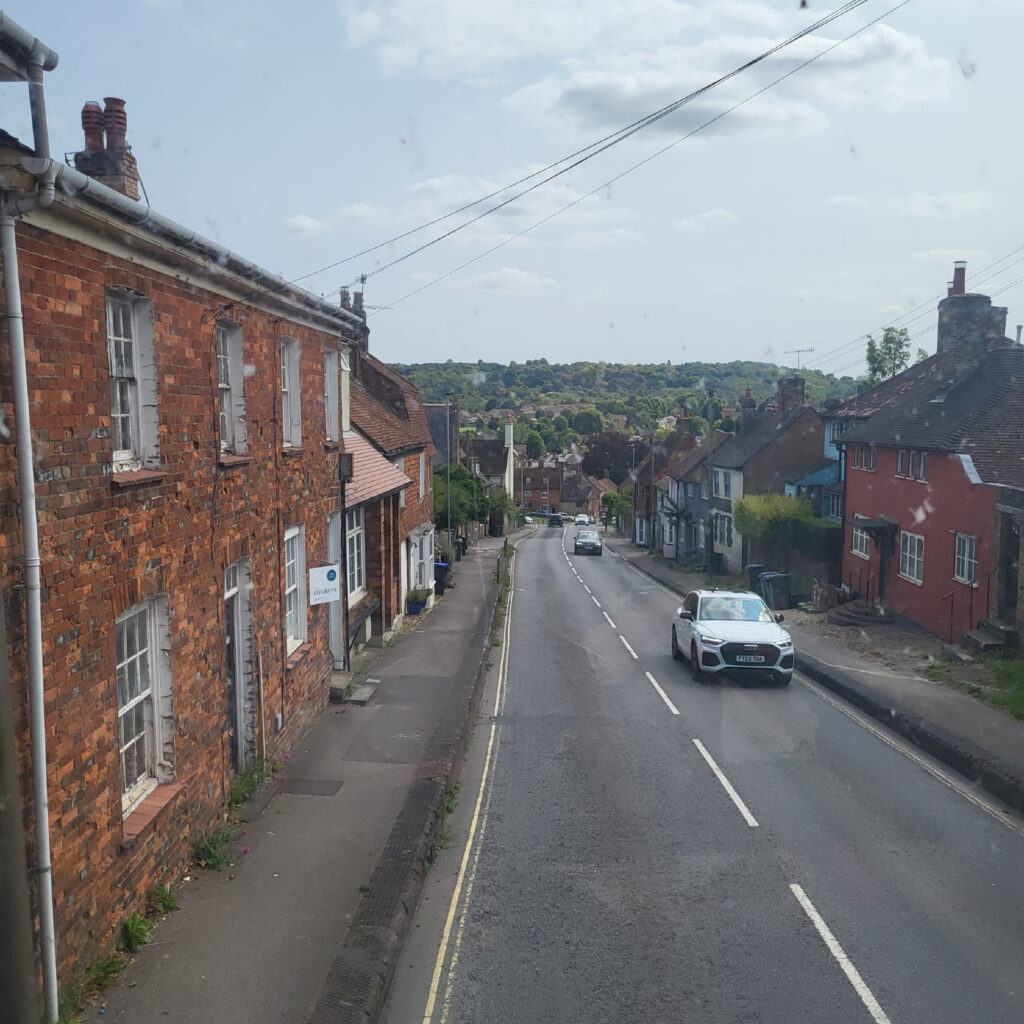
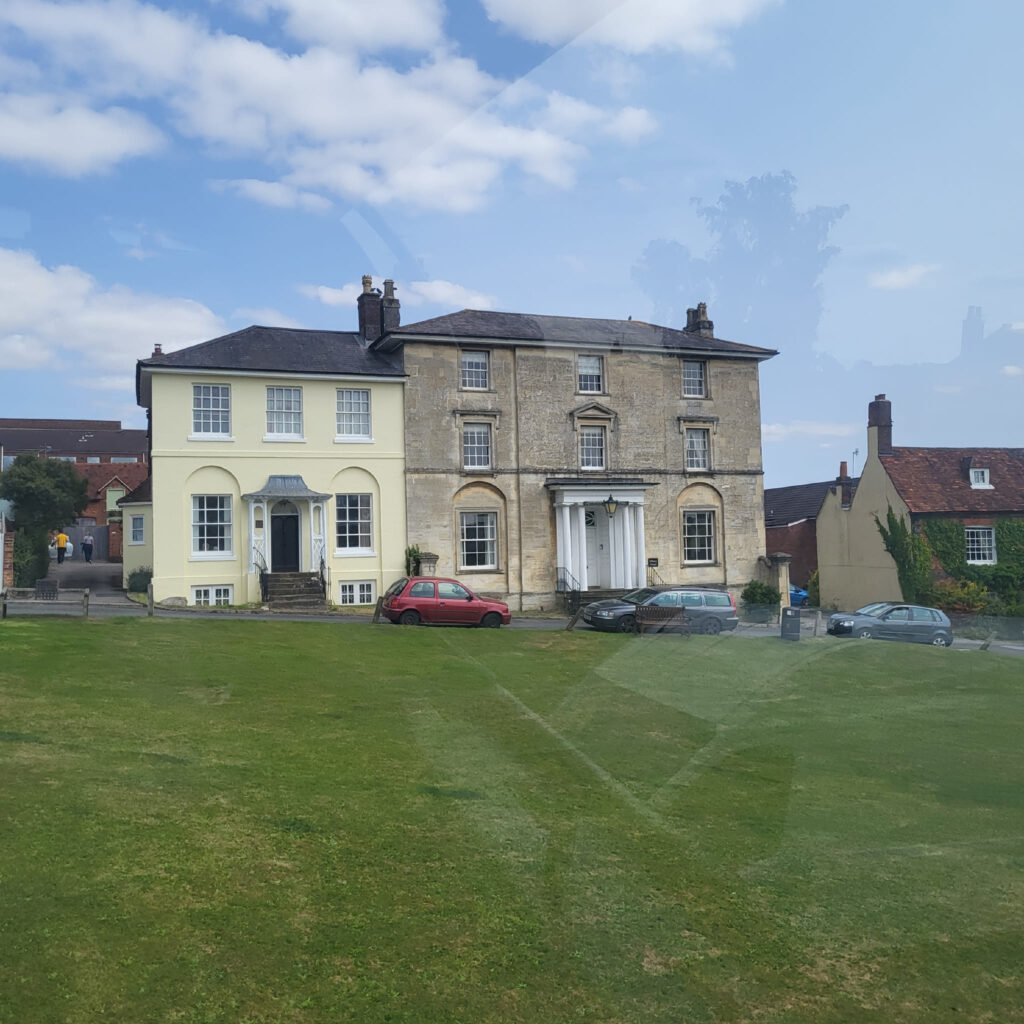
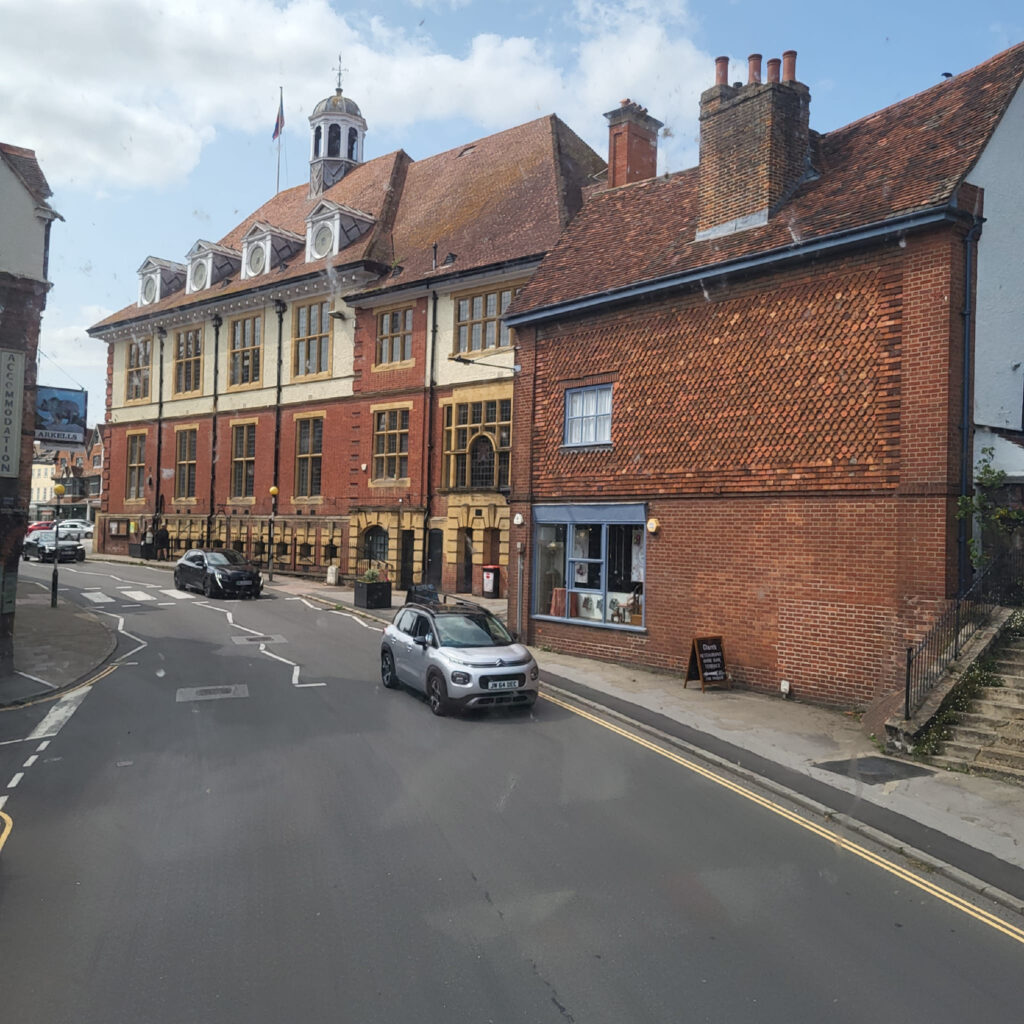
We approached the town centre via a steep downward hill, and it begins with a manicured green, bordered by Georgian houses, then followed by a sign for ‘Dan’s Terraced Wine Bar’ and an expensive gift shop.
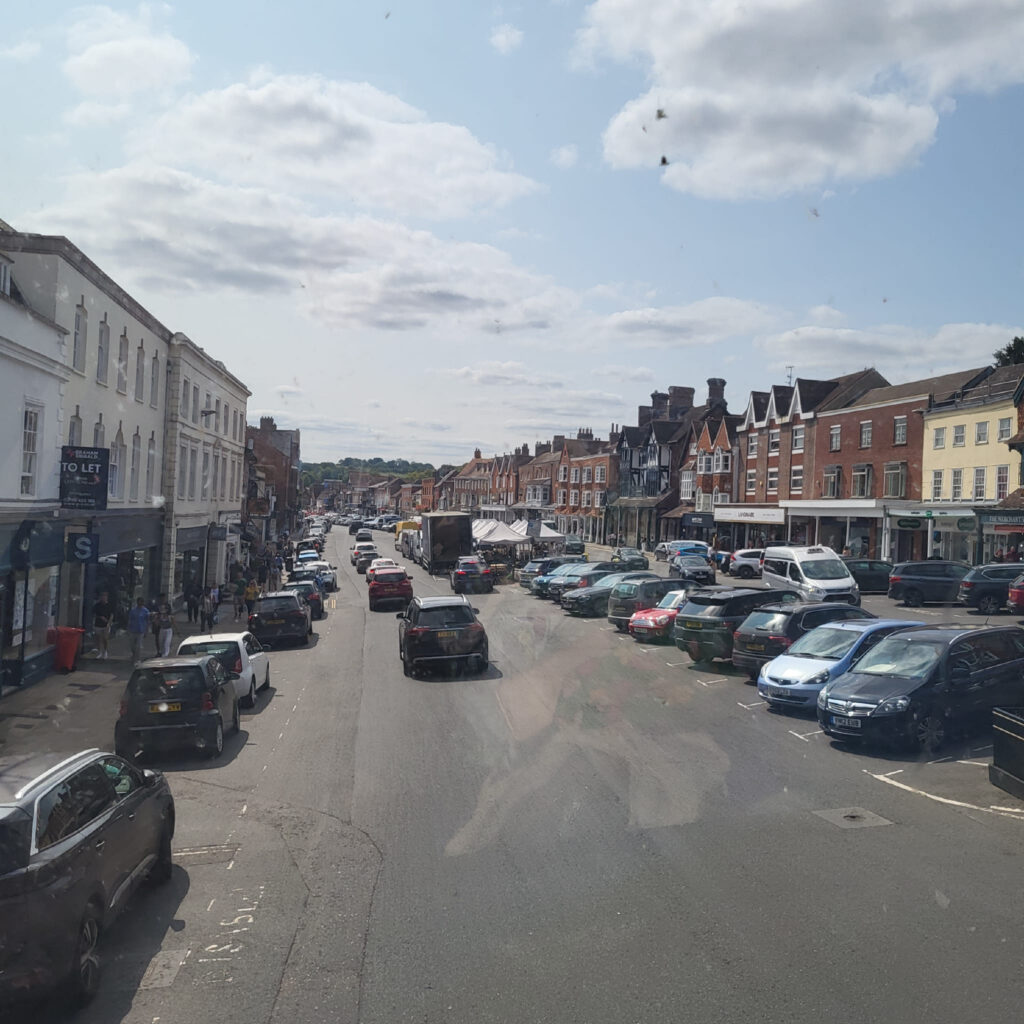
I’d like to note that the stains on the bus window might have suited Swindon, but they don’t assist in showcasing Marlborough’s assets. And similar to old market towns across the country, their splendours are compromised due to overcrowding of cars.
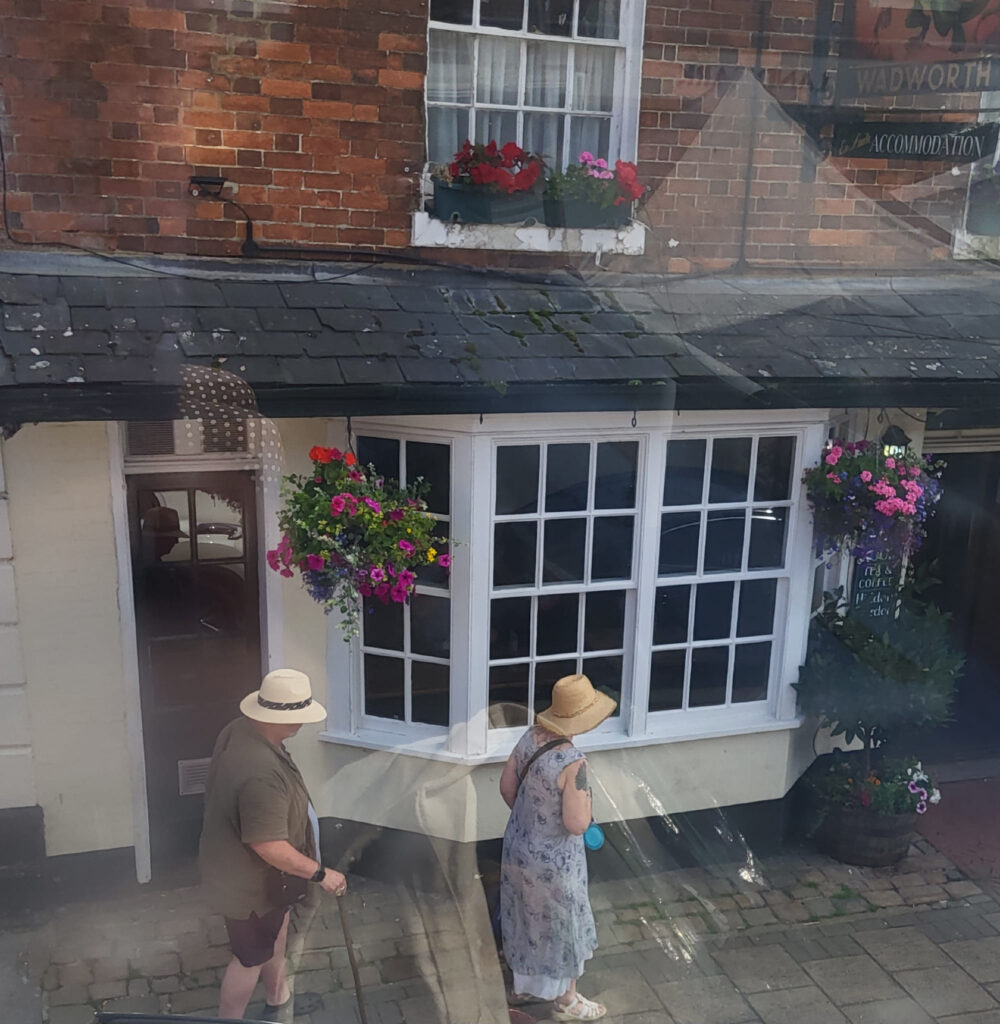
Then follows another contrast. PS2 games and aromatic alleys are swapped for leisurely afternoon strolls in straw hats. Although a particular look fashioned by an elderly couple is all about a Marlborough/ Swindon mash-up, combining hats with tats. Creds!
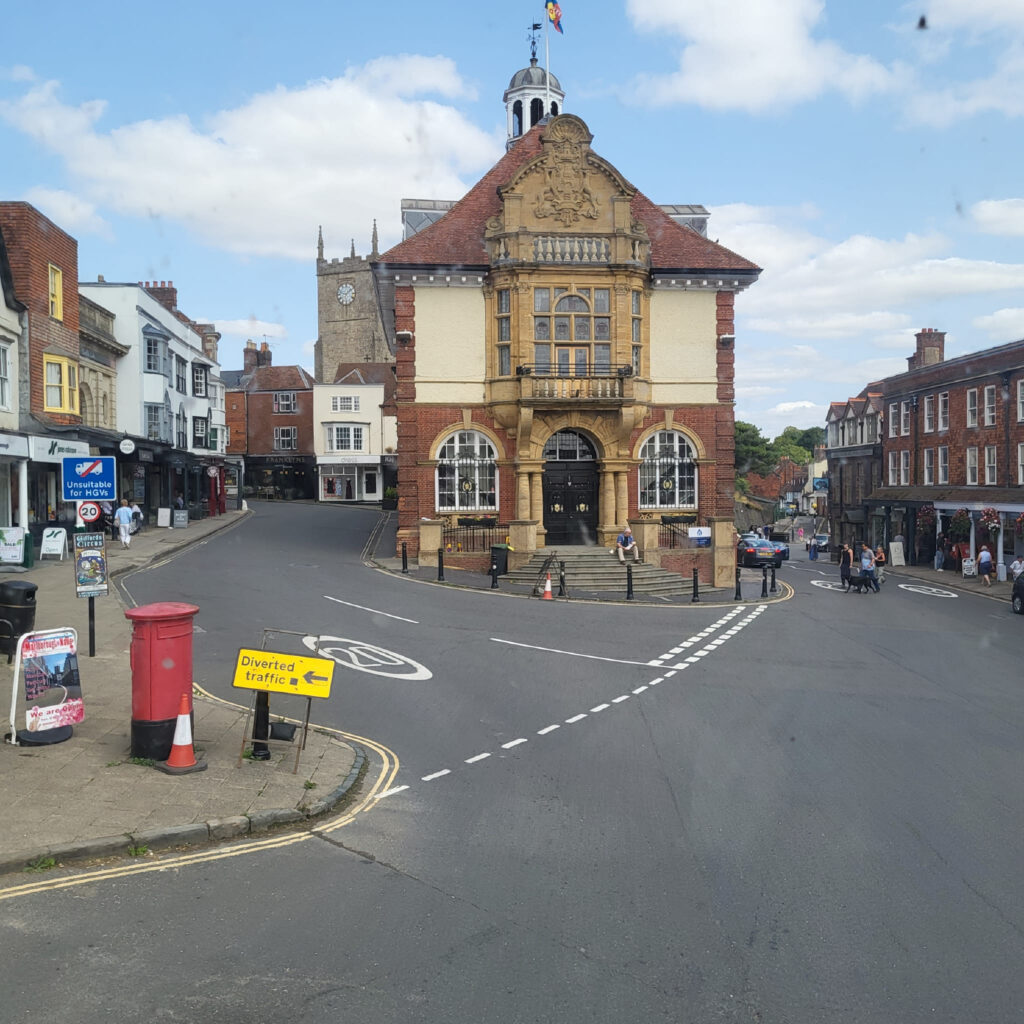
It was now 1.50 pm. The bus circled the square and wound its way out of Marlborough, continuing to Salisbury. We climbed up a hill, flew down a hill, and traversed along the A345 towards the Vale of Pewsey.
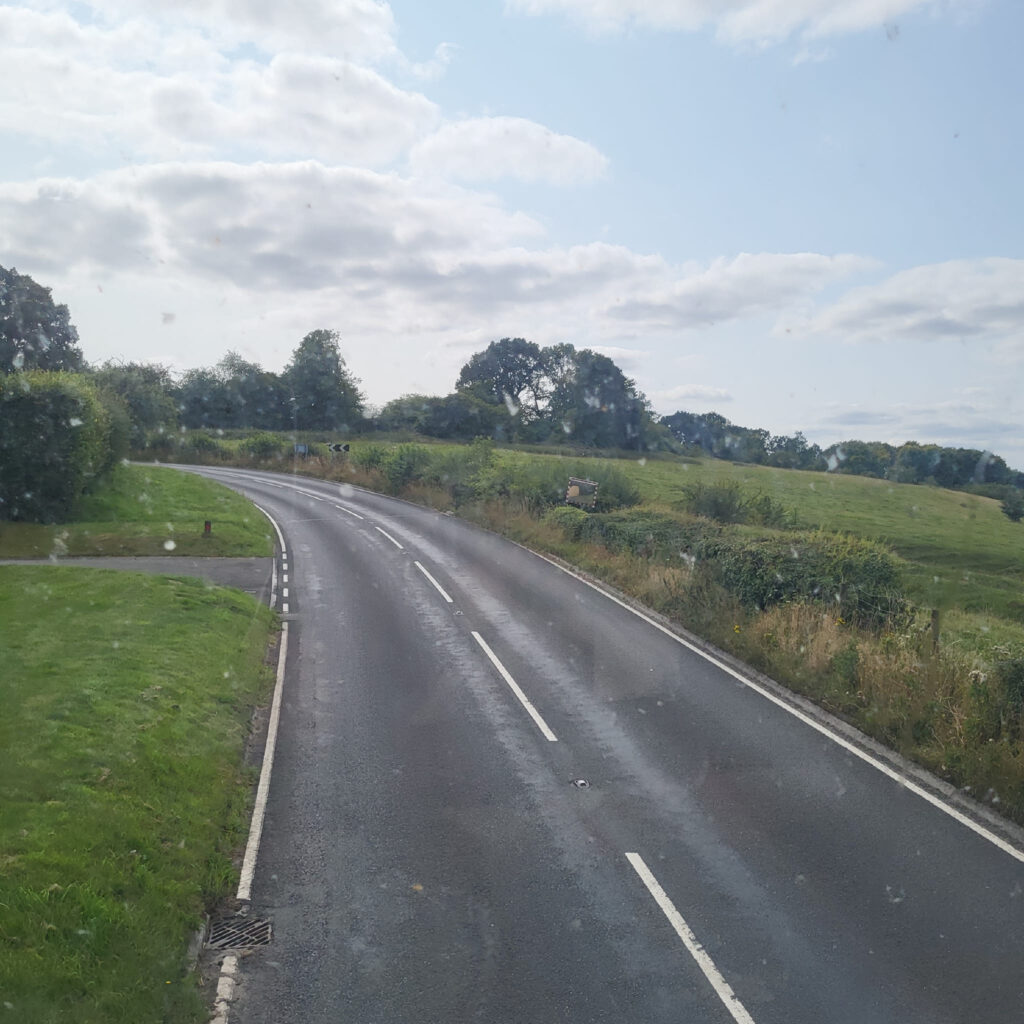
The village of Pewsey is about six miles south of Marlborough. Pewsey means Pēof’s Island, which translates as ‘well-watered land’.
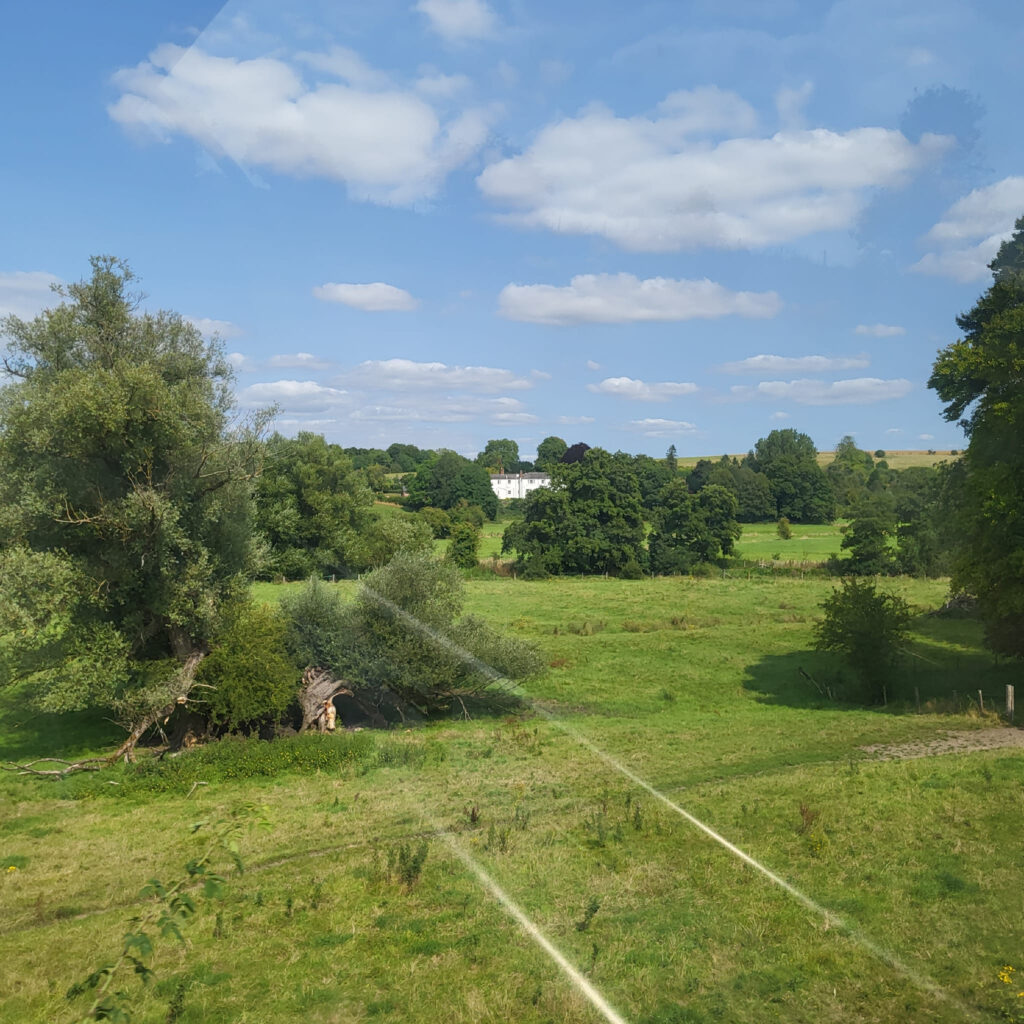
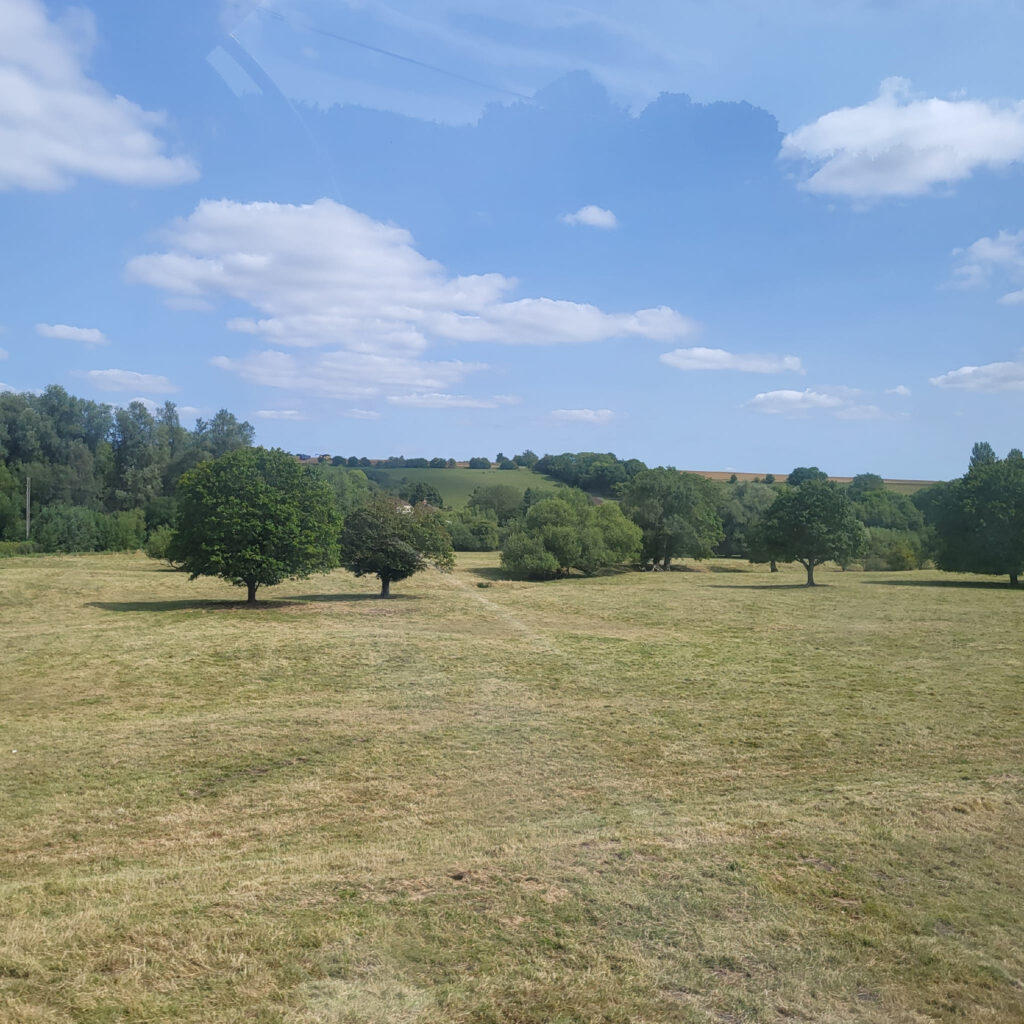
It was now 2.03 pm, and the landscape began to change into something that resembles home. We passed a series of grand-ish houses set back from the road and entered a gentle landscape of deep green, patterned with cloud-shaped trees.
Continuing on the A345, we pass through the villages of Oare and Prospect. This is a twisty road, whose bus stops are dotted precariously alongside it, in places where civilization seems scant.
Living in Northampton, I’ve become used to ‘city’ buses, which tend to appear every 15 minutes with electronic boards notifying passengers of bus ‘due times’. Here, there’s a different bus culture, one I used to be a member of. It exacts this feeling upon you that you are the only human for miles around, and you are reliant on the bus gods’ delivering you from being ‘stranded in the middle of bloody nowhere’. Once the bus arrives, you restrain yourself from smothering the driver with thank-you kisses as they have saved you from a very long walk home.
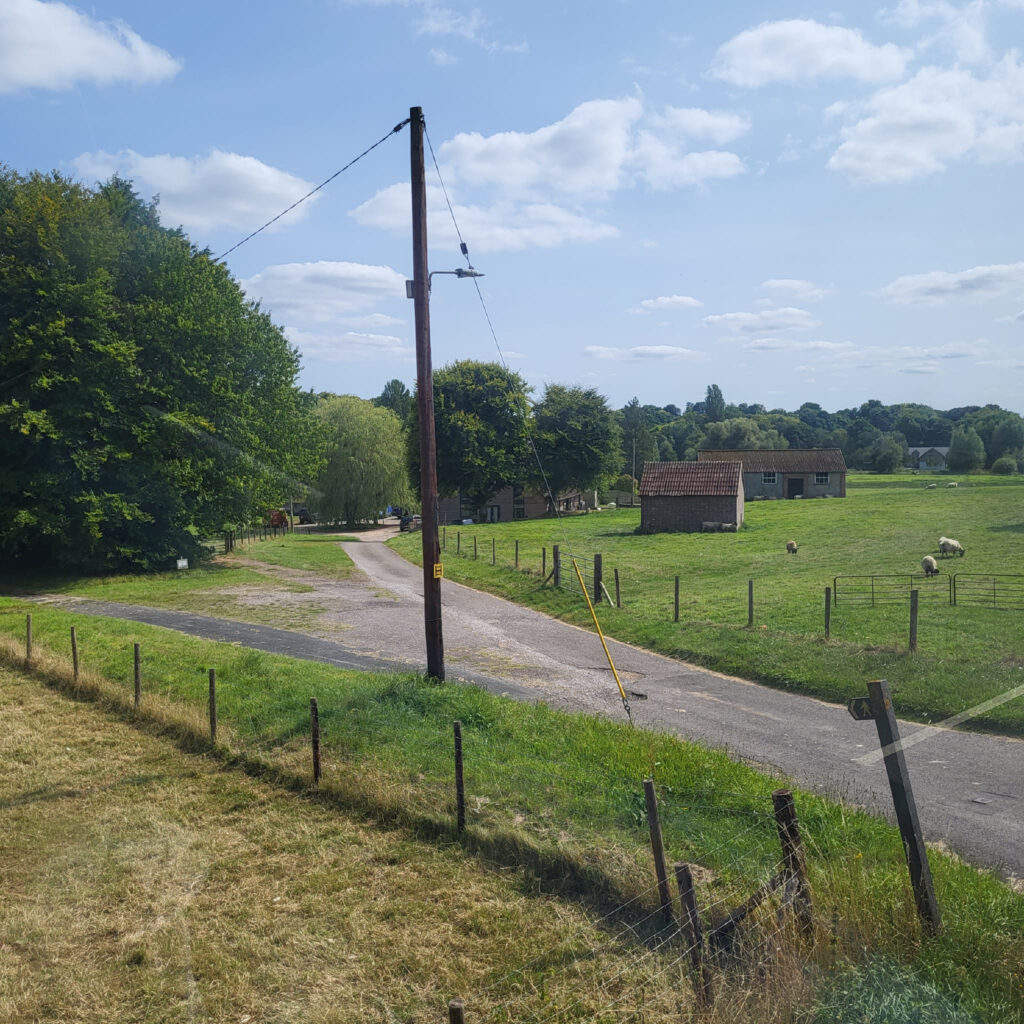
At one such stop, a young mum, her child, and a friend got on, and at the next stop, a mile away, two young lads alighted and walked towards a farm. There’s no ‘nipping into town’ here, and nights out with mates may still involve parties in local woods, similar to the antics of my younger self.
The bus continued on its way, and a row of distant sparkling white cottages came into view; soon after, as we neared a turning into a village, a glorious river appeared, complete with resident swans, and the sight of it caused a yearning for me to swim in its cool waters.
This is the River Avon, which rises in Wiltshire to the east of Devizes, and after the Vale of Pewsey, travels through Salisbury. Then onwards to the edge of the New Forest, meeting up with the River Stour before flowing into Christchurch Harbour.
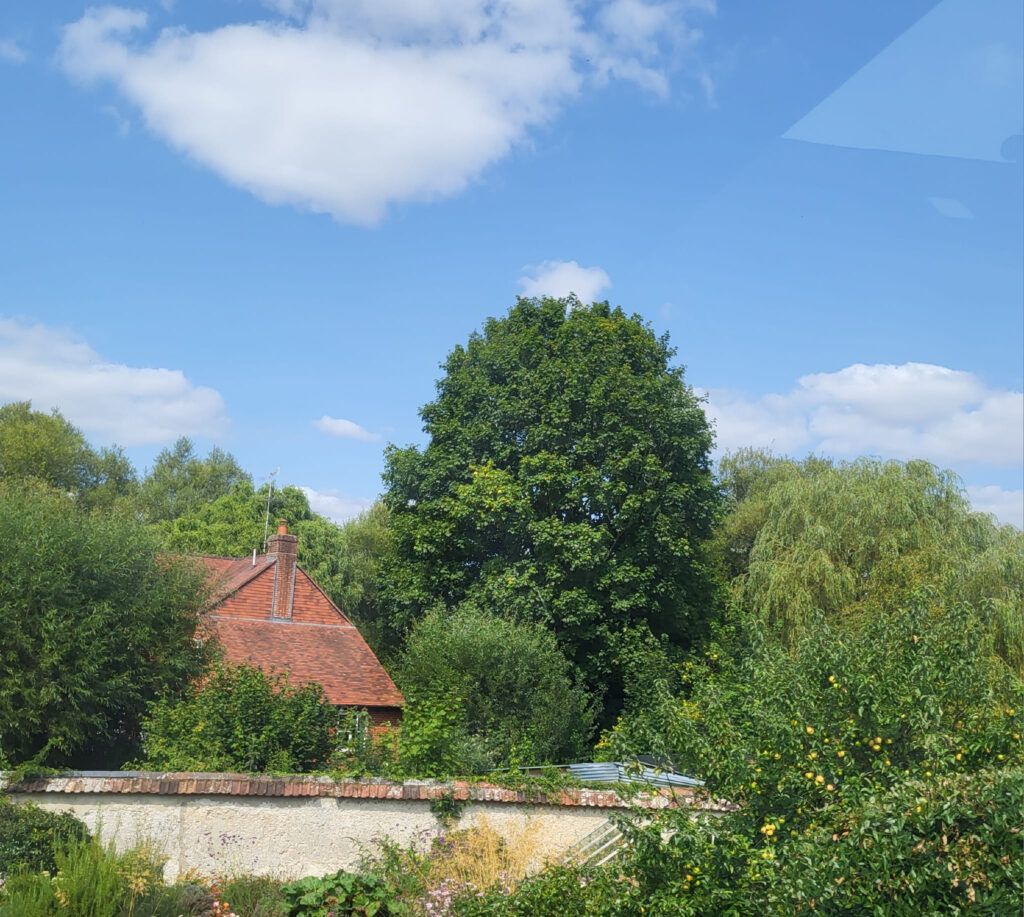
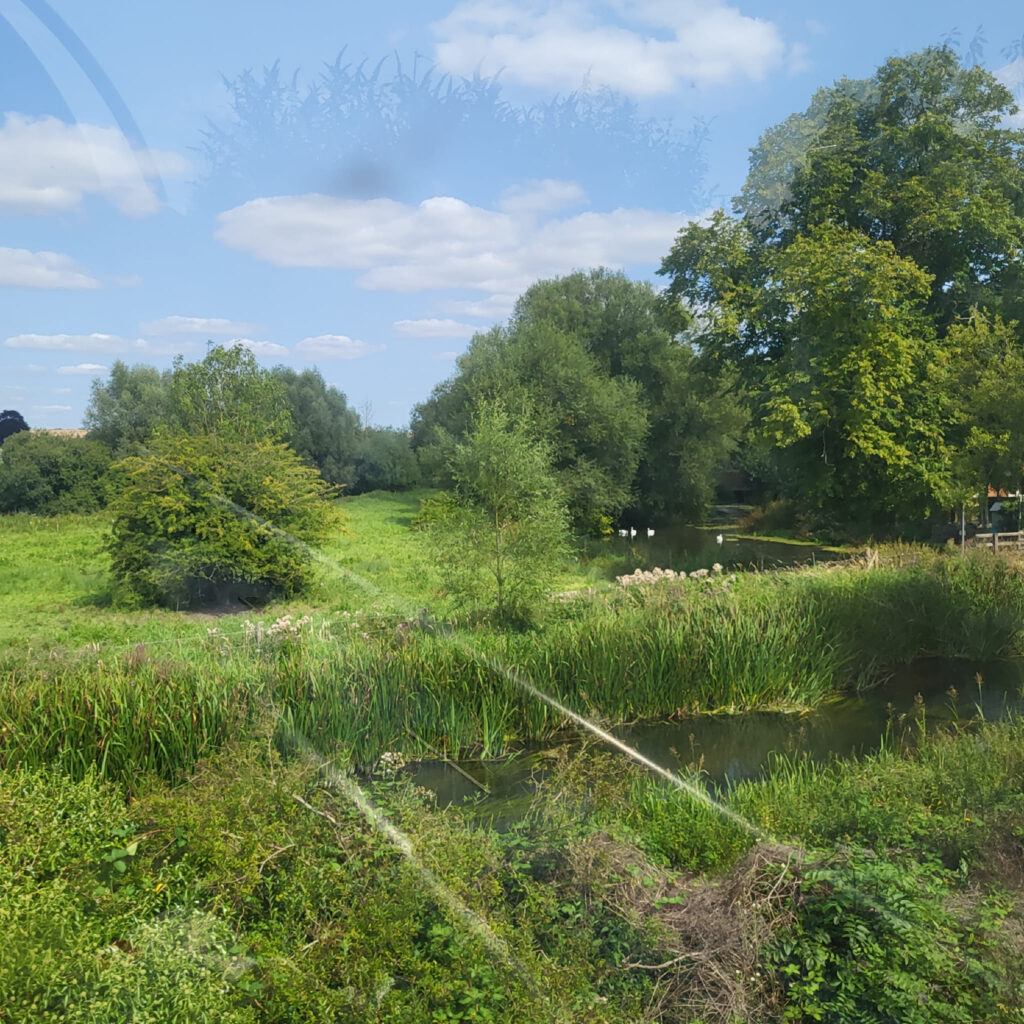
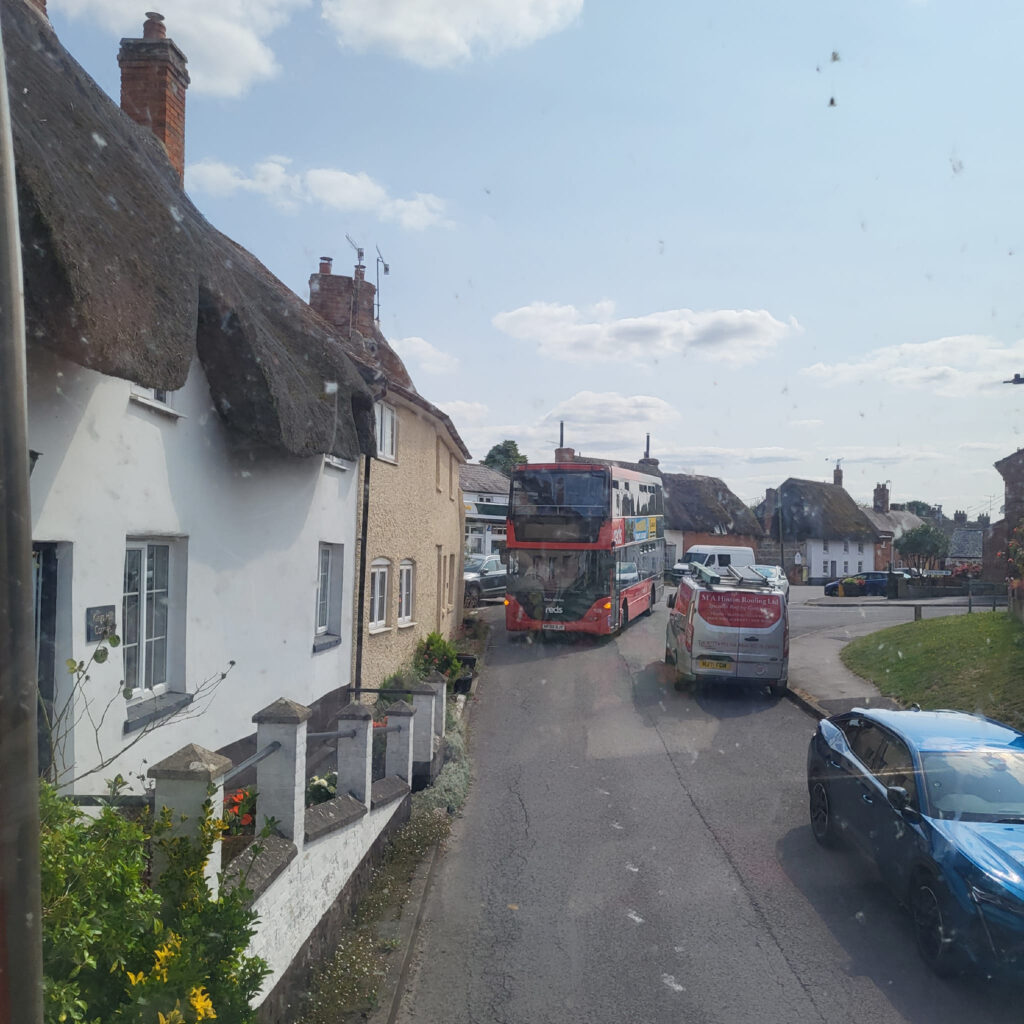
We pass another village ‘gateway’ – a pretty red-tiled cottage and once into the village centre (which was either Oare or Prospect), our X5 heading south meets the X5 heading north. They partner in a Do-si-do dance as they navigate around each other on this bendy lane not designed for 16-tonne metal objects.
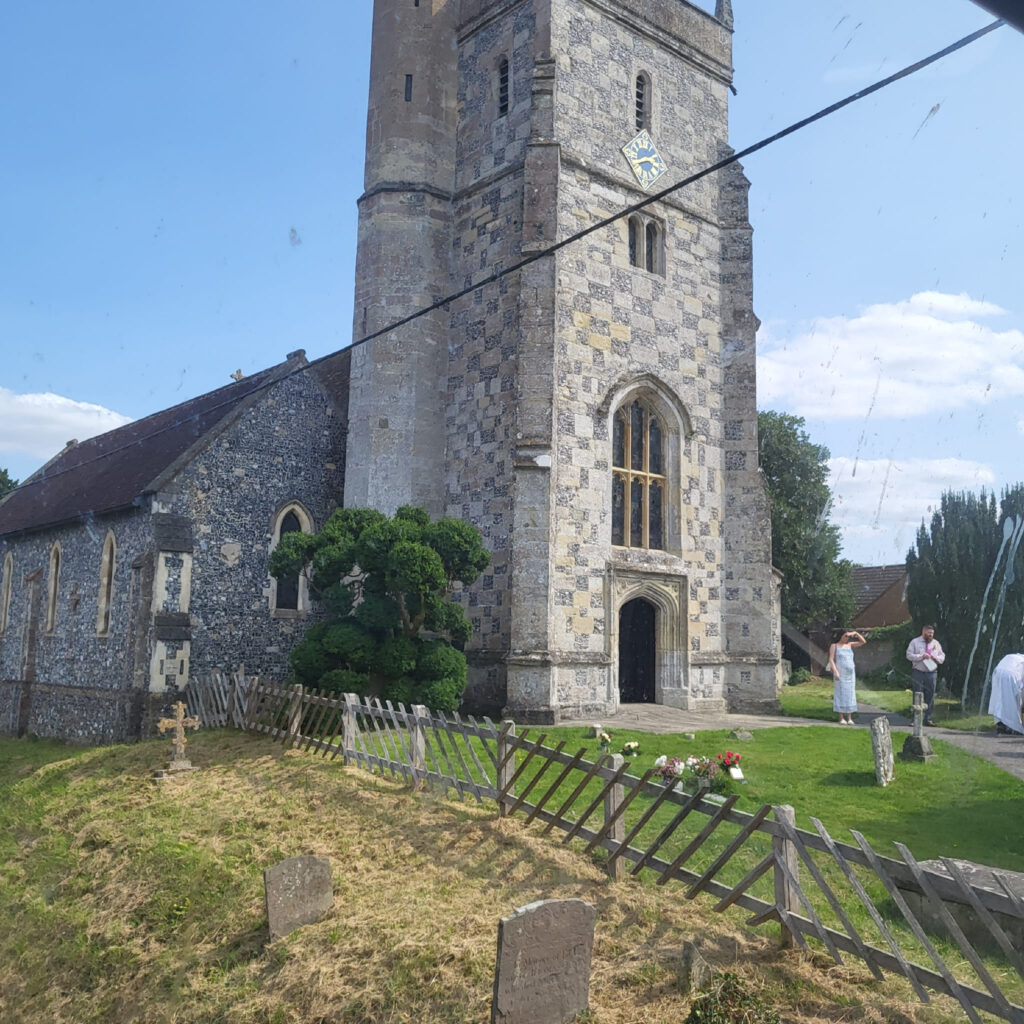
Ten minutes later and back on the A345, we pass a delightful church. There’s a bijou wedding service going on. The vicar was attending to something out of view, while two onlookers observed the proceedings. One of these might well have been the groom.
We only skirted Pewsey, but I glimpsed just enough to reminisce about a visit there, for my mother’s 70th birthday; an unforgettable experience involving narrow boating down the Kennet and Avon Canal. This being the Avon section.
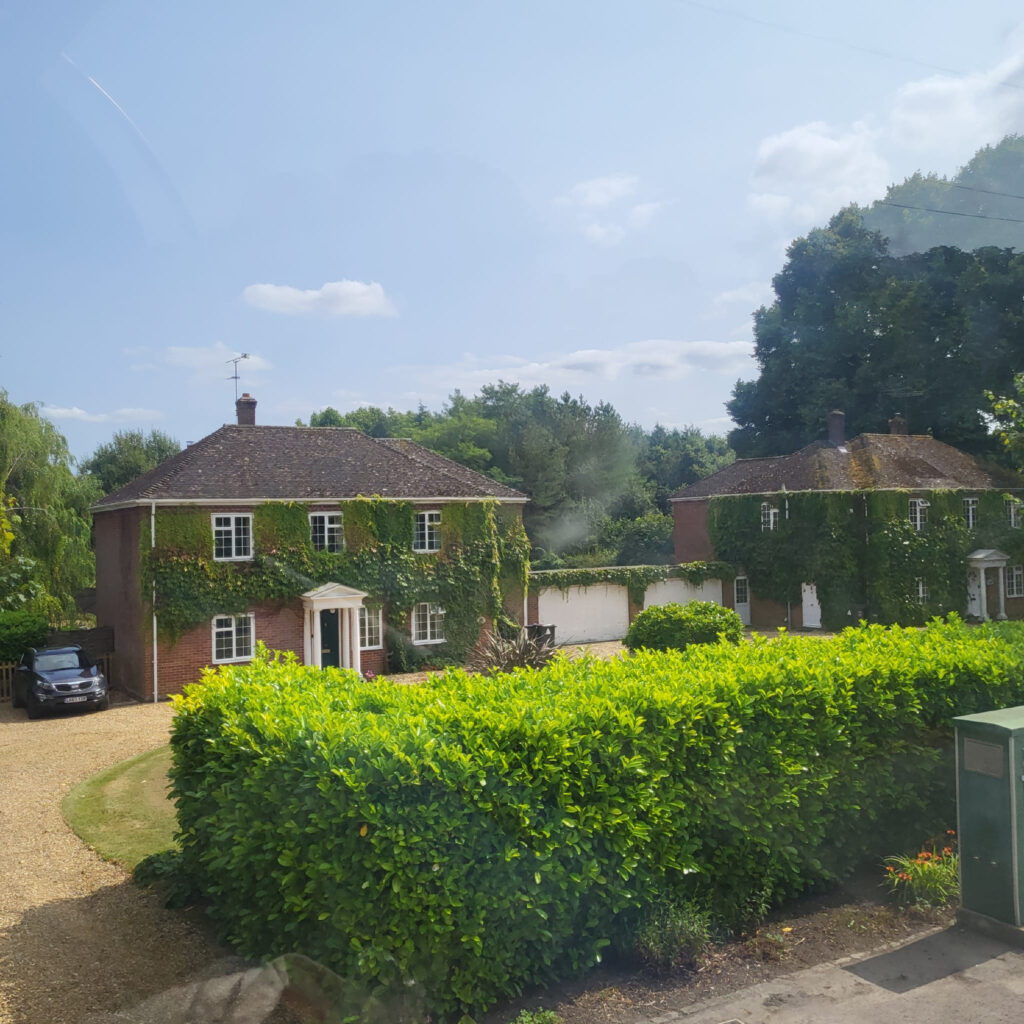
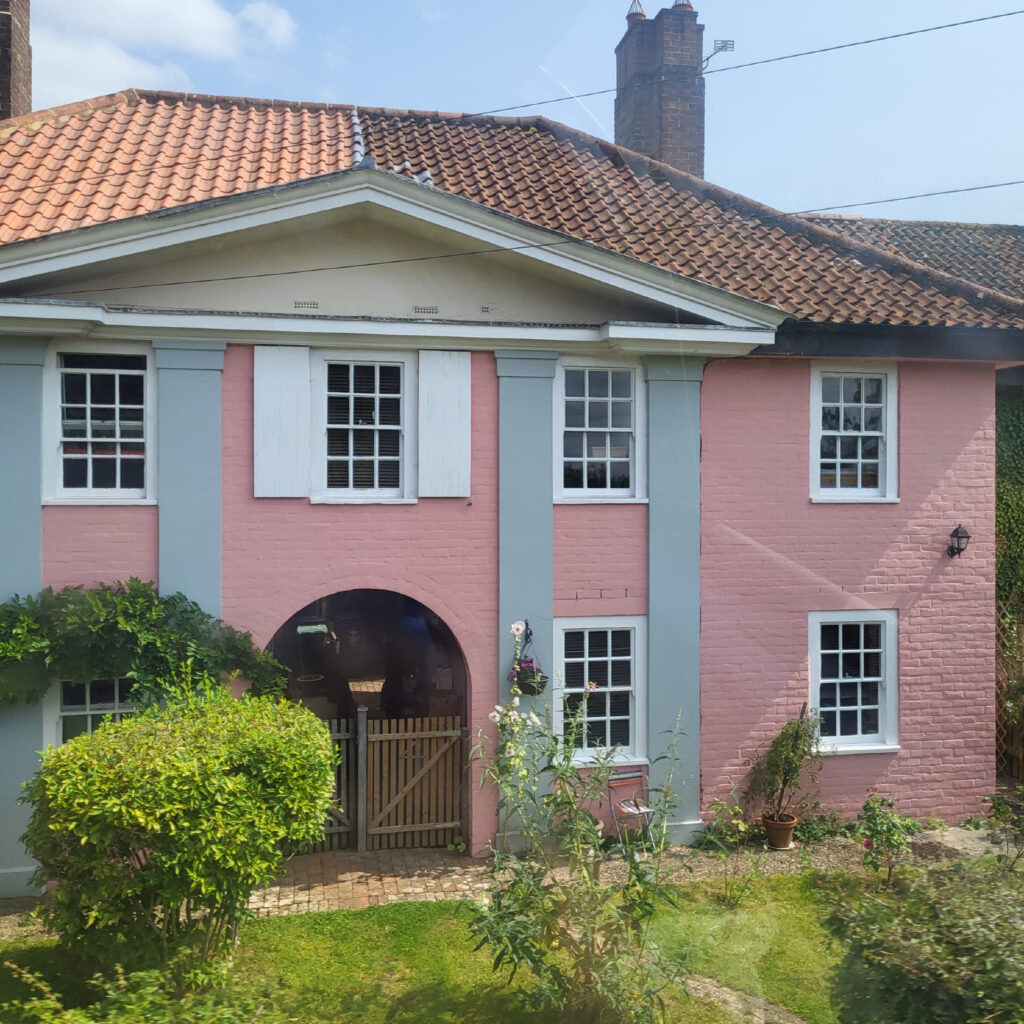
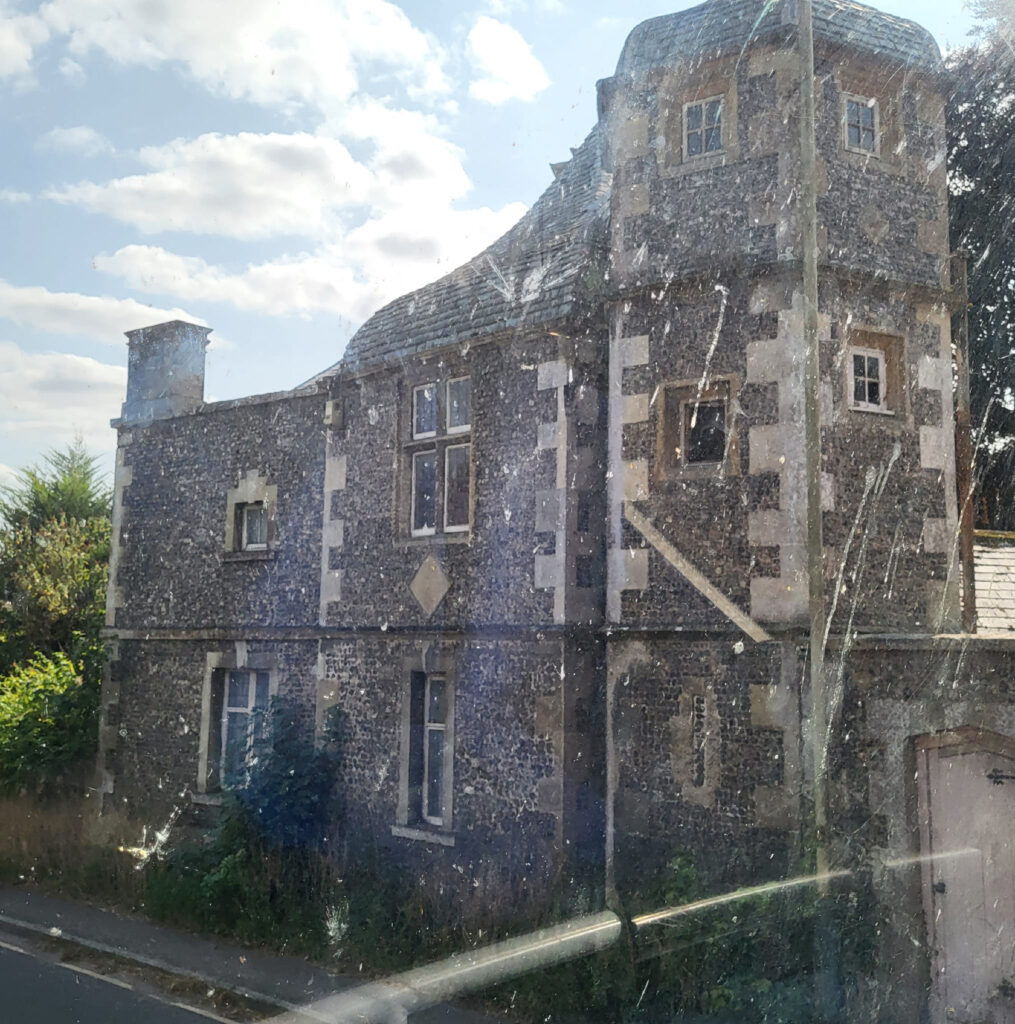
A few minutes later, we drove past a parking sign for Woodhenge, Kent House in Amesbury, and Old Sarum, an Iron Age hillfort and the ‘original’ Salisbury.
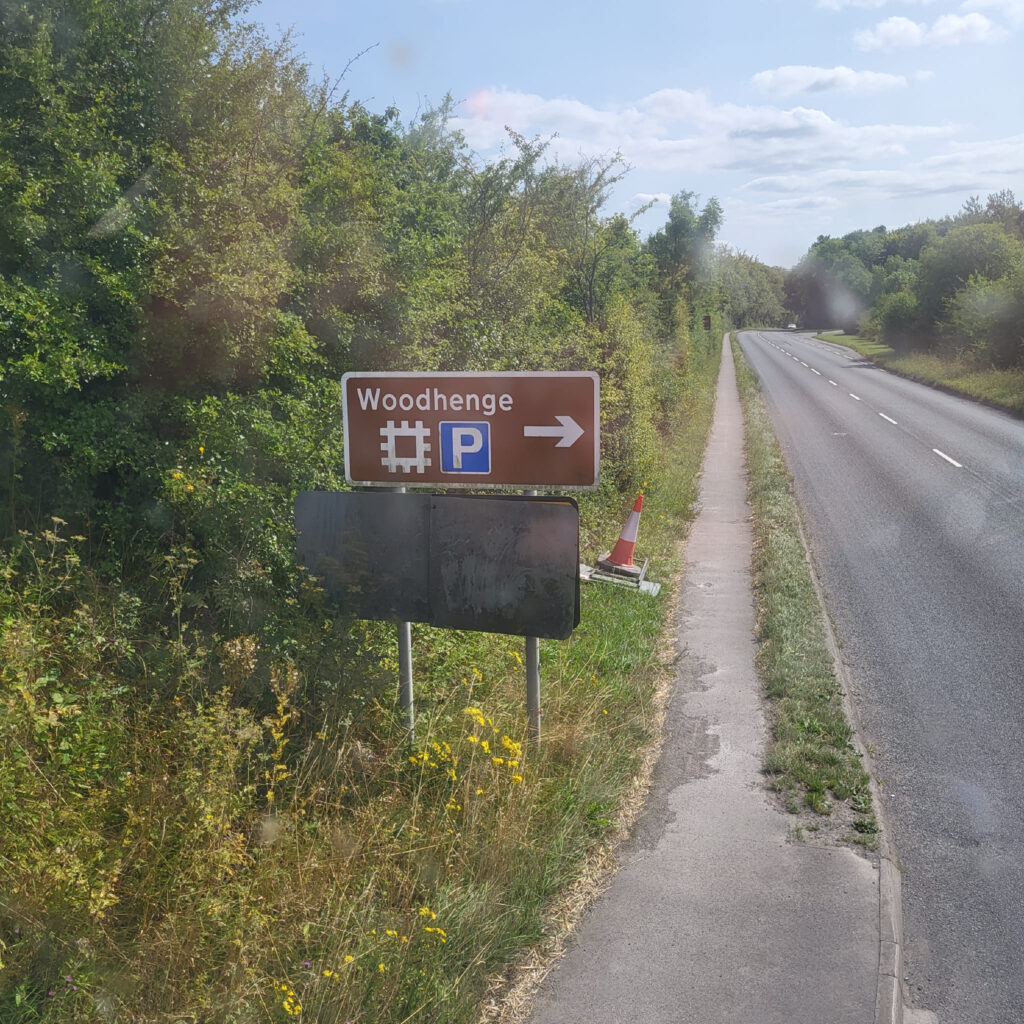
After passing the Woodhenge sign, I eagerly anticipated a sign for Stonehenge and a glimpse of the monoliths themselves, but the closest we got to this legendary structure was a brief encounter with a Stonehenge children’s ‘Playbus’ parked outside an inn on a roundabout corner.
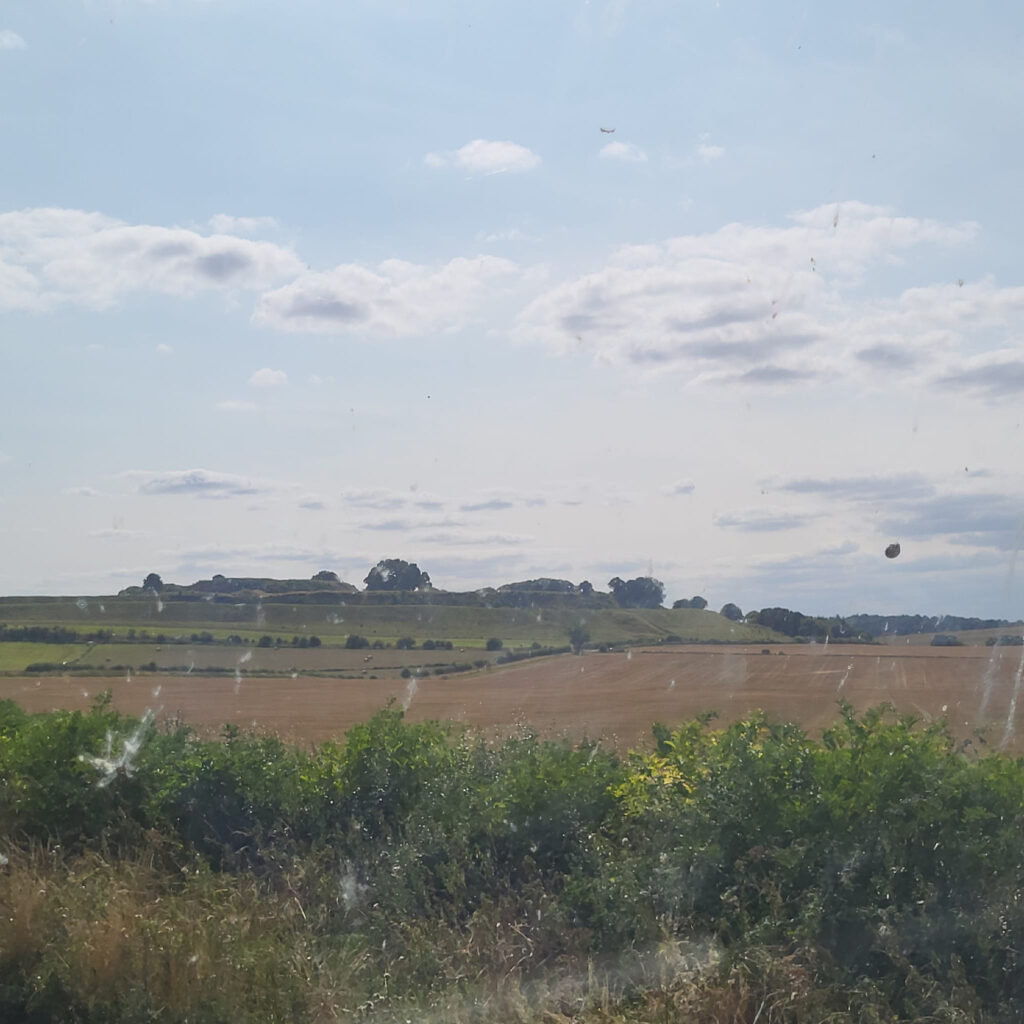
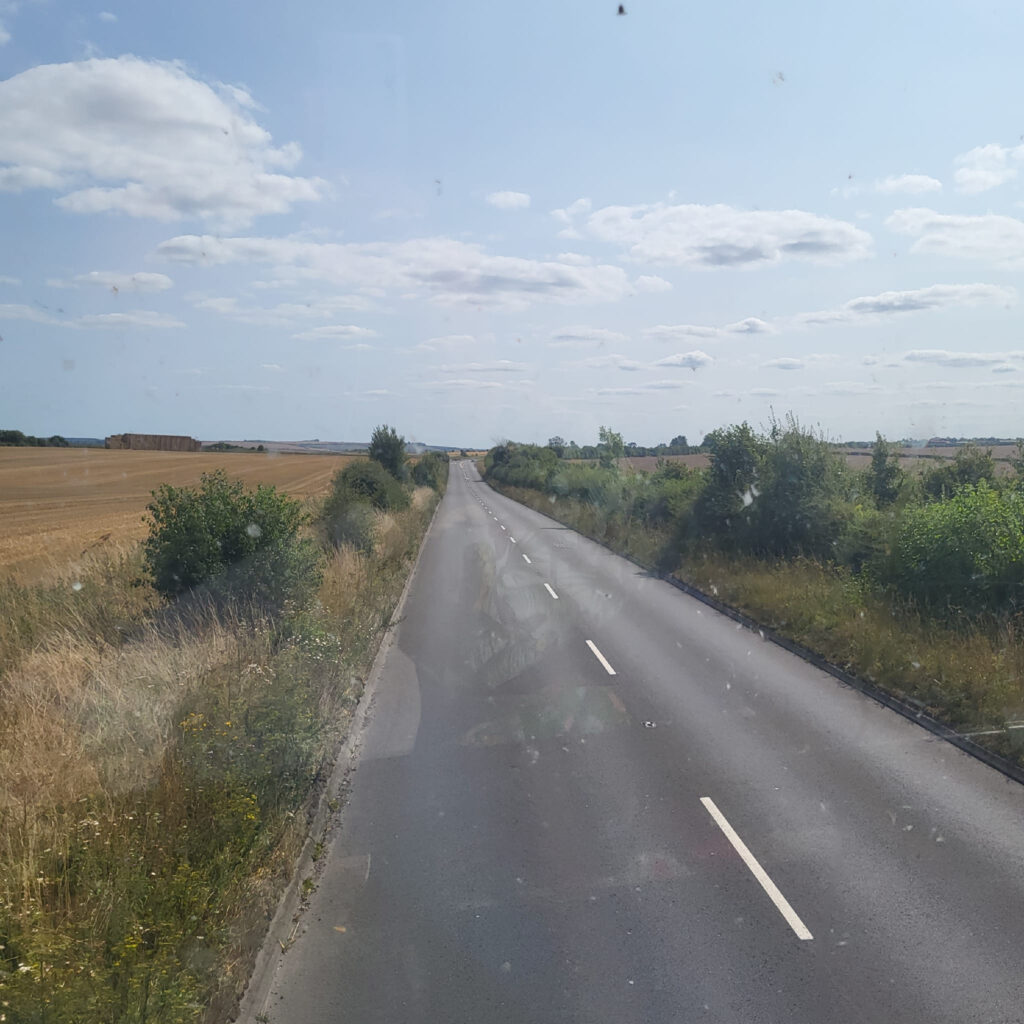
After Old Sarum, the journey into Salisbury was swift and involved spotting a biker gathering, with stalls, tents and bikes in a field next to the main road. We navigated the heavy traffic down a steep hill onto a narrow road lined with shops and suddenly, just like that, this stage of the 12-hour bus journey ended.
After stepping off the bus into Salisbury Market Square, I had a choice. Either hop onto the next bus due in ten minutes or wander around for a bit, admiring things I couldn’t afford on the market stalls. Carrying four bags (I’m a renowned bag lady) and not wanting to risk missing the bus (you never know when a bus goes AWOL), I pressed on with my journey. I made a quick phone call home to mum to inform her of my position and was met with surprise and delight at how quickly I had reached this point.
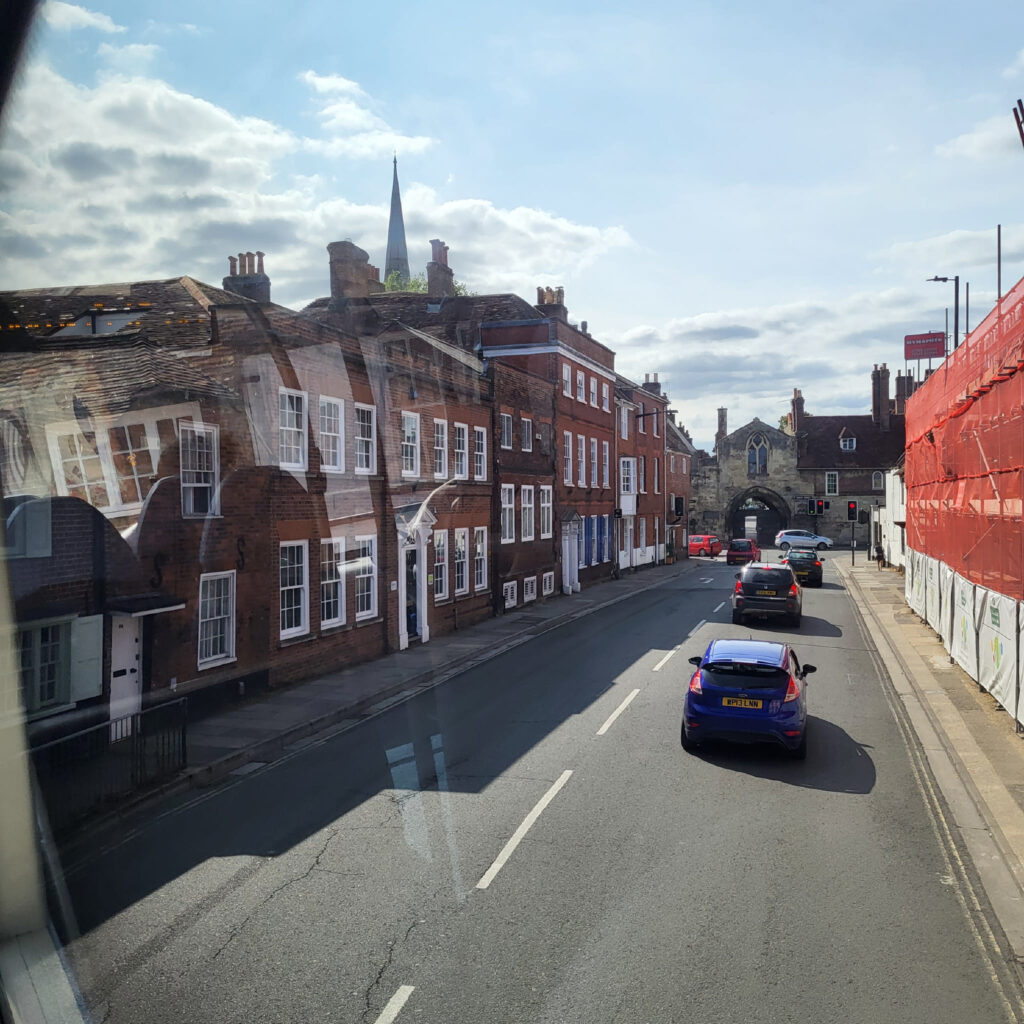
While waiting for the bus, I tried not to stare rudely as a poor lad was questioned by the police. For what, I don’t know—absolutely nothing, I suspect. After being let go, he boarded the bus with me and gazed out from the top deck until he got off at a village halfway to Bournemouth.
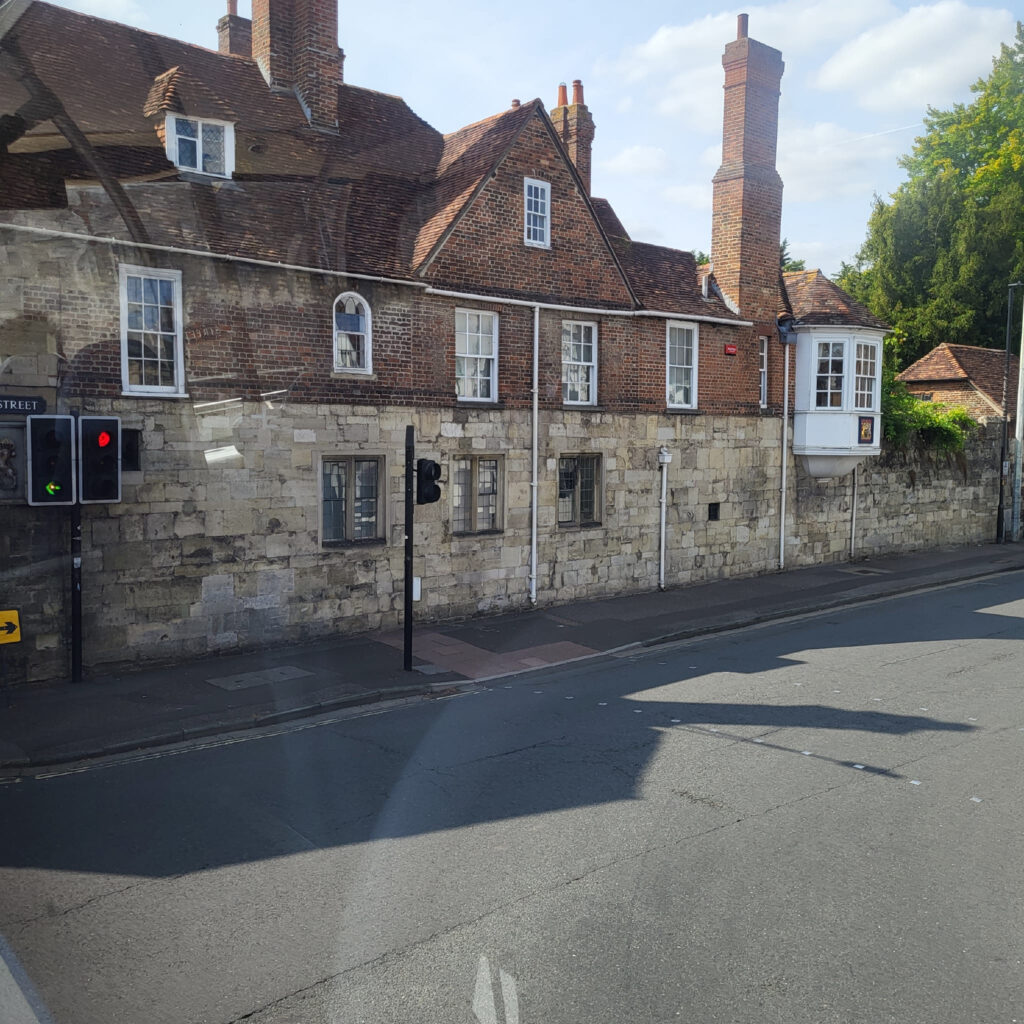
This bus is the X3 to Bournemouth, and for this leg, we stayed with the ‘Salisbury Reds’ bus company. Before leaving Salisbury, the bus ‘half-squared’ the city centre, passing restoration works and an old building displaying a pronounced chimney, a balconied window, and a coat of arms. I played a game of ‘watch out for the best view of the Cathedral from the bus’, all while thinking I really must revisit it someday.
My grandparents took me on days out there as a child, and I remember being in awe of its magnificence. Its tower and spire were built circa 1310-1330 and soar 123 metres above ground. It also boasts Britain’s largest Cathedral Close and the world’s oldest working mechanical clock, built in 1386, whose weights still have to be wound up once a day.
We are now hurtling towards Fordingbridge, the northern gateway to the New Forest. Fordingbridge itself is in Hampshire, but I have a vague memory that it was in the catchment area for either Cranborne Middle School or Queen Elizabeth’s School in Wimborne; both are in Dorset, which I attended in the early 1980s. Cranborne is 6.6 miles west of Fordingbridge, and Wimborne sits 16 miles to the south.
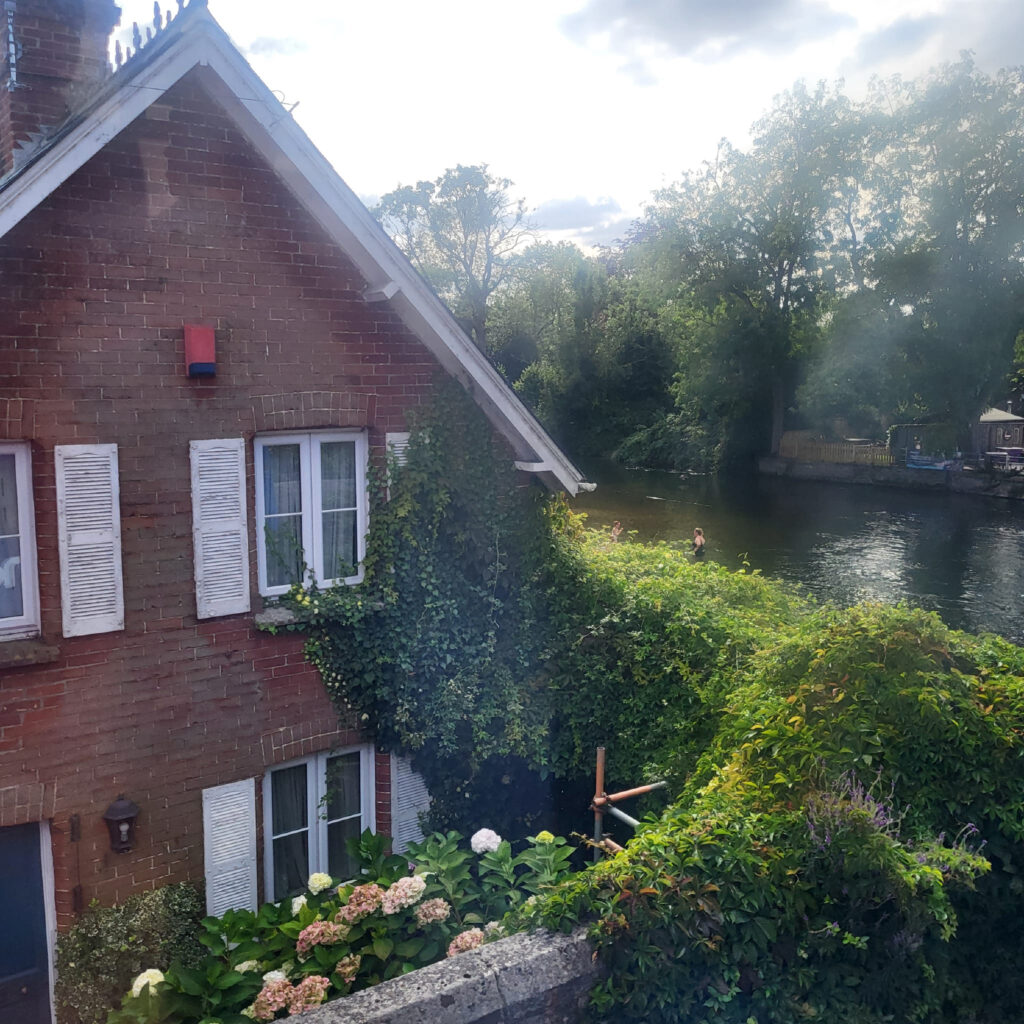
It was now 1.29 pm, and I enjoyed a rest from photo ops until I was caught off guard by the sudden emergence of a wide, glistening river and a postcard-worthy cottage nestled by its banks. A swimmer’s hot spot, and the sight of it increased my longing to immerse myself in cool wild waters. This is the southern branch of the ‘Salisbury Avon’, which we saw earlier on our A345 travels toward Salisbury.
I had this feeling, and I’m not sure which word fits best here, of sensing a time and trace of my existence within a place. Although it’s a place I might never have directly set foot in, its presence carries the distinct aura of places I once knew. I think this sensation only happens when one doesn’t often return in adulthood to the places that you frequented as a child; a personal mythology of the landscape begins to develop. It’s akin to psychogeography, though not strictly bound to it. Nor is it quite ‘Hiraeth’, a Welsh word describing a ‘bittersweet longing for a person, place or time ‘- but something closely adjacent to it.
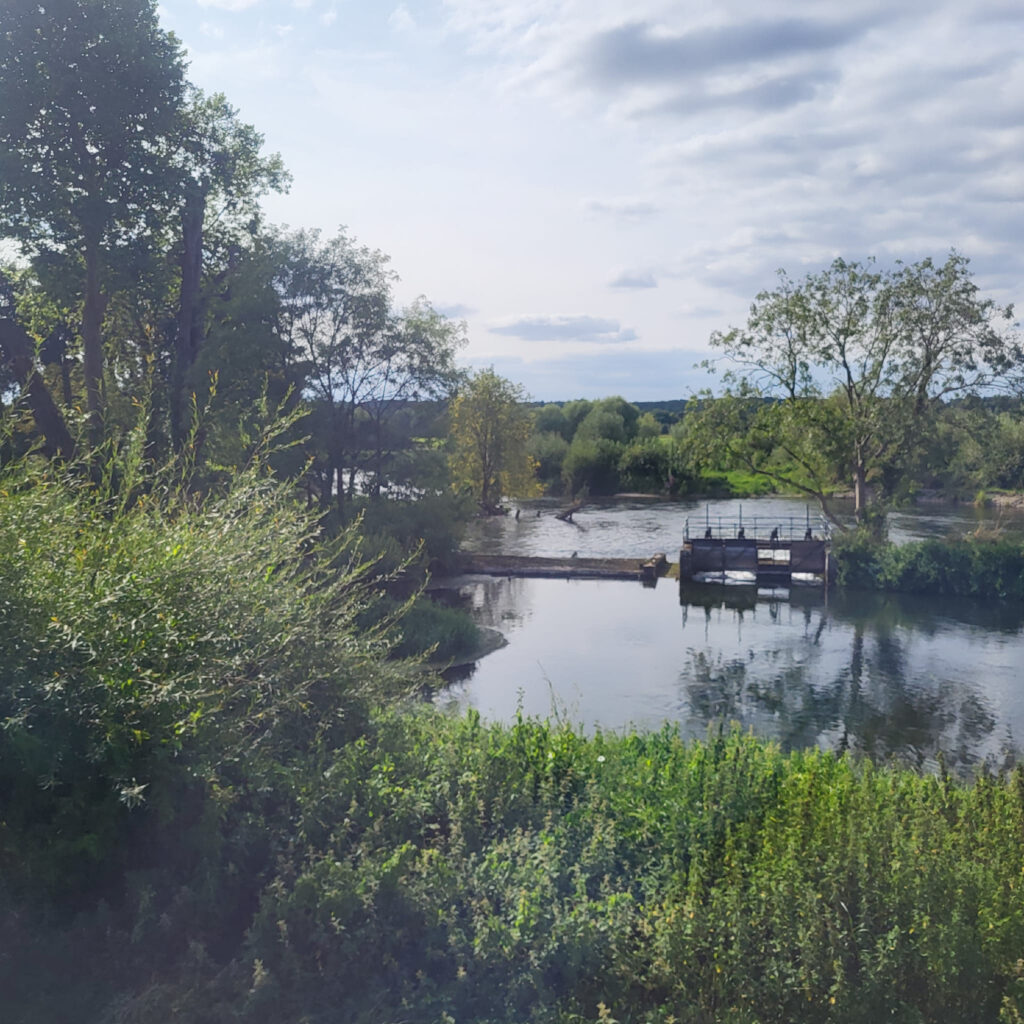
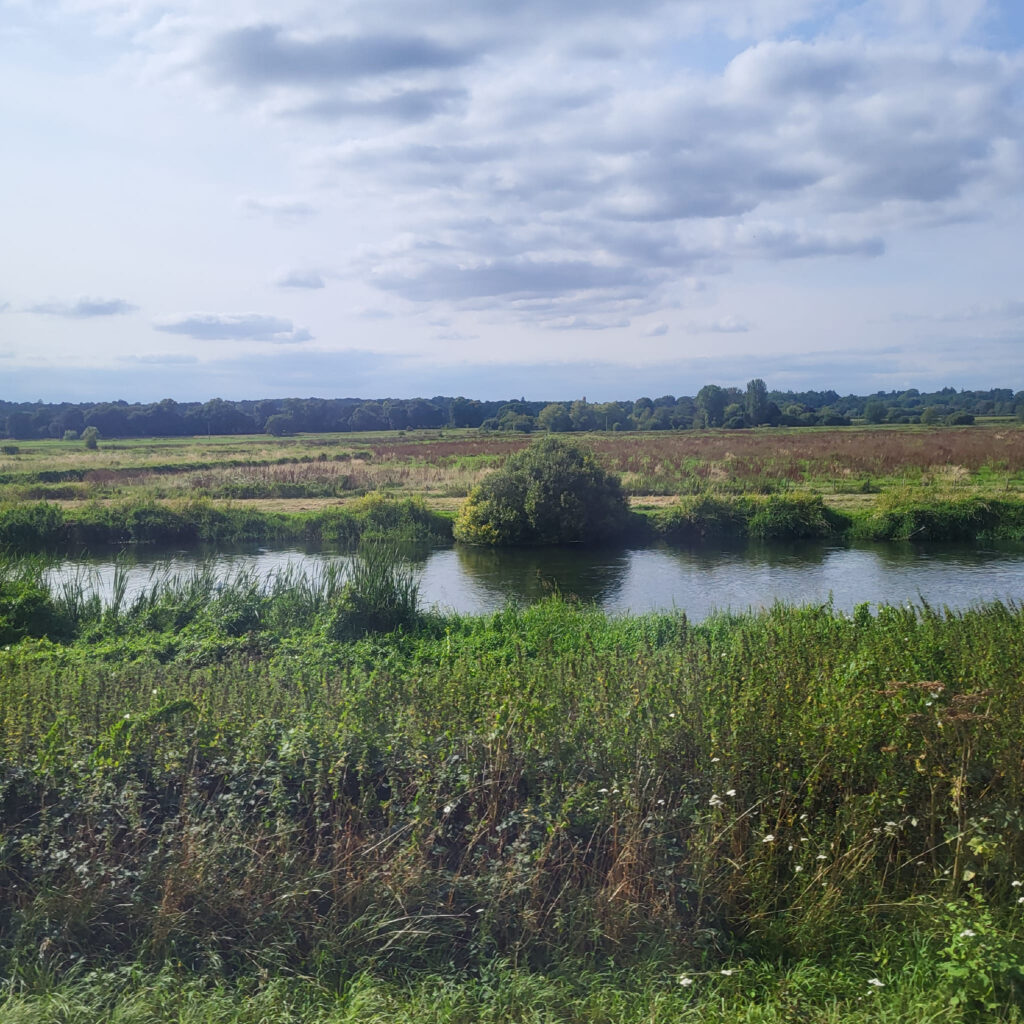
The sun was pouring into the bus, gently baking us inside. A woman in a fuchsia pink top fanned herself with an azure fan that perfectly matched the bus’s interior. We were now approaching a roundabout, an official signal that we had entered the outer reaches, as it signposted exits for Poole and Dorchester to the west and Bournemouth to the south.
From Salisbury, we’ve been travelling on the A338 (notorious for its number of RTAs), and on this narrow stretch, it’s single-lane only, following the River Avon’s curves.
After a brief sojourn to Ringwood’s Furlong Car Park, bordered by bus and coach stops, we continue our journey to Bournemouth on the A338 and pass through heathland, which forms part of the largest settlement of Dorset’s heaths. This tract is another signal that I’m heading home. I only ever see this area when on a bus or coach; when travelling by car, the journey would have moved onto the A31 towards Wimborne and Poole. But here, one has the pleasure of absorbing the subtleties of colour present within the heathland: purple heathers, silver birches and deep blue-green pine trees.
We soon reach the outer edge of Bournemouth, and I’m looking down from a flyover. I catch sight of a house which I last visited for a college friend’s birthday party, circa 1988. Then onwards onto Holdenhurst Road and into Bournemouth Town Centre. While sitting in traffic, I watched daytime visitors at a local park, enjoying the sunshine: an elderly gentleman chilling in his wheelchair, friends sharing a few beers, and a young mum attending to her child hidden inside a pushchair.
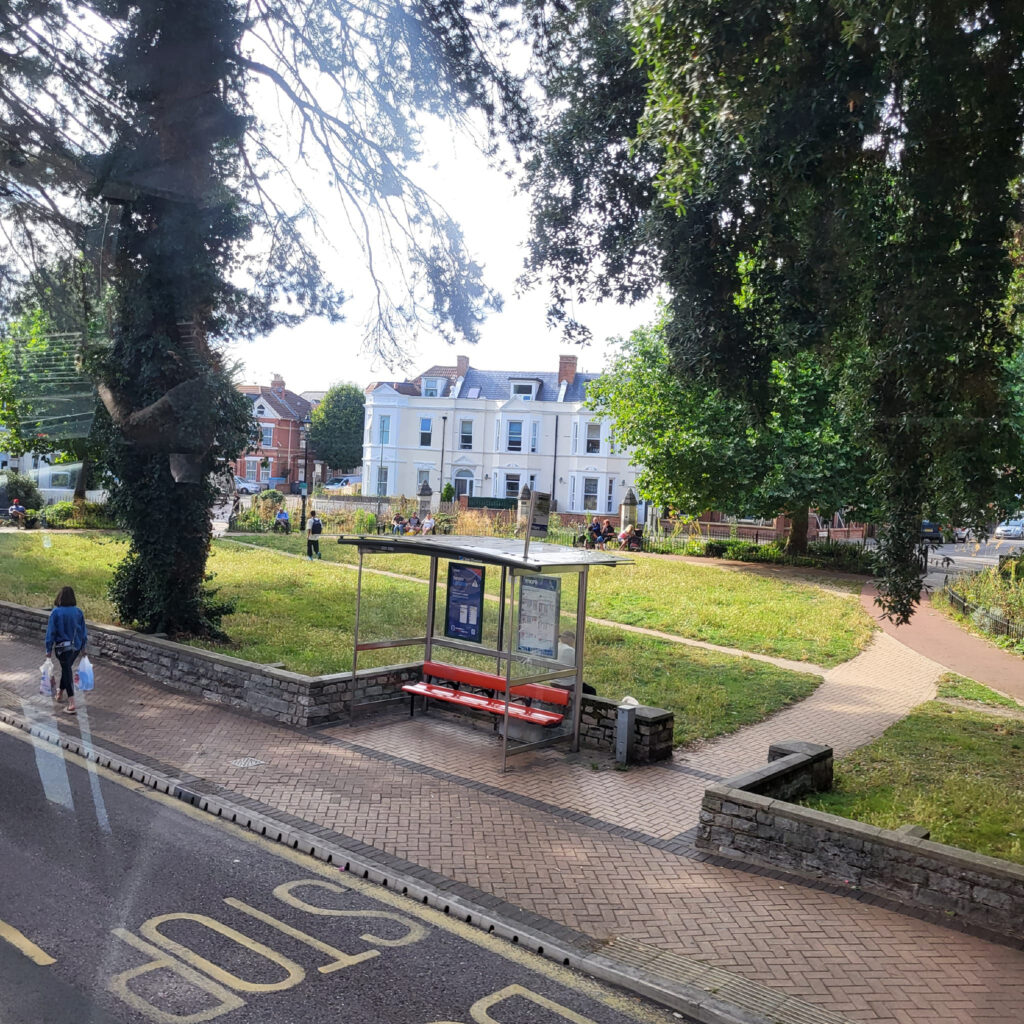
I was getting my bags ready, thinking we were heading into Bournemouth Bus Station, where (I thought) I’d catch my next bus. But we continued, crossed a roundabout and headed for the town centre. We passed the door to a gay nightclub I used to frequent in 1989, where I’d dance with the guys in their tight Day-Glo cycling shorts to rave music.
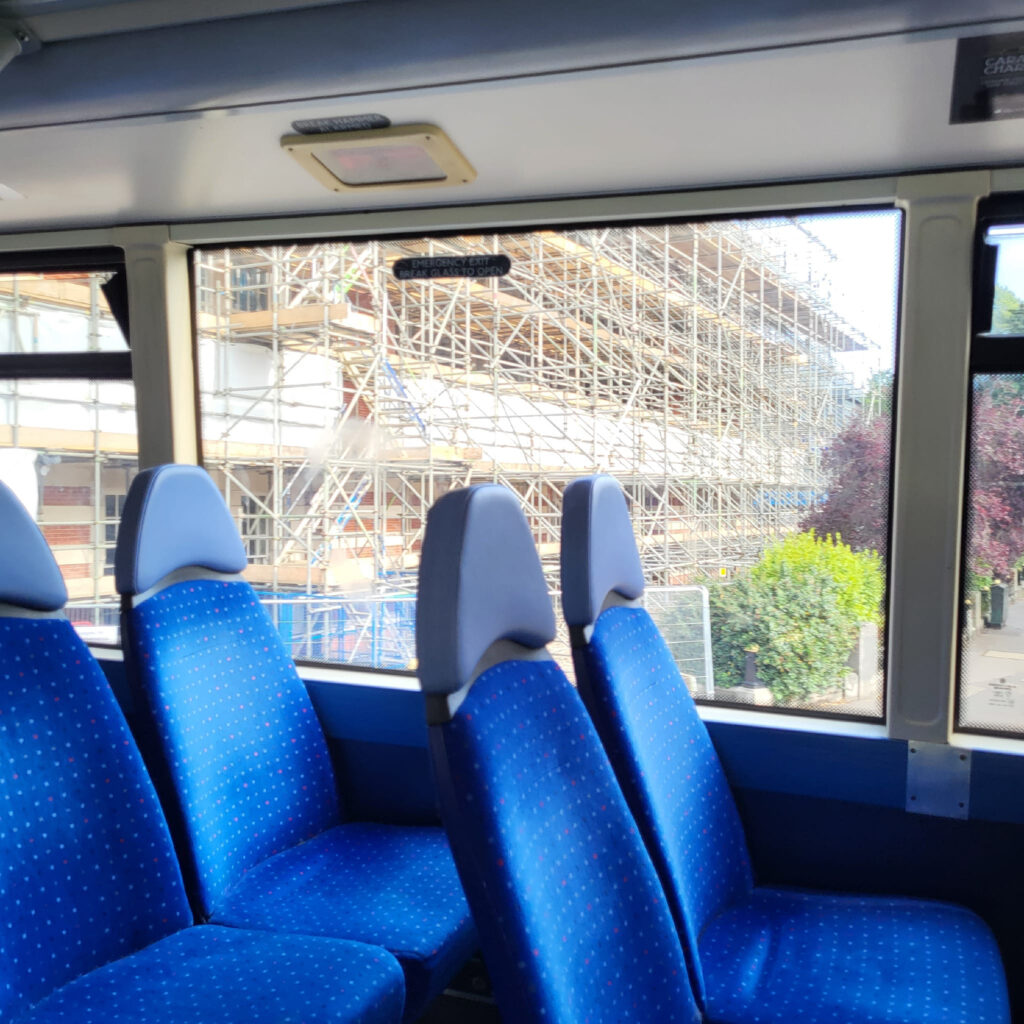
And then there it was: the setting that housed the story of how I came to be. The Lansdowne – also known, in the late 1960s, as the Bournemouth and Poole College of Art and Design. This is where my parents met. I would attend the same art college years later, but only after it had moved to the Shelley Park campus in Boscombe. Yet at The Lansdowne, when I was around my parents’ age, I used to rent vinyl records. After the art college relocated, part of the building became the Bournemouth Record Library (which also housed books). Hours were spent rummaging through wooden racks smelling of polish, browsing musical gems kept safely within protective plastic sleeves. I remember rows upon rows of these long racks, with floating dust glistening in the sun’s rays streaming through The Lansdowne’s tall, elegant windows.
Thirty-five years later, The Lansdowne is a Grade II listed building surrounded by scaffolding, as it’s being redeveloped and preserved as an educational institution for future students, this time part of Bournemouth and Poole College. The art college had become ‘The Arts Institute at Bournemouth ‘ in 1998 (later Arts University Bournemouth) after moving to Wallisdown in 1984.
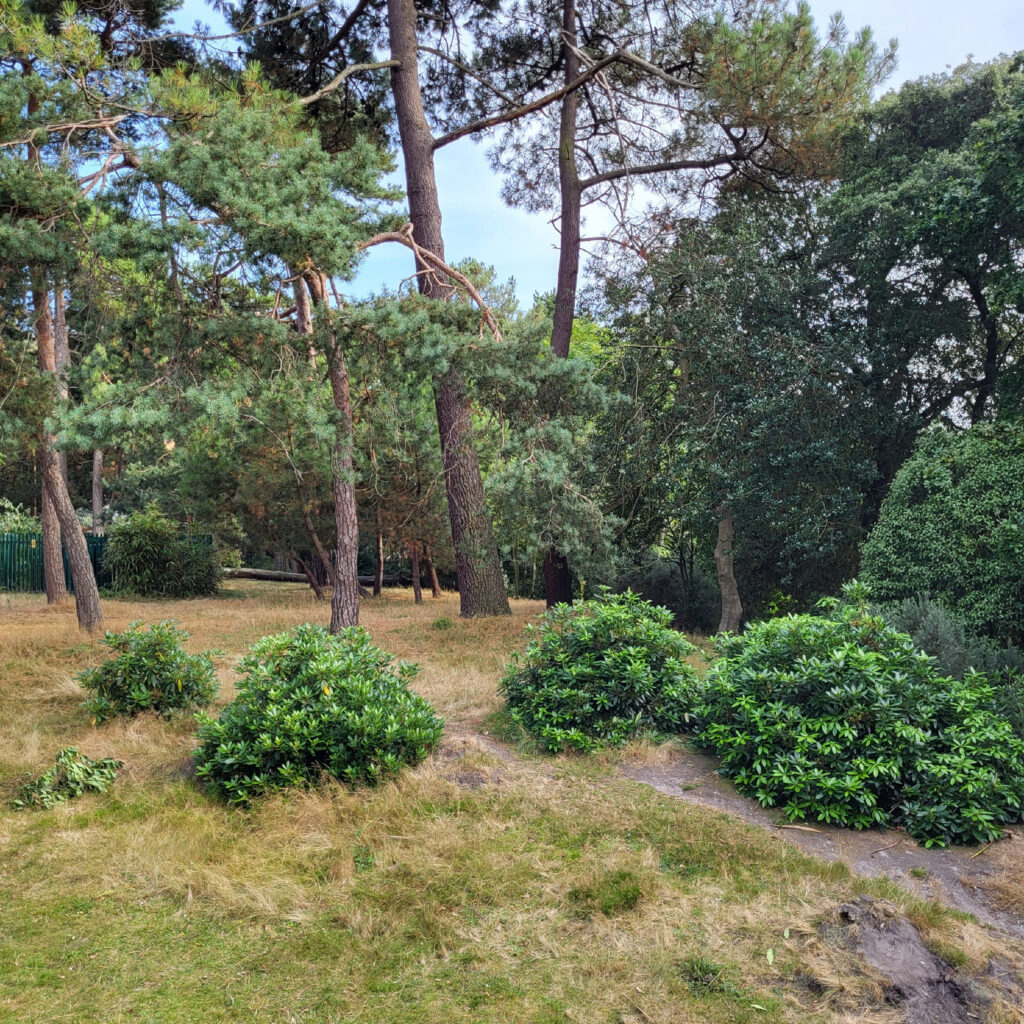
And then, there it is. We are on top of a hill on Bath Road and for a brief moment, as we pass the Royal Bath Hotel, we can see the sea!
We abruptly turn onto Westover Road, adjacent to Lower Gardens, where the X3 pulls up at its final destination. My next bus, the No. 50 ‘Purbeck Breezer’, departs from a few stops further down, leaving me just enough time to wander partway into Lower Gardens to see if the aviary is still there. Not that I’m a fan of birds in cages- they should be flying about and enjoying themselves in trees!
I walk up through the art market, emerge back onto Westover Road, and wait for the No. 50. We are now traveling with the award-winning ‘morebus’ company, formerly known as Wilts & Dorset.
It arrives. YES! It’s an OPEN-TOP!
I board with an excitement unchanged since childhood. This bus service is my all-time favourite—you’ll soon find out why. I head straight for the back seat, and off we go! The open-deck community on top of this bus always delightedly shares in its offerings of rain, wind, low overhanging trees, wet bottoms, and bus drivers demonstrating their penchant for being ‘racing bus’ drivers.
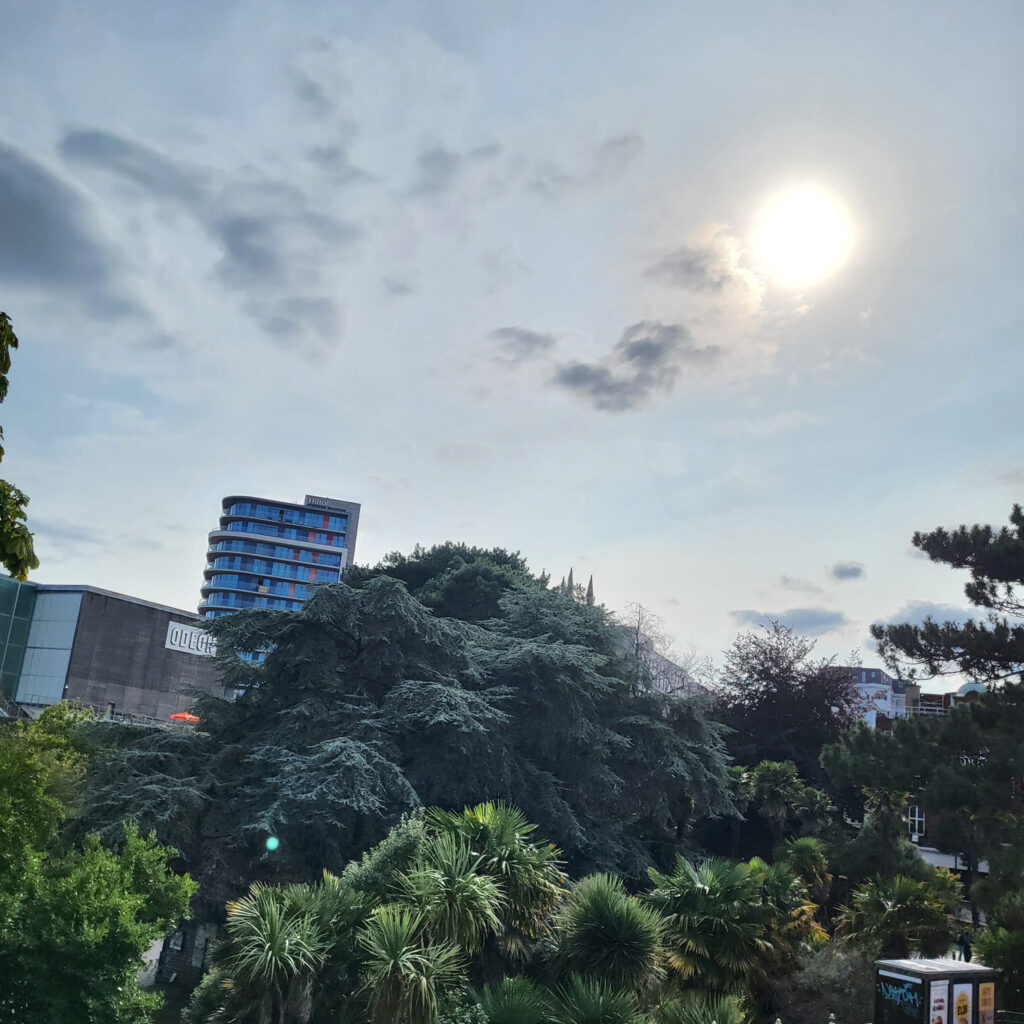
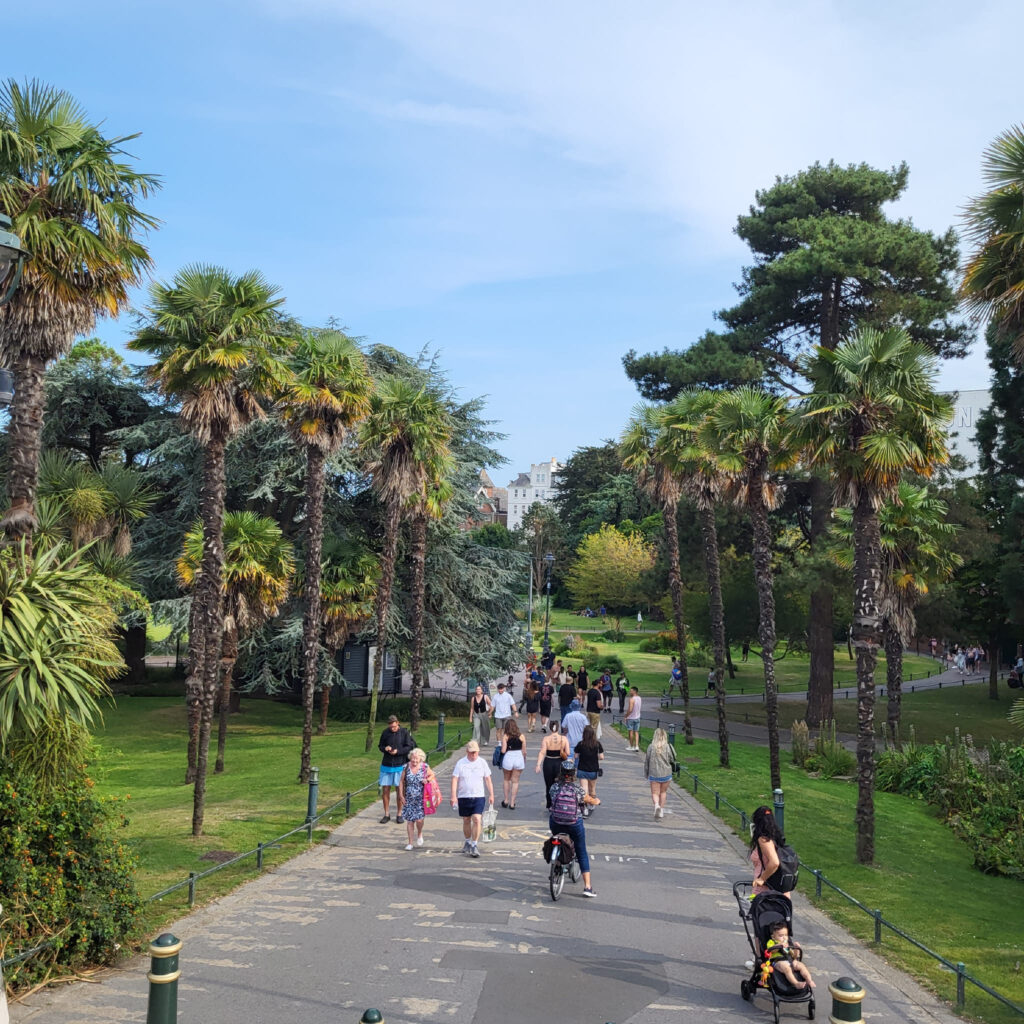
With the sun shining, we follow the bend around Bournemouth Square.
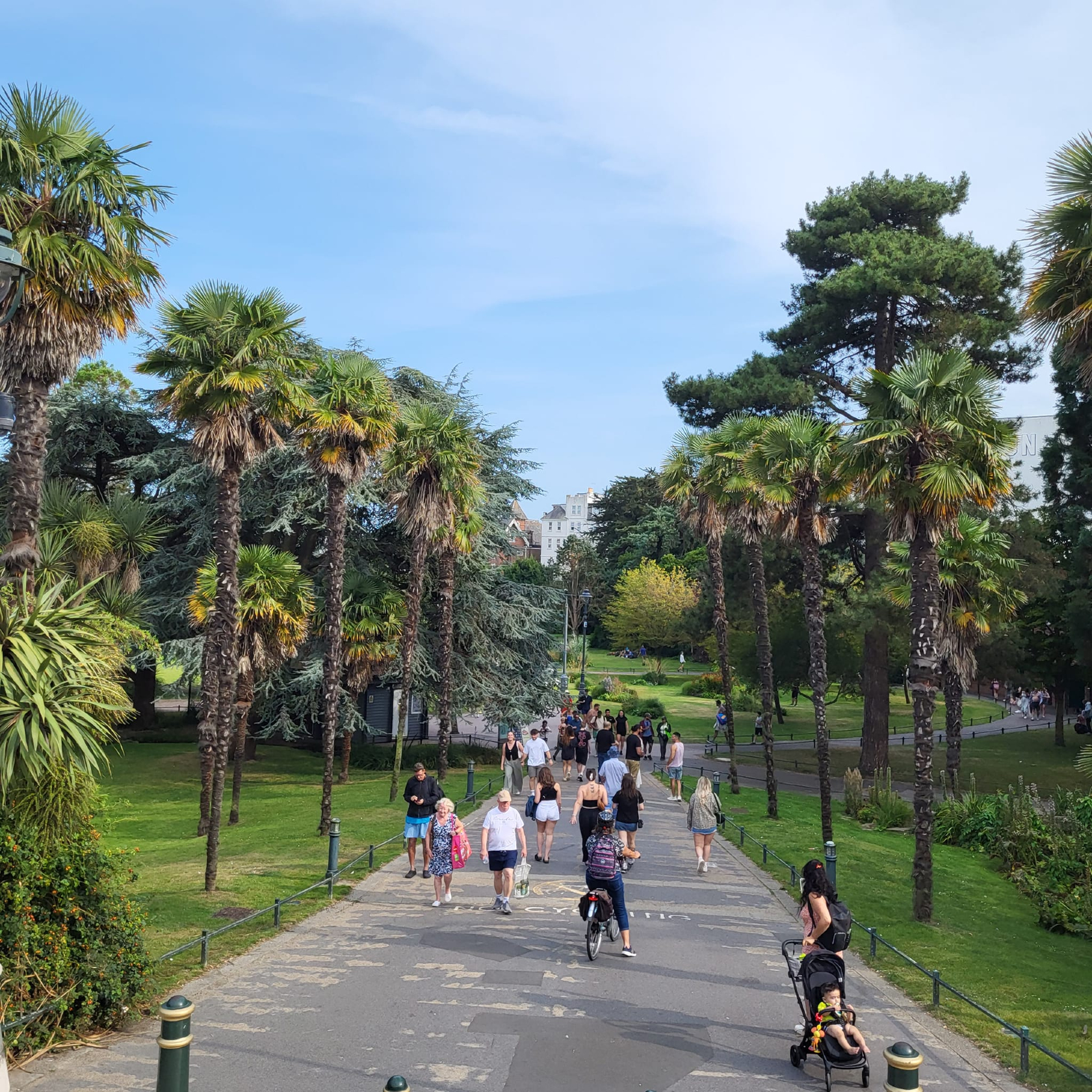
Looking to my left, I see the central path leading through Lower Gardens toward the beach. To my right is Bournemouth Square itself, which used to be a bustling roundabout. Today, it offers a pedestrianised, piazza-style experience for locals and visitors alike. Just to the left of two palm trees sits the iconic old Debenhams building—now reimagined as a fancy destination store called Bobby’s. When originally built in 1915, it opened as Bobby & Co, before rebranding to Debenhams in 1972. Its current incarnation merges cultural tourism with retail to create a ‘unique and faithfully restored venue,’ as their advertising describes.
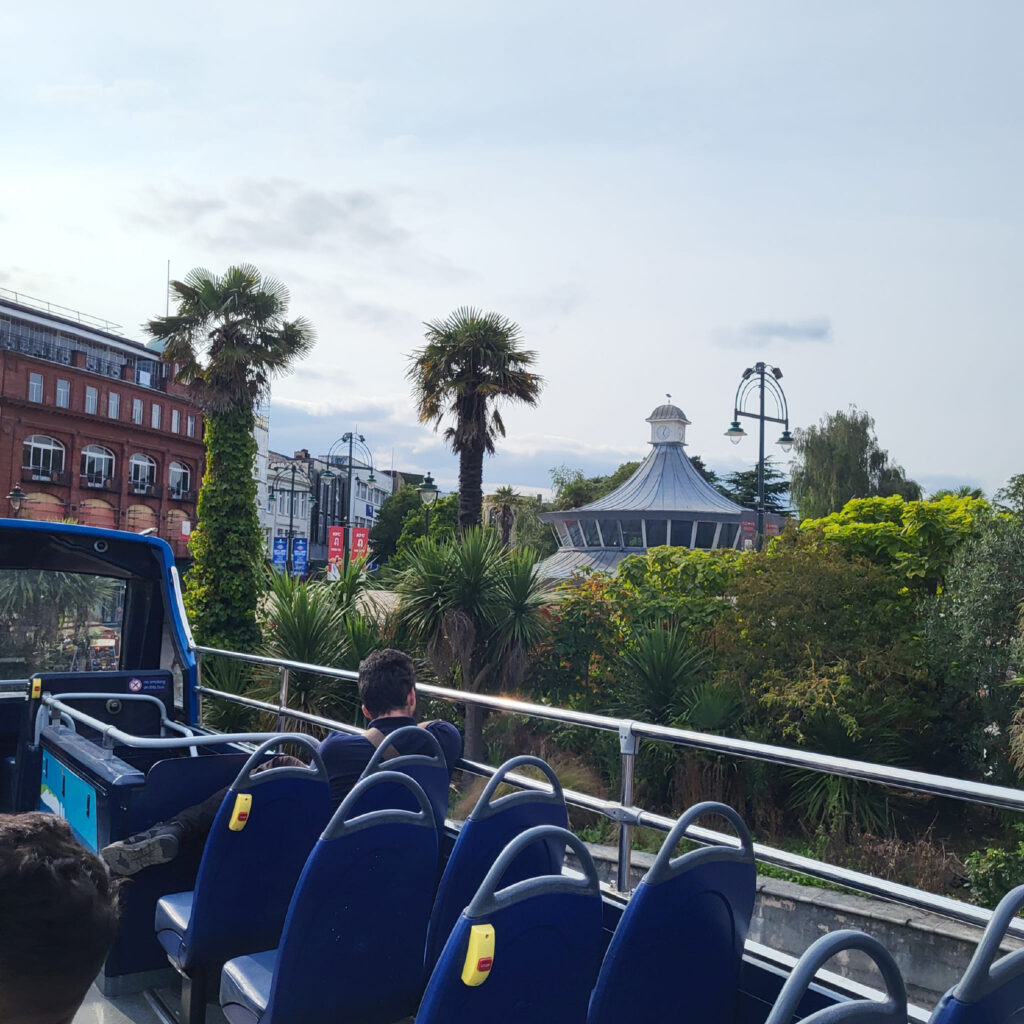
When I was little, I went shopping in Debenhams with my mum and grandparents. I took it upon myself to hide inside the coat racks for quite some time; I can’t remember now whether I was eventually found, or if I only revealed myself once I realised I’d caused a state of gut-wrenching panic!
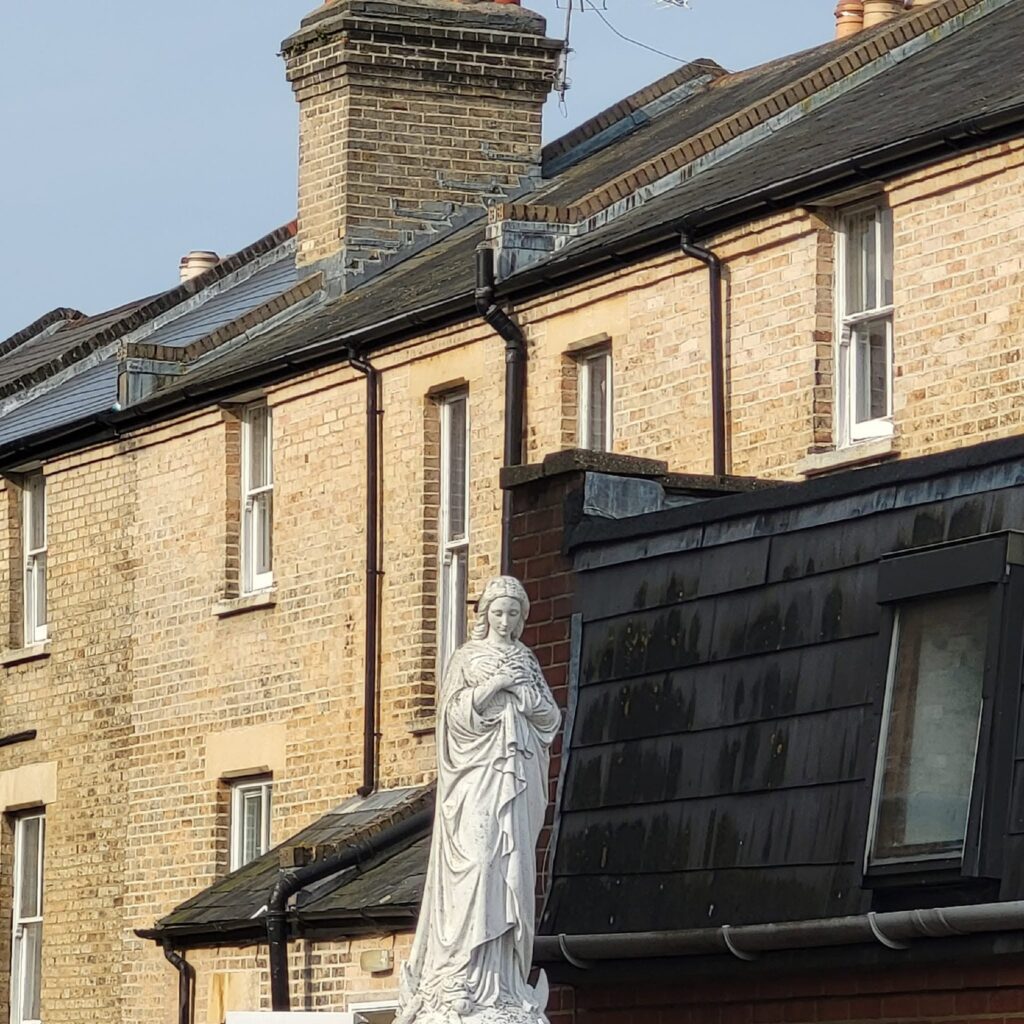
A quick look back toward the town centre, and before we journeyed through the Chines, we visited Westbourne—the ‘fashion district’ of Bournemouth, with its boutique fashion and interior design shops. Perched on the roof of an otherwise inconsequential building stood a statue of Mary. I couldn’t recall seeing any church or graveyard in its vicinity; she looked quite alone, looking almost perplexed as to why she was up there.
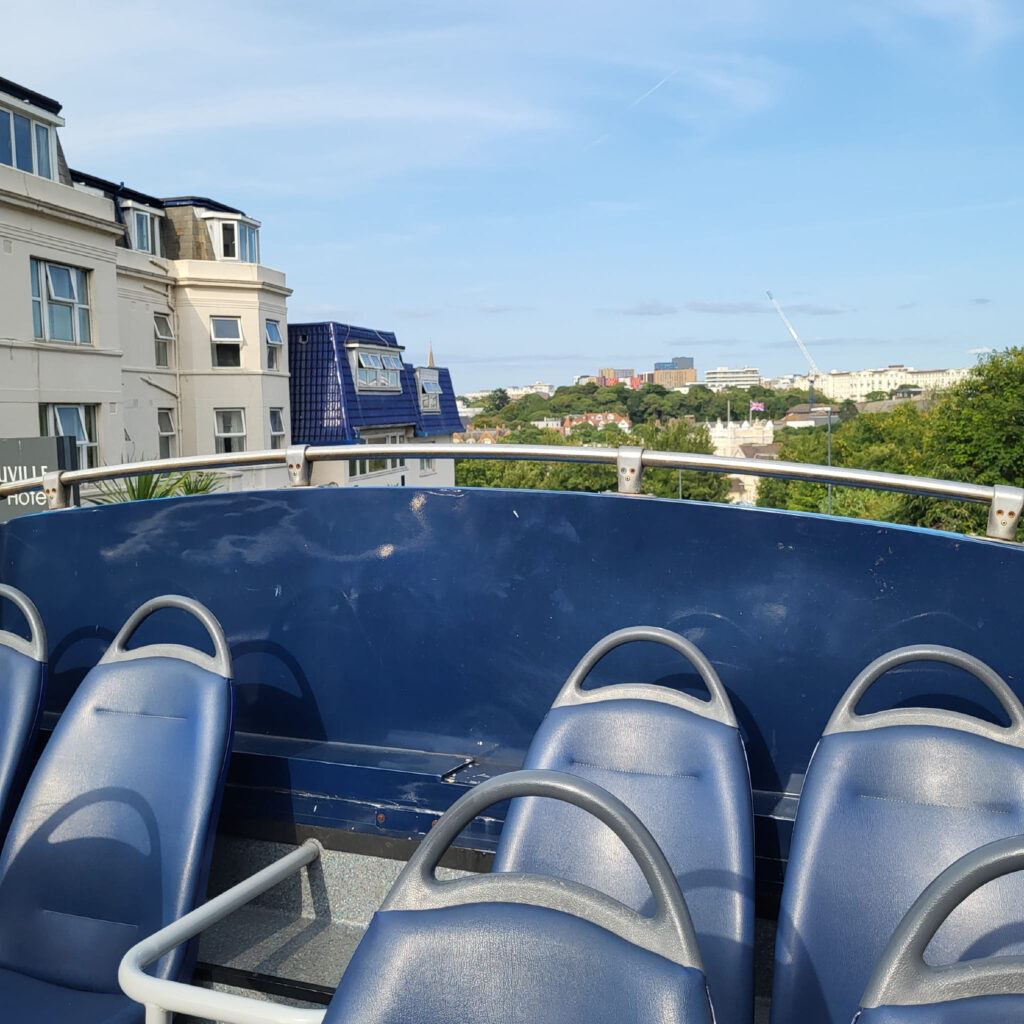
For thirteen minutes, we meandered through the Chines – Durley Chine, Alum Chine, and Branksome Chine – a sprawling sanctuary for the wealthy and retired, tucked away in their grand Victorian mansions.
The bus teases us at Branksome Chine with a ‘blink, and you’ll miss it’ view of the sea, and five minutes later, we pass ‘Seaside Sizzle’ – a 1970s-ish luxury pad with glass walls and sweeping balconies. Looking across toward Poole Harbour, Seaside Sizzle is another ‘memory marker’, as its name greatly amused my daughter Eleanor and her stepsiblings when they were young during day-out trips on the No. 50. As adults, it still does.
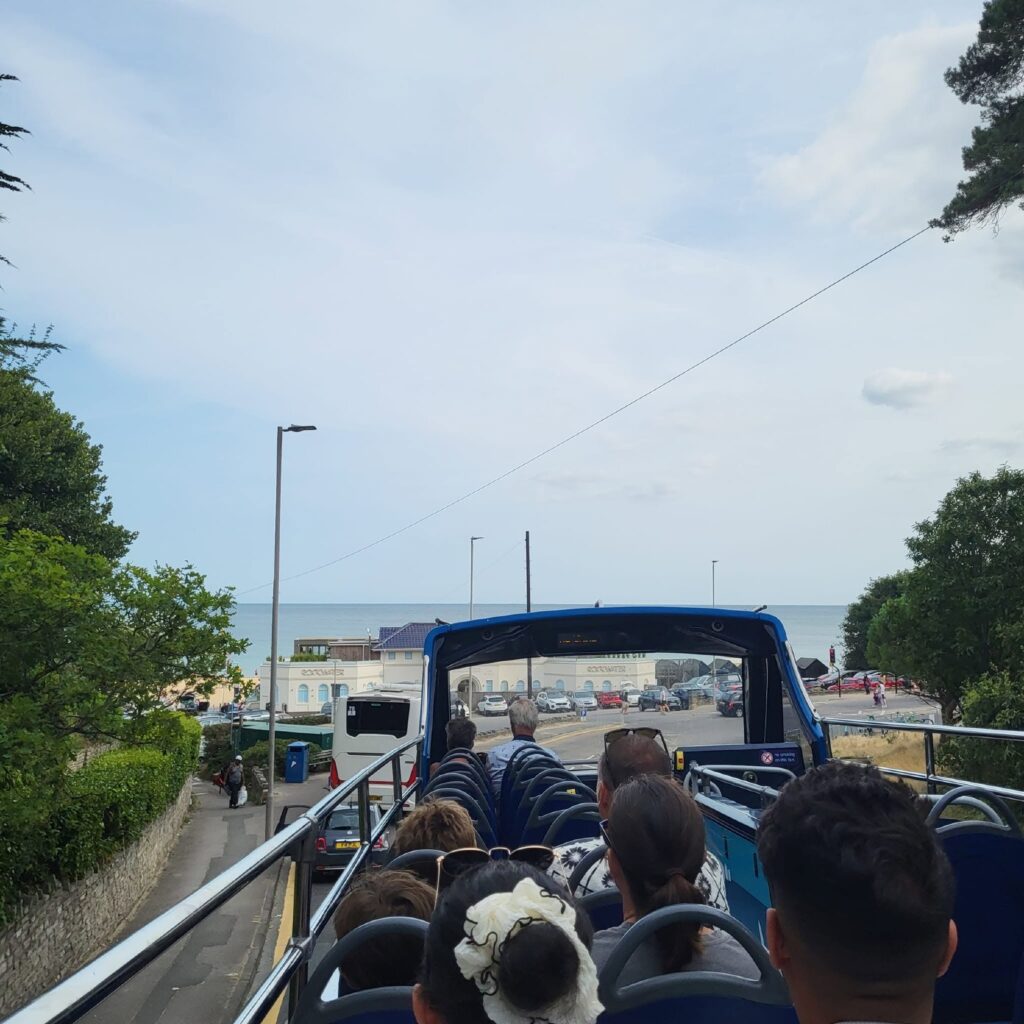
After mere morsel offerings of the sea back near the Royal Bath Hotel, at 5:28 pm, the coast finally reveals its full splendours. Emerging from the shadow of the Chines’ multitudinous pine trees, the view suddenly opens wide. Ahead of us lies Brownsea Island—famous for its red squirrels and regarded as the birthplace of the worldwide Scouting movement. Boats and paddleboards bob gently on the water’s surface, and as we curve round this end of the harbour, we pass the entrance to Shore Road beach, then Millionaires’ Row (renowned as one of the most expensive coastal stretches in the world), and Sandbanks beach—memories of which are simply too rich and numerous to unpack here.
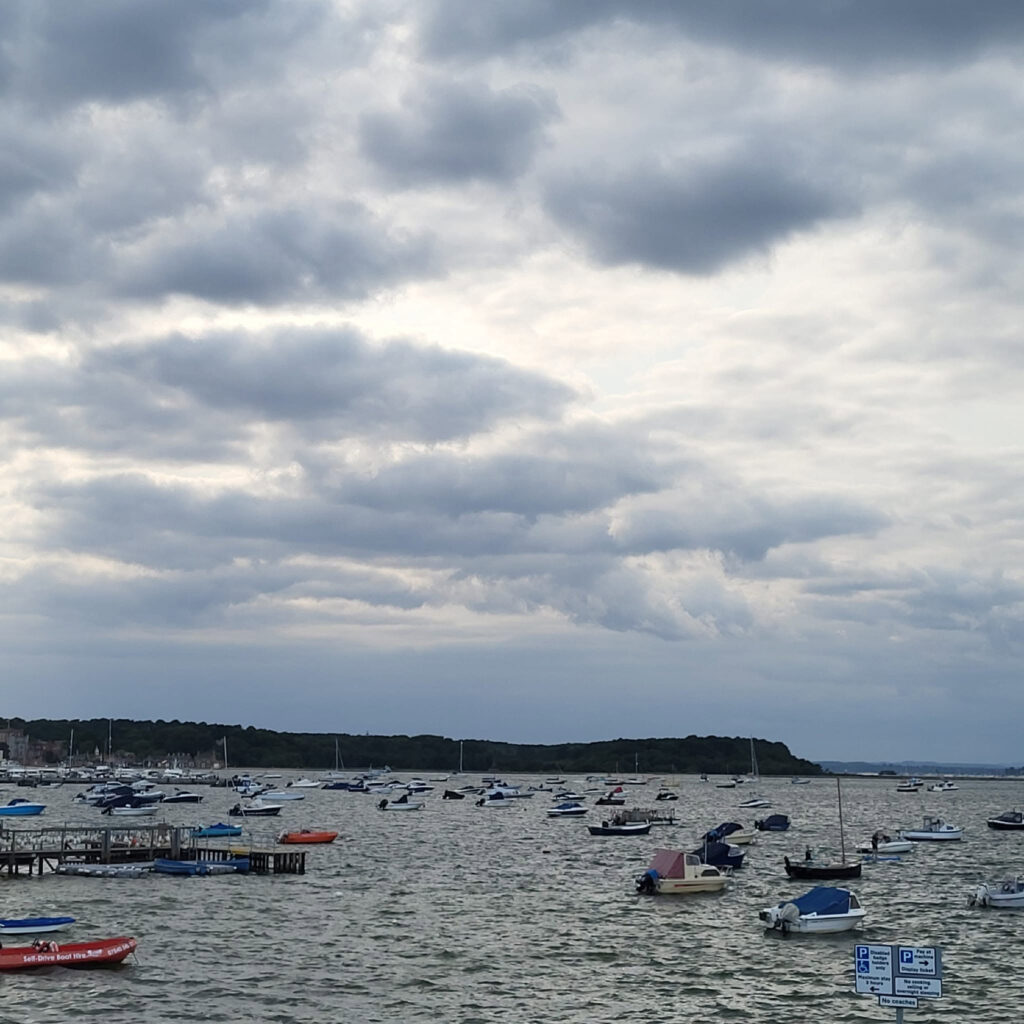
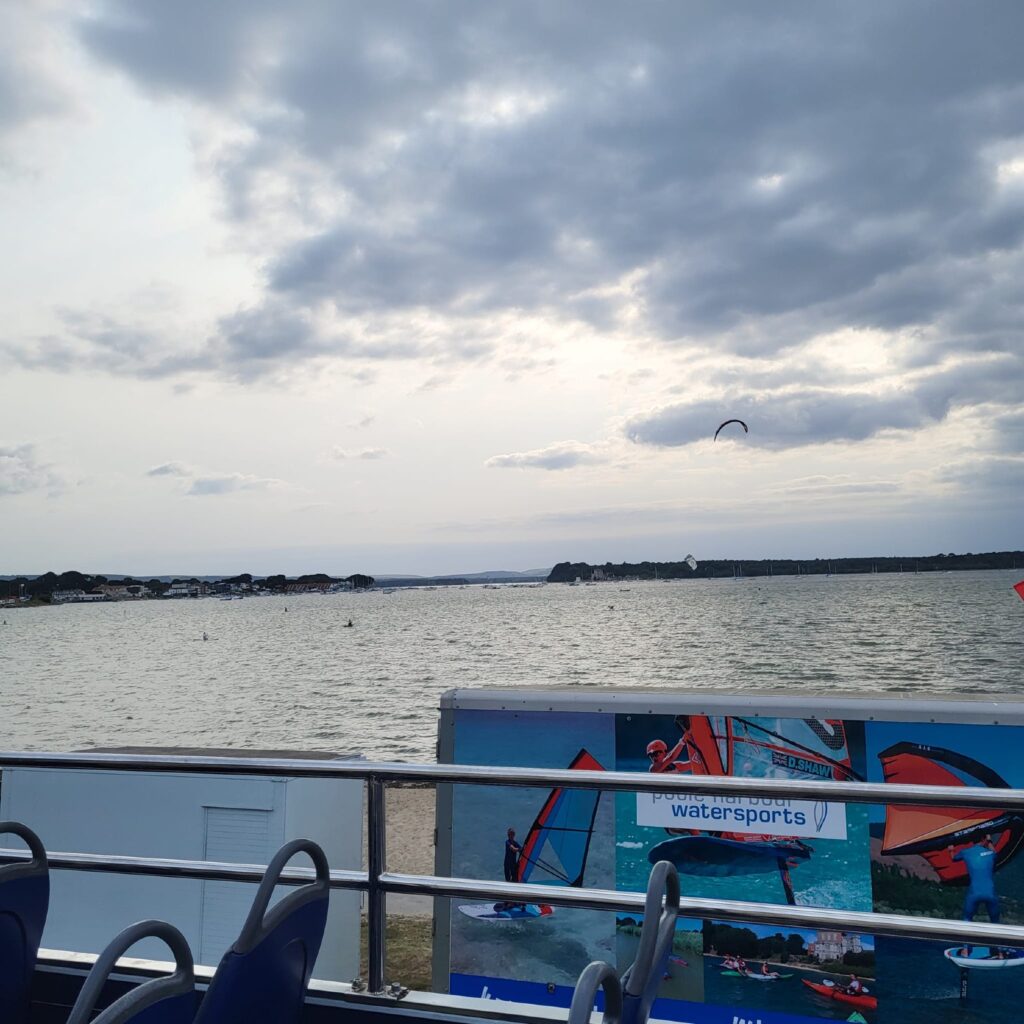
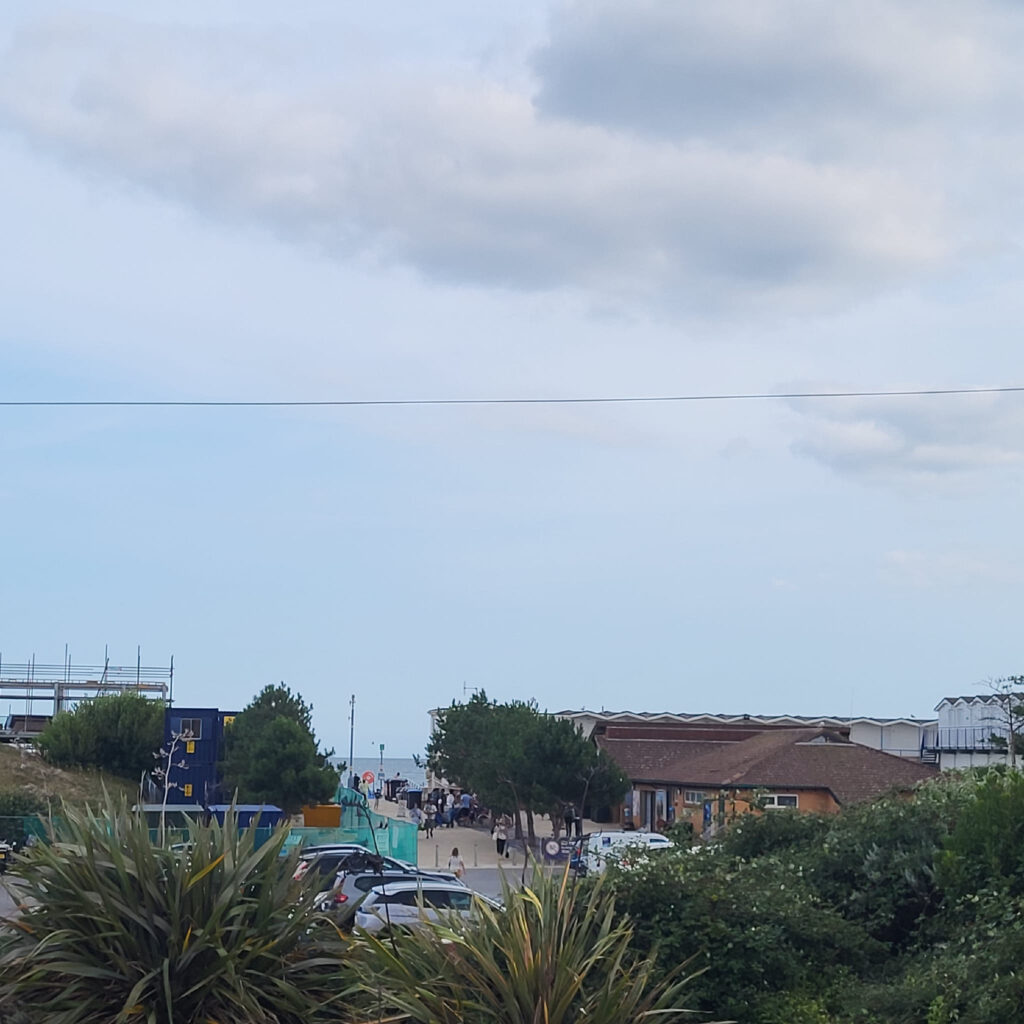
We roll past a parade of shops that have suffered the curse of gentrification: cafes have transformed into bistros, and Rick Stein has moved in. We then move along Banks Road, a one-way system hugging the southern side of the Sandbanks peninsula.
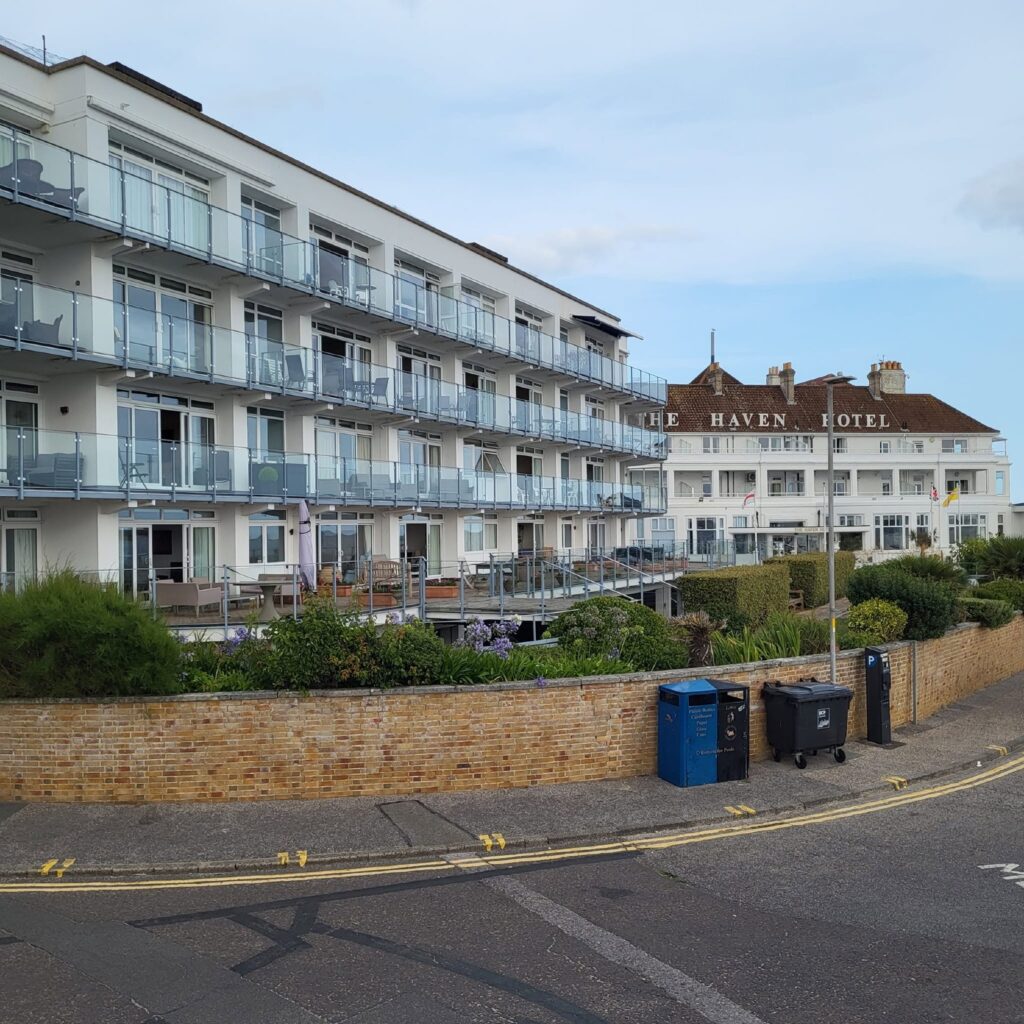
Turning left, we reach the Haven Ferry shop and the historic Haven Hotel. Thankfully, the Haven Ferry shop has avoided the capitalist handshake. When I was young, a much-anticipated reward for cycling the ten miles or so from my grandparents’ house in Upton was being treated by my mum to a Screwball ice cream right here.
The Haven Hotel sits at the tip of the Sandbanks peninsula, looking out onto Poole Harbour, Brownsea Island, Shell Bay, and the Purbeck Hills in the distance. The narrow stretch of water beside it is the Haven Channel; further into Poole Harbour lies the Swash Channel, while behind the hotel is the English Channel, giving it sweeping 270-degree views of open water.
Poole Harbour itself is a drowned valley, serving as the estuary for seven rivers—the largest being the Frome. Covering an area of roughly 14 square miles, it is often ‘talked up’ as the second-largest natural harbour in the world. However, numerous other harbours across the globe lay claim to this title, and one of them is almost certainly the rightful owner.
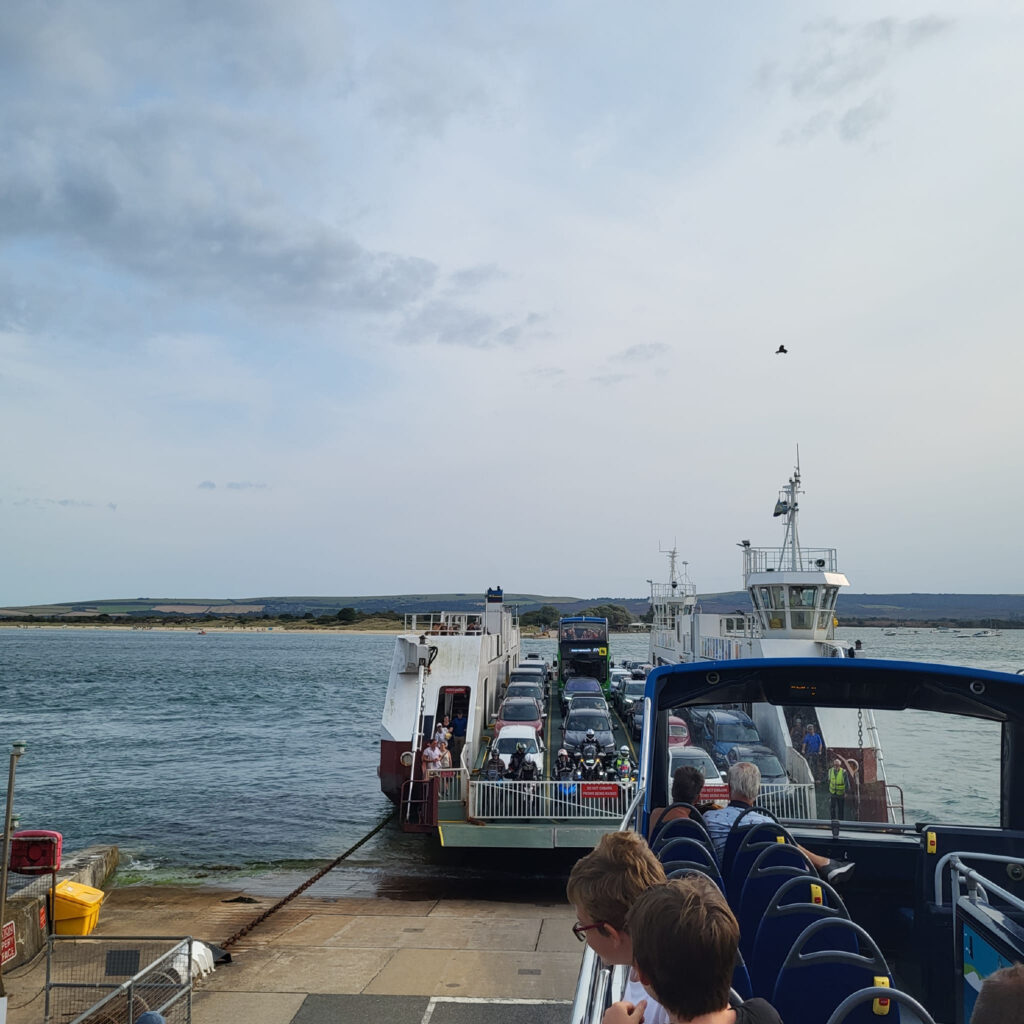
It is 5:31 pm, and the bus has turned its engine off. We are waiting in a small queue of cars, and I estimate the wait time to be about ten minutes. I take the time to scan the scene around me. To my right, in the foreground, a series of jetties lines the west shore of the Sandbanks peninsula. These jetties extend from private gardens, which in turn belong to expansive dwellings priced in the millions. Past and present Sandbanks residents include the varied likes of Harry and Jamie Redknapp, and John Lennon’s aunt Mimi—while just down the road in Branksome is Liam Gallagher.
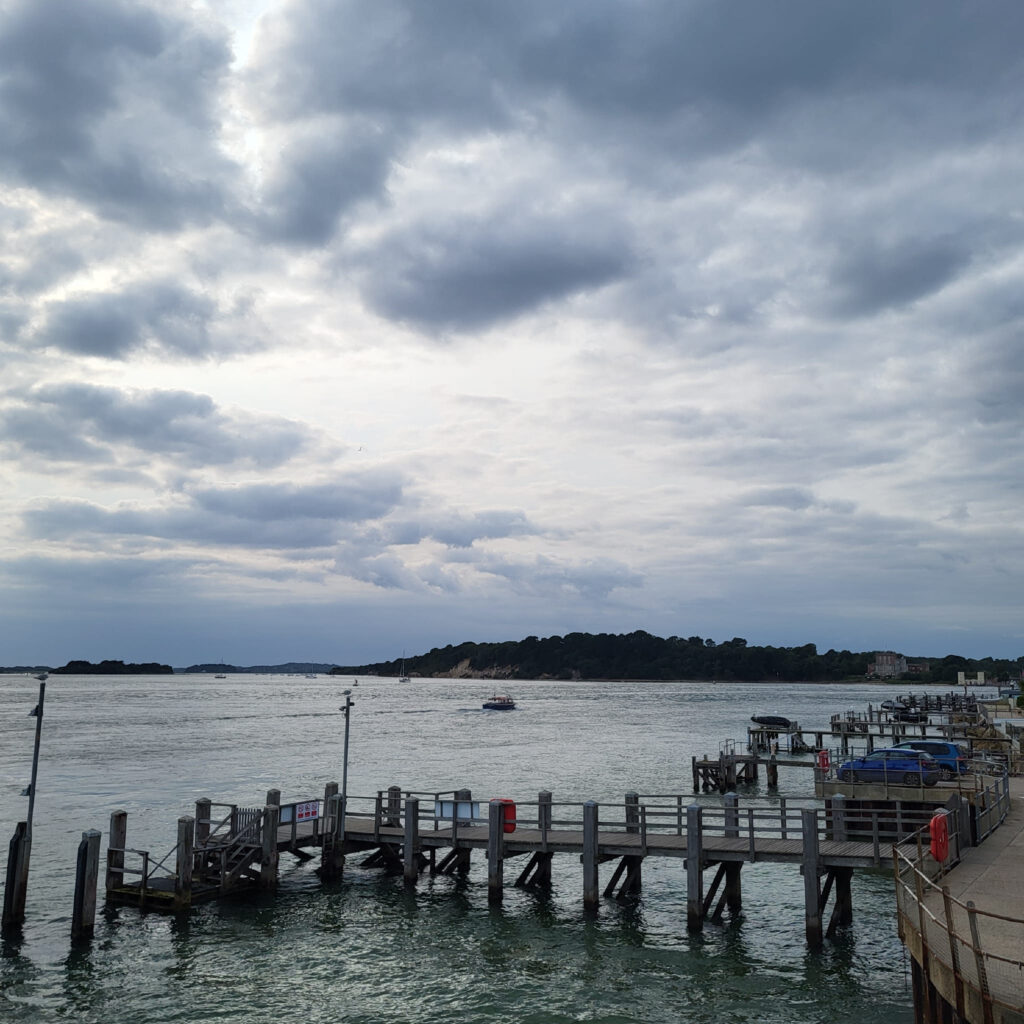
North of the jetties sits the south-facing tip of Brownsea Island and Brownsea Castle, historically known as Branksea Castle. Originally constructed by Henry VIII as a coastal fort, it fell into abandonment for over two centuries before being transformed into a private residence in 1726. It passed through the hands of various colourful owners until the National Trust acquired the island and leased the castle to the John Lewis Partnership, which restored it for use as a hotel for their staff and retired partners.
Aged eighteen (or thereabouts), I was offered a chambermaid position over at the castle. I wrestled with whether or not to take it. It would have been quite the commute: an hour-and-a-half bus ride from home, followed by a ferry crossing. I’d work my shift, stay overnight in the castle, work another shift, and then repeat the long journey back. Alternatively, I was offered another chambermaid job at a budget hotel in Bournemouth. That was still an hour’s bus ride, but without the ferry leg. My plan after work would be to go clubbing and crash at a friend’s house.
Both options appealed, but I chose the latter, prioritising a social life with humans, which narrowly edged out one with squirrels and seagulls. Yet, as much as I love my friends, if faced with that same decision today, I’d choose differently. As the years have passed and my social battery drains far more quickly, time spent in nature and quiet solitude is what truly evens out my soul.
As I scan the horizon, the Purbeck Hills are calling. I can see the deep gap in which, out of view on a hill of its own, stands Corfe Castle – built by William the Conqueror and later slighted by the Parliamentarians in the 17th century. ‘Corfe’ derives from the Old English ‘Ceorfan’, meaning ‘to cut or to carve’, as this isolated mound was carved out over millennia by two converging streams: the Corfe River and Byle Brook.
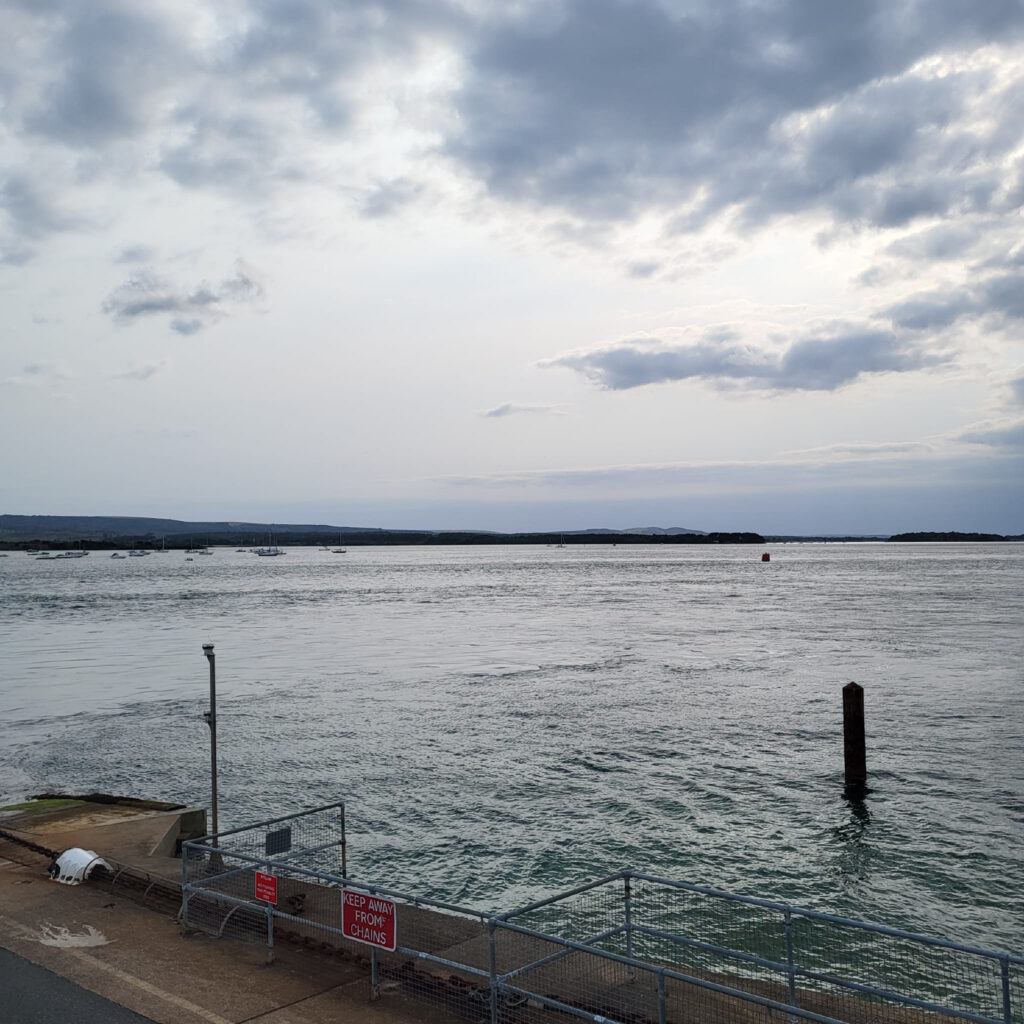
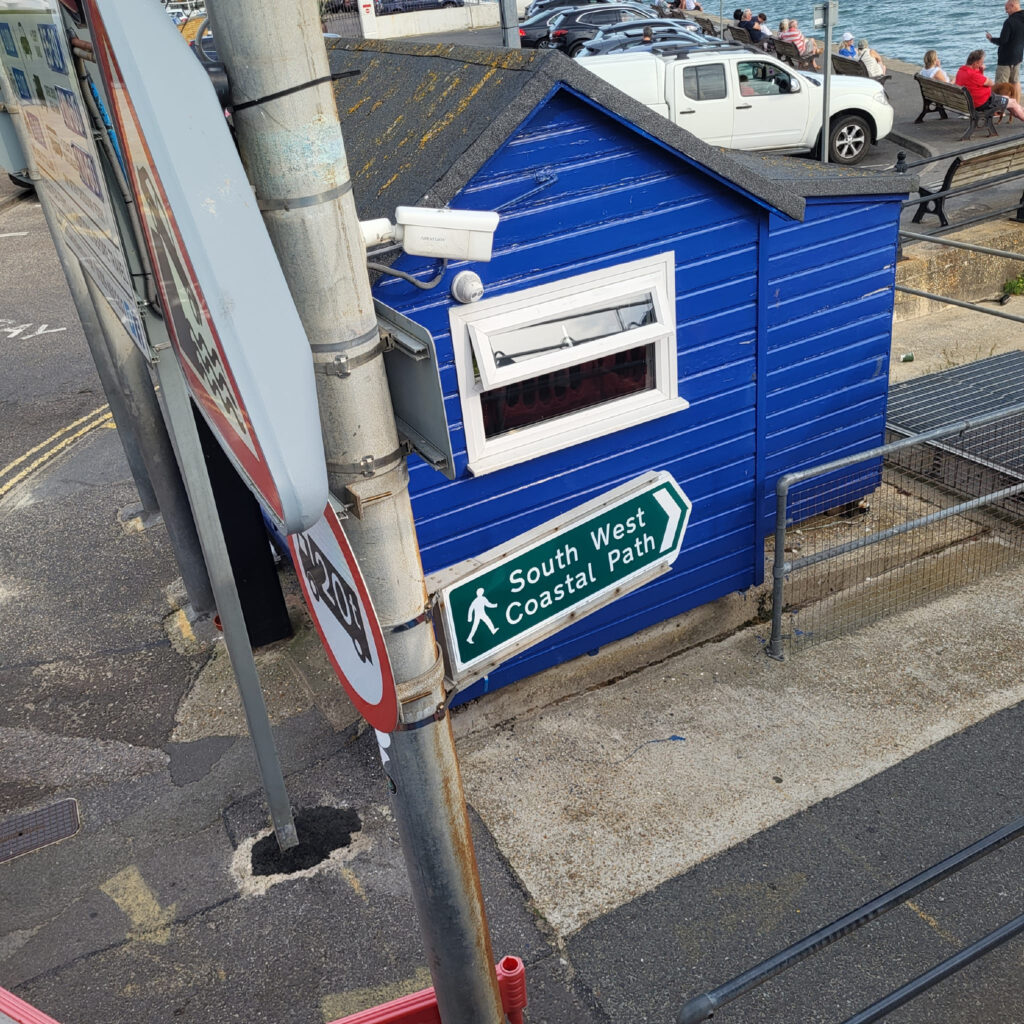
Directly below me sits a sign for the South West Coast Path, England’s longest waymarked trail. Ahead, just beneath the shadow of that far-off ‘Ceorfan’, I spot the Sandbanks ferry on its return trip. The Sandbanks Ferry has shuttled between Sandbanks and Shell Bay since 1926—a chain ferry carrying vehicles, cyclists, and foot passengers across the mouth of the harbour. The crossing connects Poole and Bournemouth with the Isle of Purbeck and Swanage, saving travellers a 12.5-mile road trip around Poole Harbour. Whenever I return home, I aim to always make the crossing, either as a pedestrian or on the open-top deck bus. If I can’t do that, just seeing and hearing its steady rumble is a very close second-best.
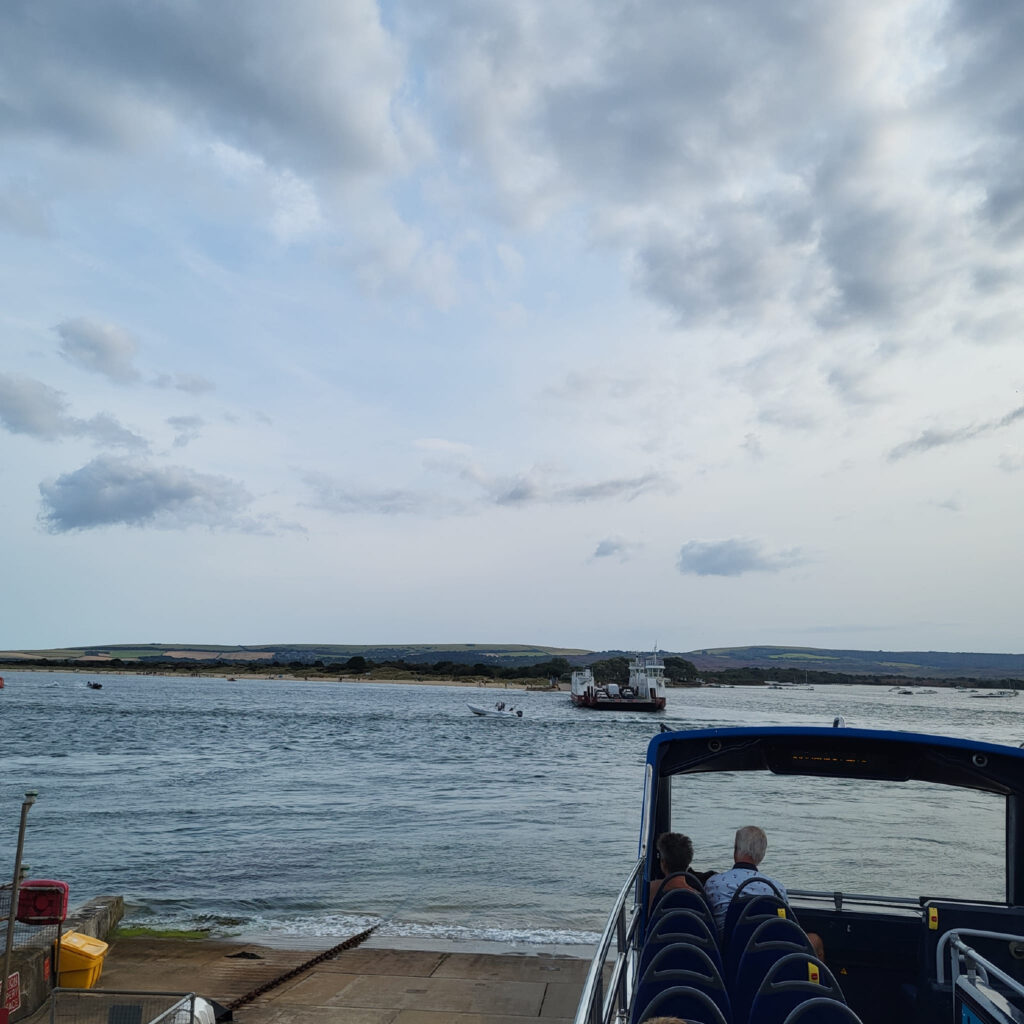
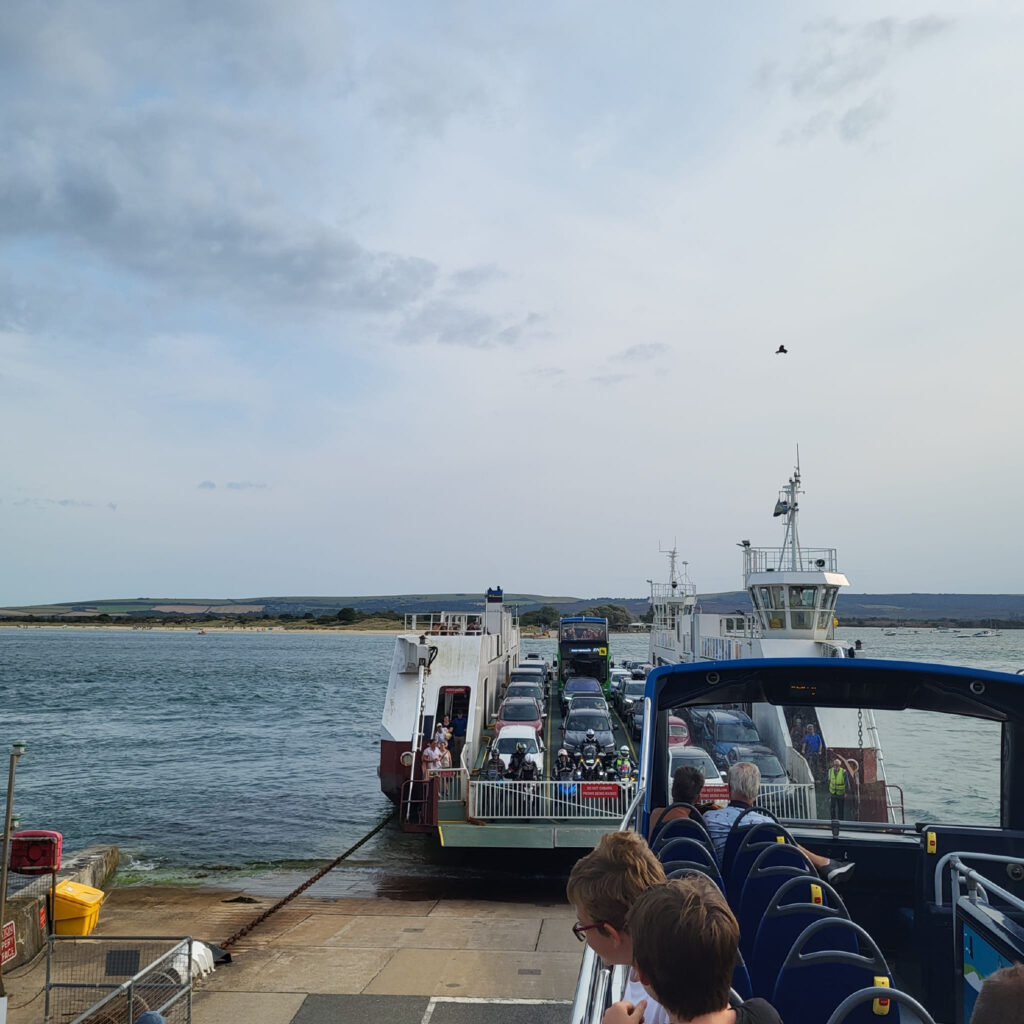
As a pedestrian on the upper deck, you can wander the walkways between bow and stern, observing the journey from shore to shore, with seagulls accompanying you from above and fish beneath the waves. Crossing on an open-top bus, however, is no less thrilling. Joined with the foot passengers, you can hear the rhythmic ‘chug-chug’ of the ferry’s chains pulling through its internal mechanism. From their high vantage point, the ferry captain never fails to wave back to enthusiastic children. I have to admit, I still take great pleasure in exchanging a warm smile of acknowledgment with them too.
Each crossing takes just four minutes. Over the years, I’ve learned to adapt by absorbing its quiet delight to the fullest within that allotted time.
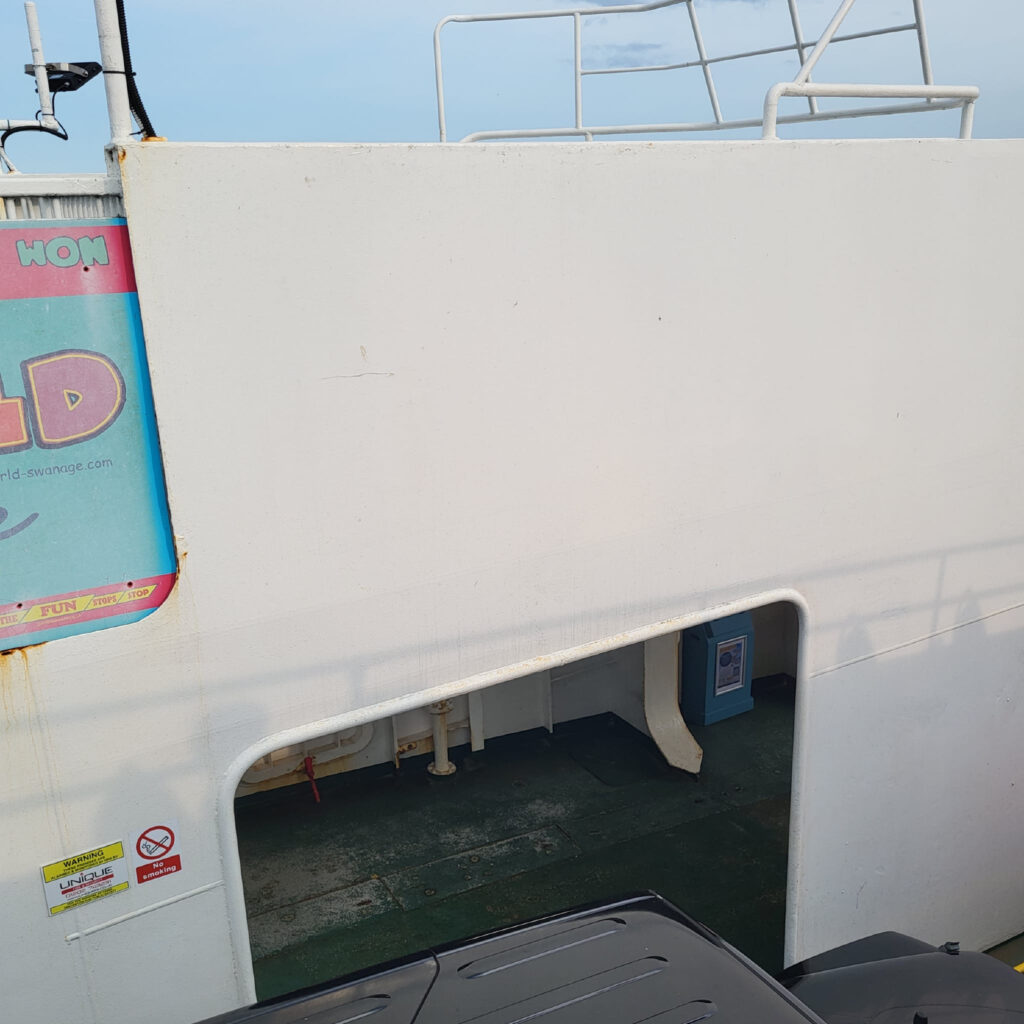
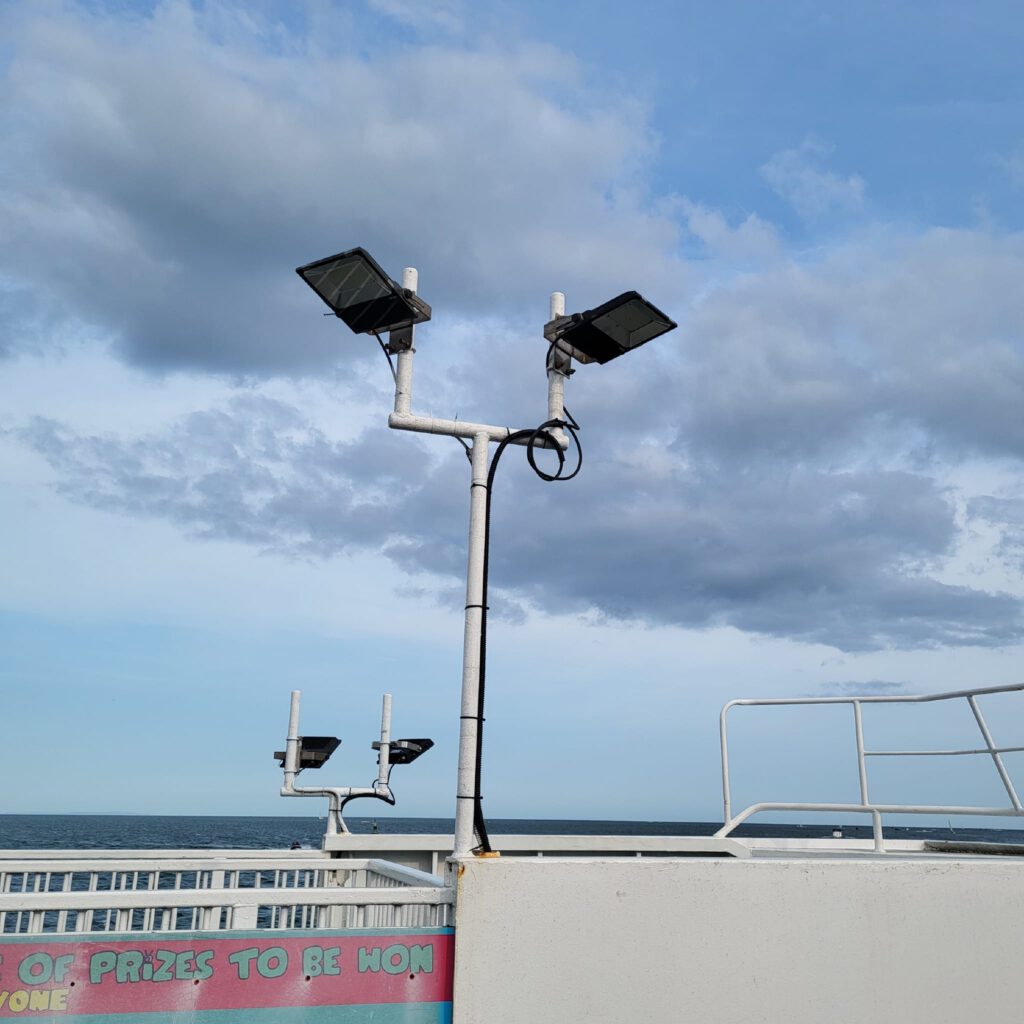
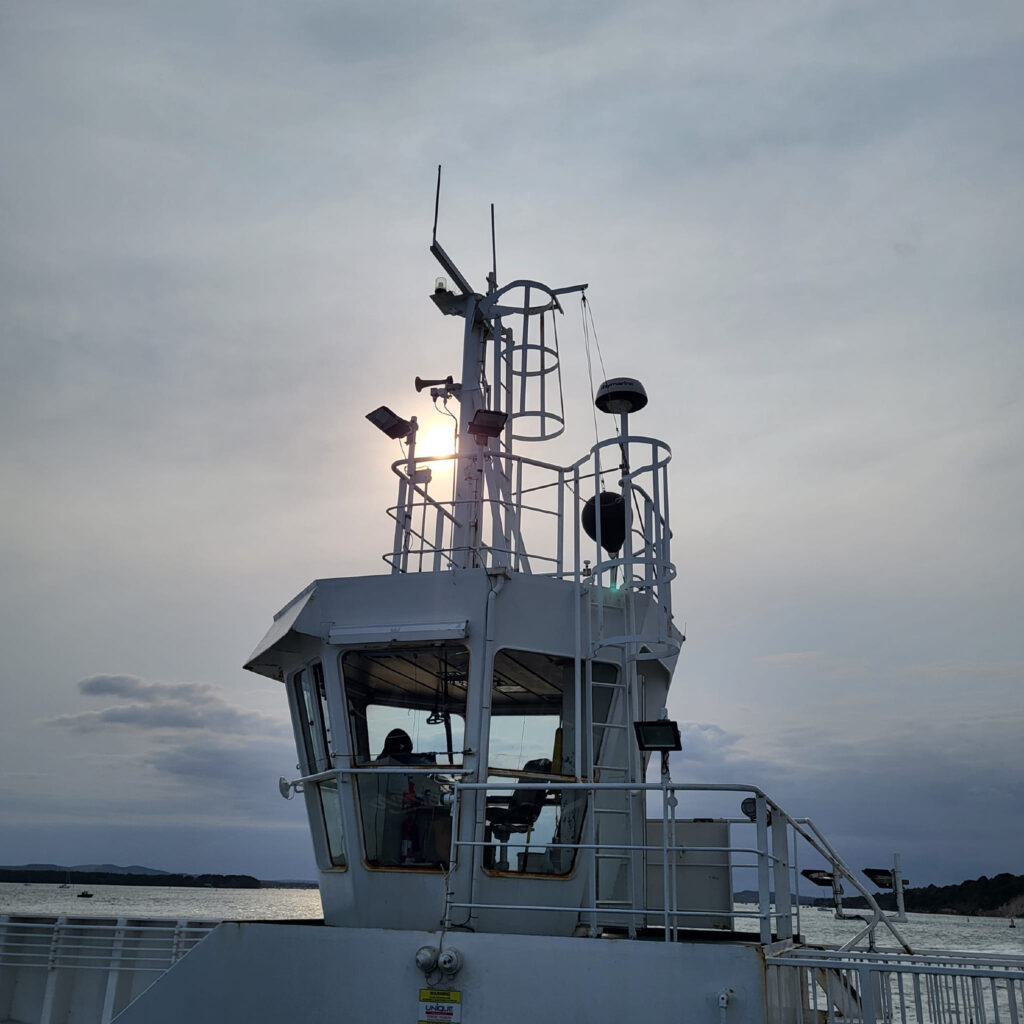
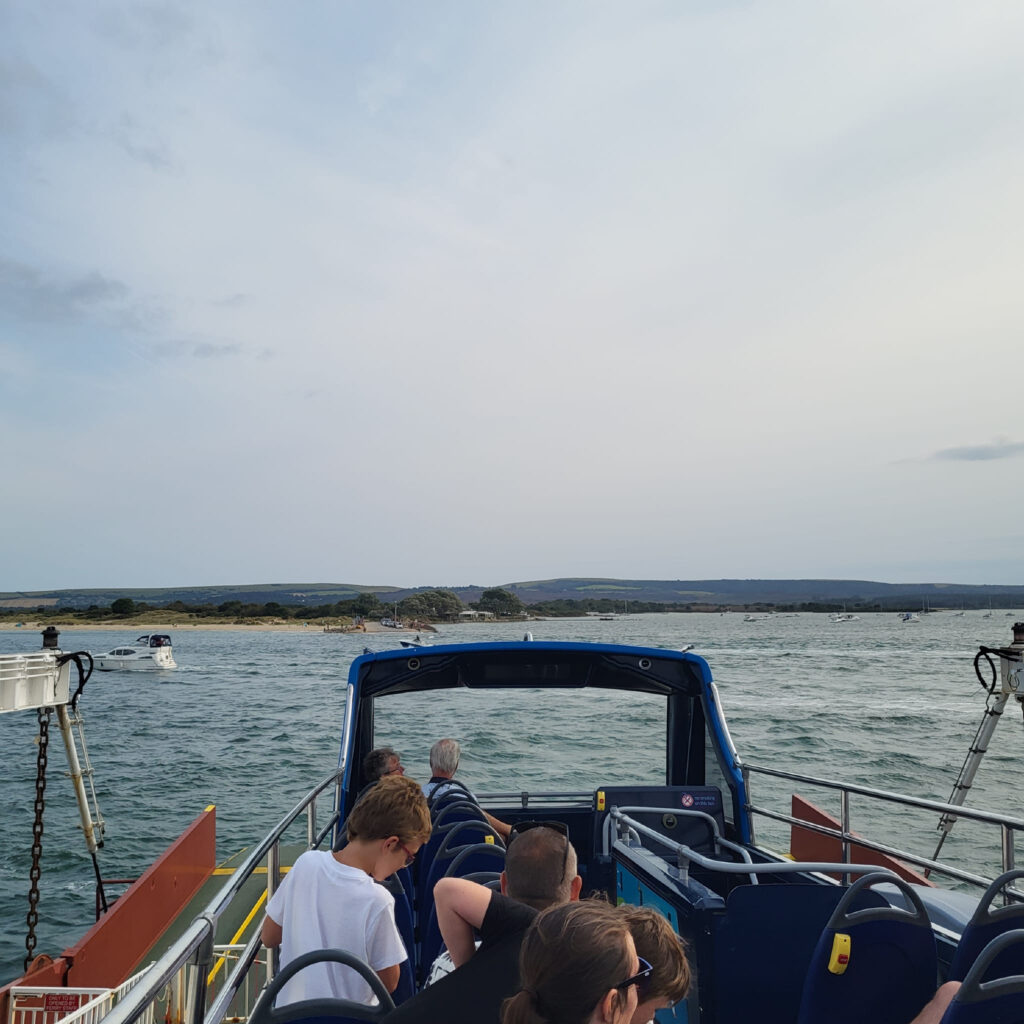
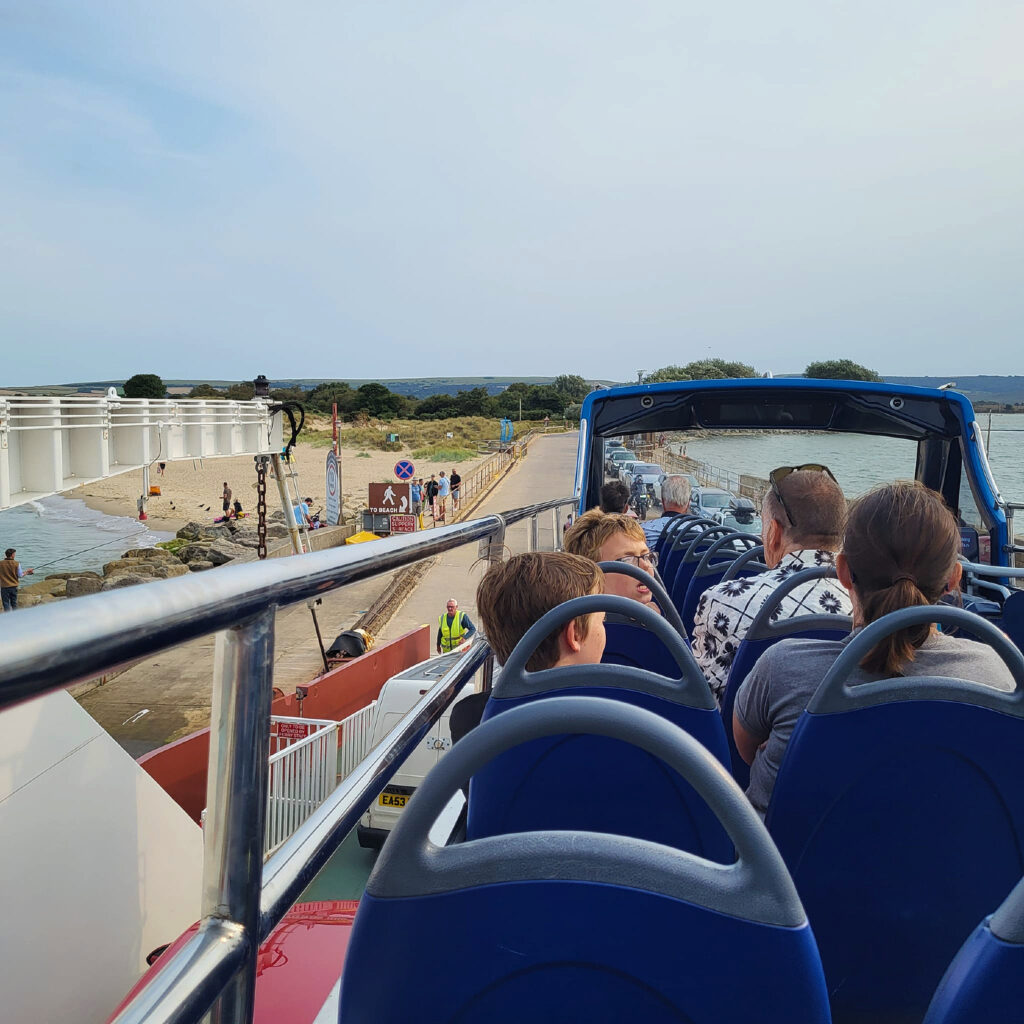
We’ve now crossed over to Shell Bay, and once again I’ll forgo regaling you with memories from here; they are as multitudinous as the fifty-three years it took to make them. We adventure on, first ambling past Shell Bay Bistro, yes, another gentrified establishment from which I’m outpriced.
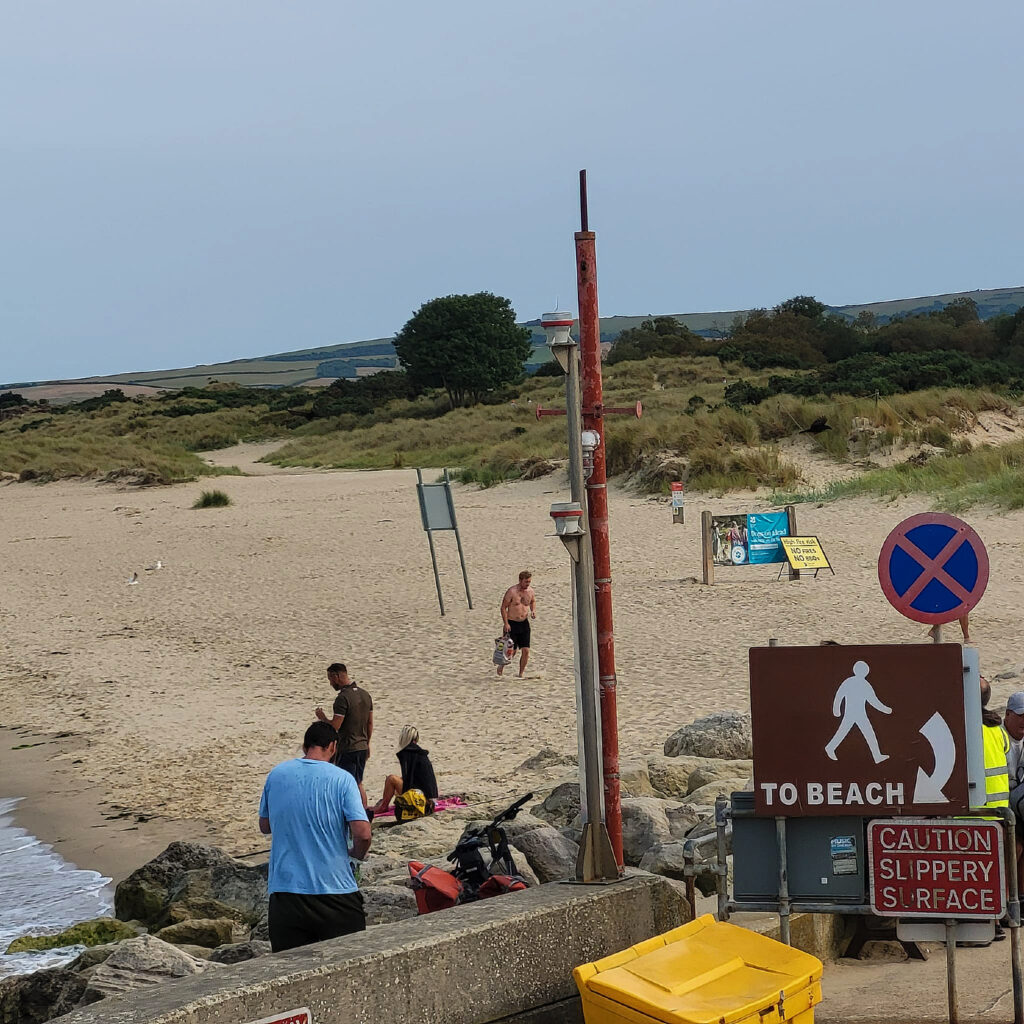
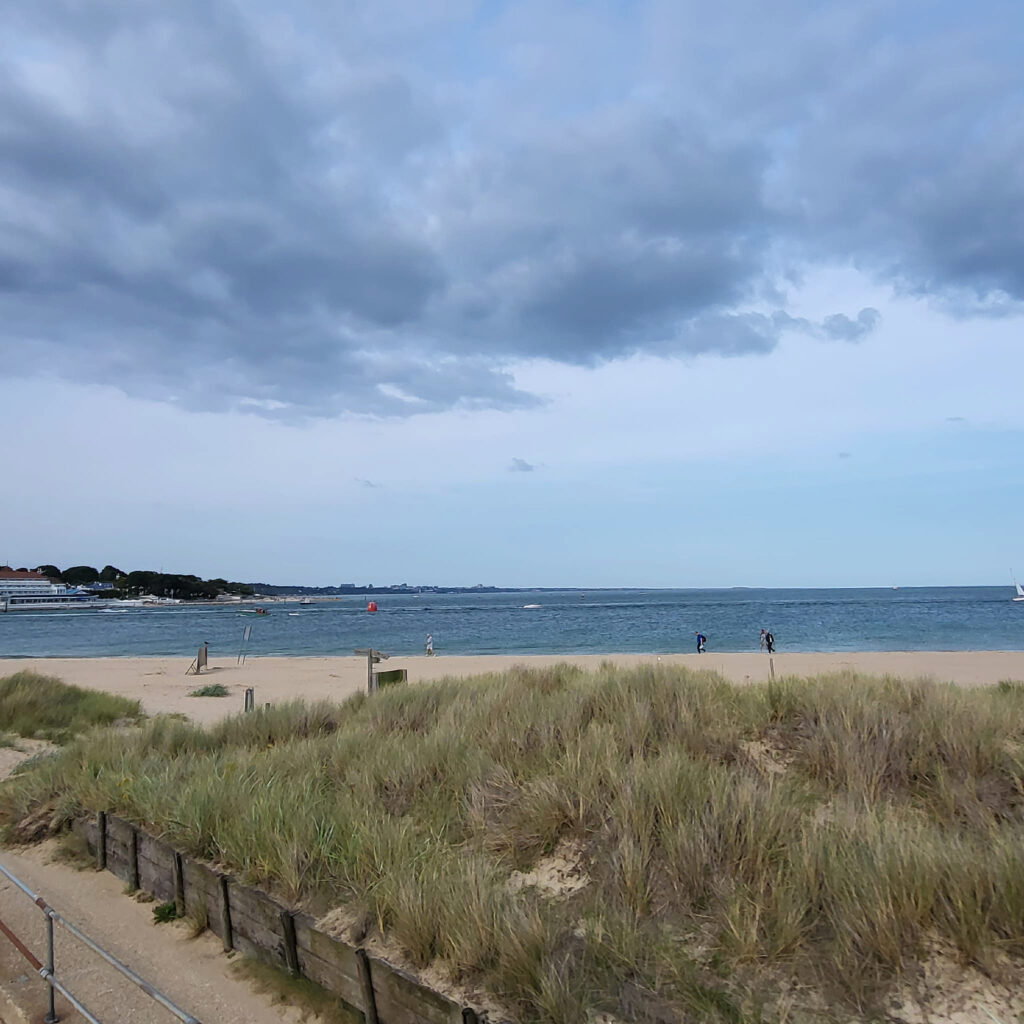
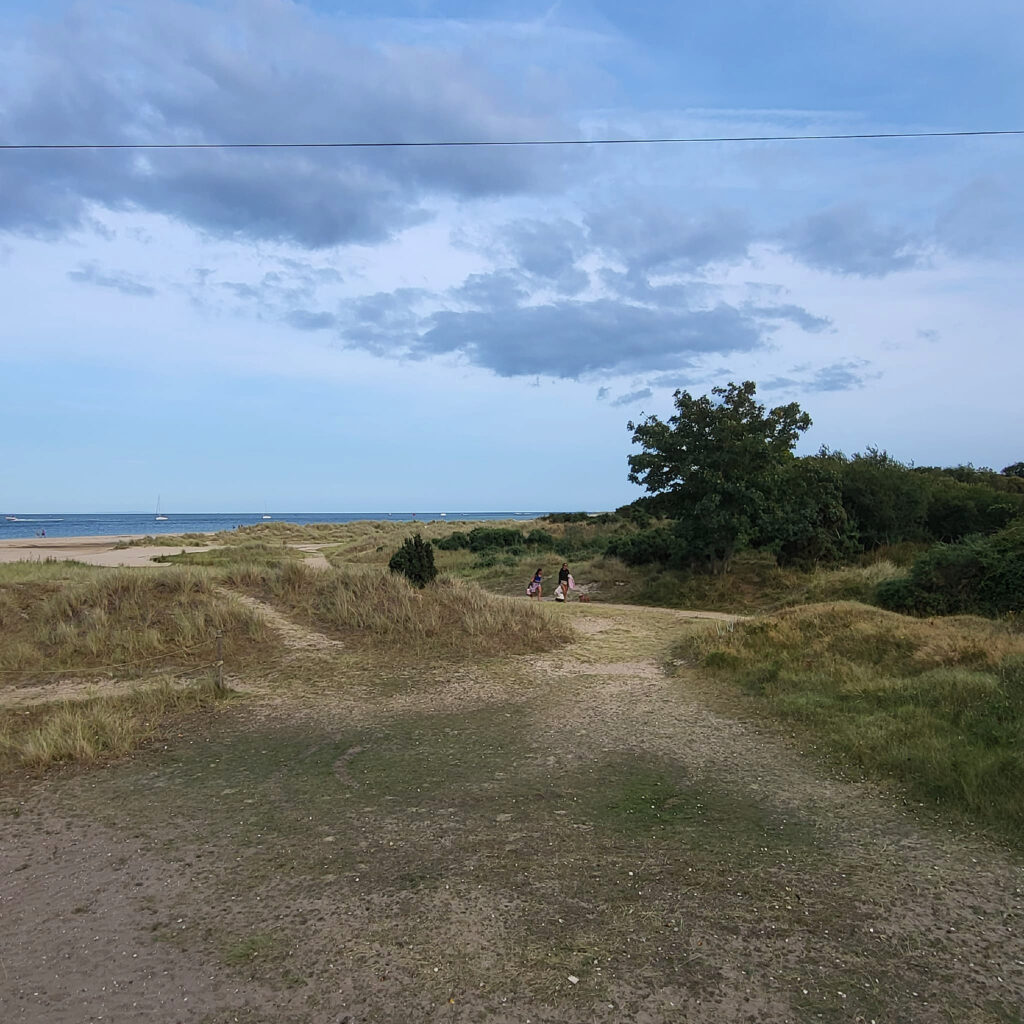
Passing through the ferry tolls and beyond the lines of cars and motorhomes parked on both sides of Ferry Road, it’s now that our ‘racing bus drivers’ come into their own. The gears shift, and the speed ramps up. The open road stretches ahead, and for a short while, this landscape feels entirely our own.
A short distance away, we spot Little Sea, a freshwater lake created by the gradual growth of the dune system. Beyond it, Old Harry Rocks stand proudly against the horizon. These iconic chalk formations were once part of a continuous ridge linking Purbeck directly to the Isle of Wight. We sweep through the surrounding heathland, a sea of muted greens and rich purples, hosting all six species of native British reptiles.
The speed of the bus whips hair around your face. While travelling on it with my mum a while ago, she insisted on keeping her hat on so as not to ruin her hair; it became a continuous battle between her hands holding it in place and the wind determined to claim it.
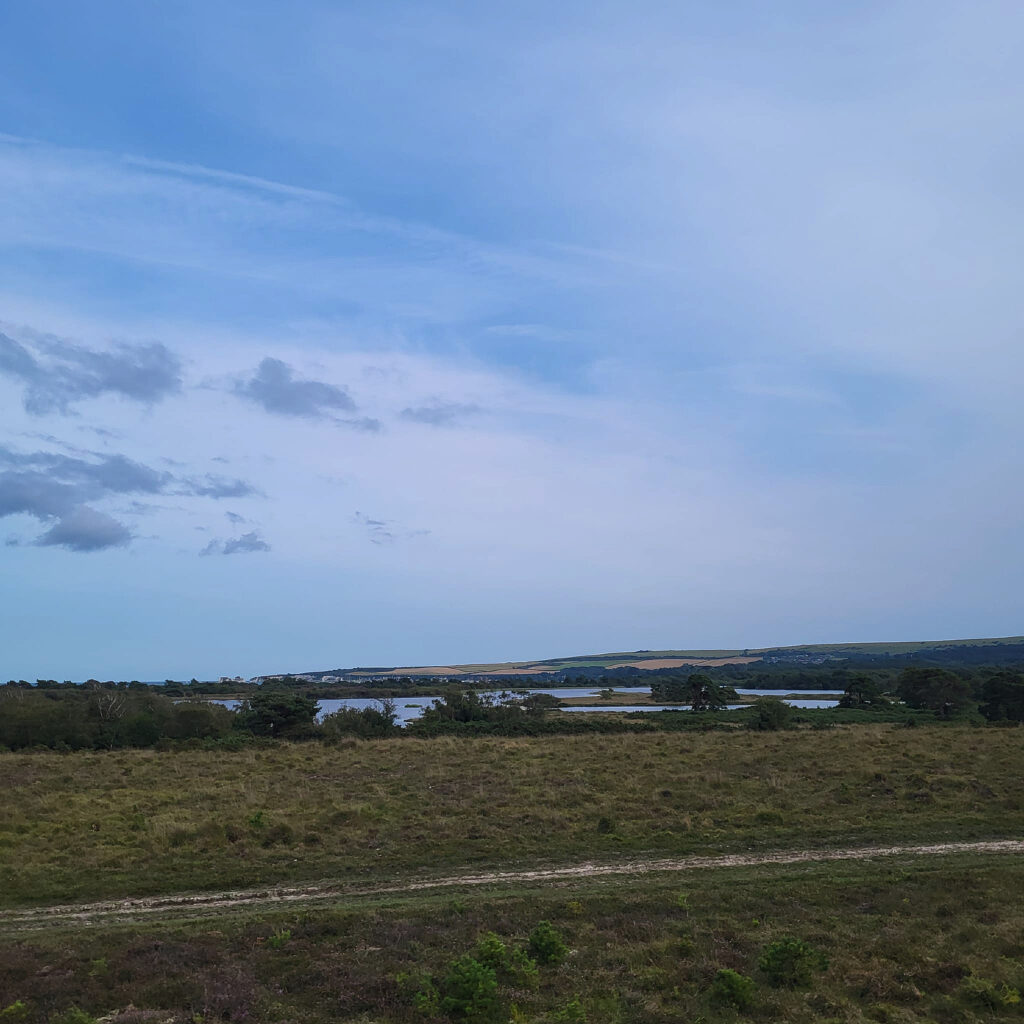
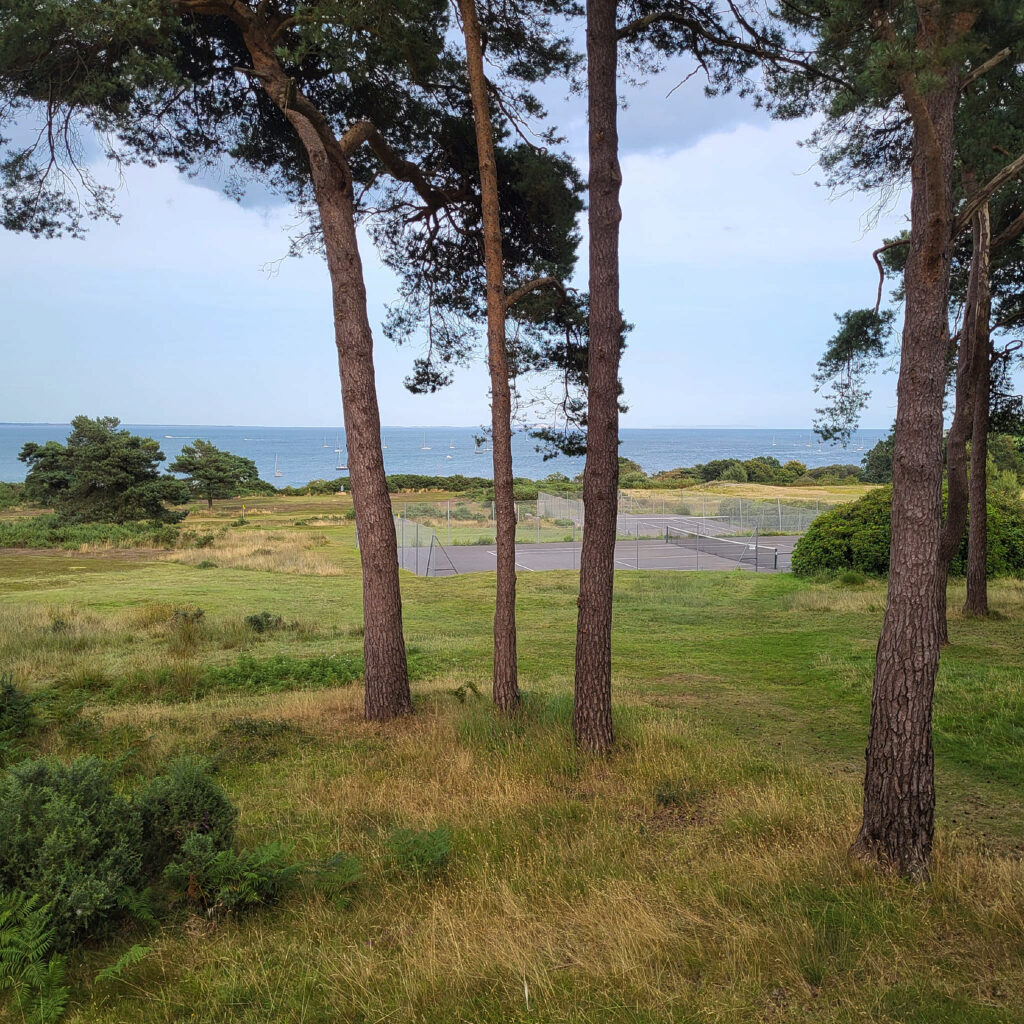
We move under the cover of pine trees, slowing down as we climb a small hill. Someone requests the bus to stop; we’ve reached the Knoll House Hotel. Originally built as a seaside holiday home by the Bankes family at the turn of the 20th century, it was converted into a hotel in 1931. It has long been a dream of mine to stay here: to play a game of tennis on the courts overlooking the sea, wander down to the beach for an evening swim, and indulge in a spot of afternoon tea.
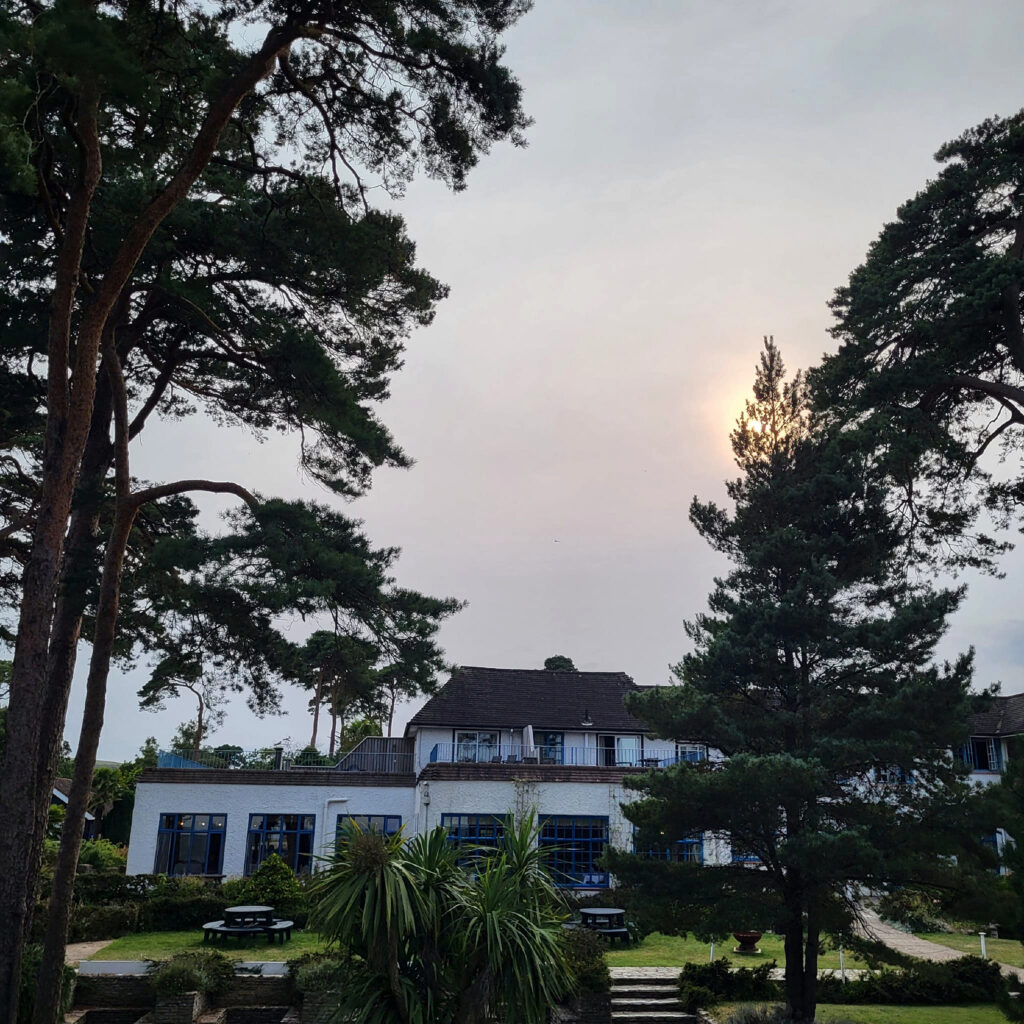
On holiday, I am usually found in a tent, but I view the very occasional spot of indulgence as entirely acceptable. I might imagine being Vanessa Bell, who painted Studland Beach in 1912, or hanging out with Gluck, a trailblazing, ahead-of-their-time icon who spent some of their happiest days in Dorset during the 1930s. The Bells and the Woolfs stayed in cottages within Studland Village, but I am sure, being the artistic celebrities of their day, they would have been invited for cocktails at Knoll House by the Bankes family.
It is now 5:59 pm, and we have dropped off the passengers across the road from the hotel, right beside the tennis courts. I often use this bus stop to hail the No. 50 back home after a trip to Studland Beach. If I’ve been night swimming, timing becomes crucial to catch the last bus back; otherwise, it’s a long, dark and tricky walk home.
My phone is now down to 10% battery, and I need to save what’s left to ring home once I arrive in Swanage. It’s frustrating, as there are glorious views to capture along this stretch between Studland Village and Swanage, but I make the firm decision to save my final photograph for our approach to Swanage Beach.
The bus sweeps into Studland Village along the B3351, the Swanage Road. Every house here is a dream house, with the last few looking directly out onto the rising ridge of Ballard Down. The bus whizzes under a low canopy of trees, and it’s along this stretch, as we hurtle onward toward Swanage, that the donning of hard hats would not go amiss, given the trees’ habit of whacking their branches across top-deck foreheads a little too vigorously.
Eleven minutes later, we arrive in Swanage. As we descend the hill, we see a scattering of families enjoying the evening’s on the beach. I frame the view and take my final photograph.
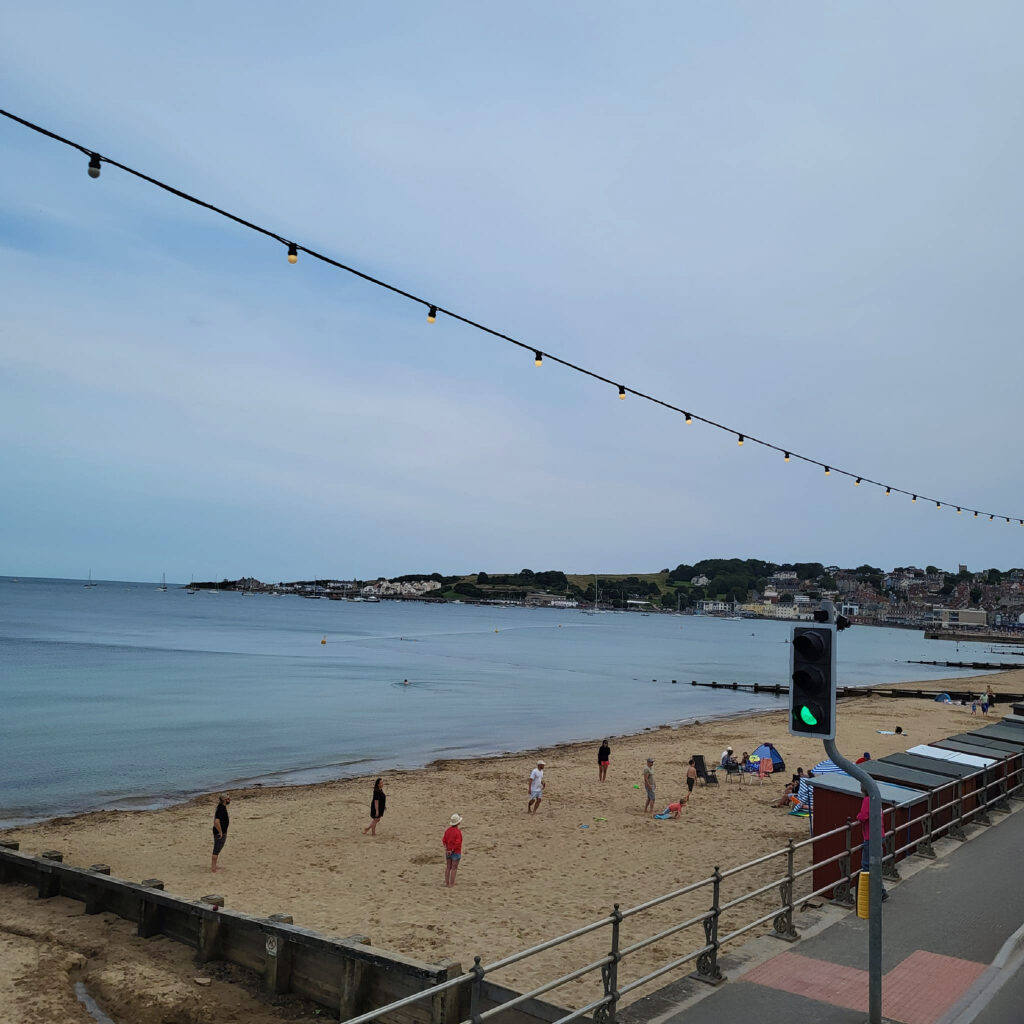
Beyond lie Swanage Pier, Peveril Point, and The Mowlem Theatre, all set against the sweeping backdrop of the Swanage Downs. The Purbeck Breezer pulls into the bus station, which consists of two bus stops, located directly outside the entrance to the delightful Swanage Railway Station, a proud home to a family of steam trains.
After eleven hours and flawless transitions across six buses, I have hit a stumbling block at the final furlong. The No. 50 pulled in just a few minutes late, which means I’ve missed the No. 40 to Langton Matravers, my final destination. I ring Mum. She offers to pay for a taxi. I gratefully decline, determined to see this challenge through to the end. I have one hour to wait. There’s only one thing to do. I elbow my way through the remaining throngs in the town centre until I’m facing the Mowlem Theatre and Forte’s café.
I look to my left, and there it is, glistening in the evening sun. I walk along the promenade until I find a quiet spot, heave the heavy bags from my shoulders, and sit down with my legs dangling over the sand. Looking out across the expanse of Swanage Bay, I breathe in the sea air. I contemplate the two opposing ‘SB’ scenes of my day: Swindon Bus Station and Swanage Bay. It is safe to say that this spot is infinitely preferable.
My waiting hour is up. It’s time to head back to the bus stop.
In Swanage society, it’s polite for passengers to line up where it says ‘Queue Here’. MoreBuses has even employed an inspector to admonish those who ignore the sign, preventing them from jamming up the entrance to the train station, frustrating locals, and making boarding stressful for elderly and disabled passengers. I am glad to be one of the first in line and, with a mixture of relief, pride, and celebration, step onto the No. 40 bound for Poole.
Whereas the No. 50 crosses east over the water on the Sandbanks Ferry, the No. 40 travels all the way around Poole Harbour, passing through Langton Matravers, Corfe Castle, Wareham, and Upton along the way. Ten minutes later, I press the bell to alight at the old ‘Ship Inn’.
Waiting for me at the bus stop is my ‘Heart Daddy’ Roddy, wearing a lovely smile of anticipation.
Mum and Rod have waited up for me, well past their bedtime. The moment I step through the front door, I am greeted with a warm hug and a glass of wine, both of which I readily embrace. I am knackered but buzzing, and it takes a few sips of wine to settle down before I can regale them with tales of my journey.
Bus Data
- 6.38 am. X6. Stagecoach Buses. Northampton to Milton Keynes. £2.00
- 8.08 am. X5. Stagecoach Buses. Milton Keynes to Oxford. £2.00
- 10.53 am. S6. Stagecoach Buses. Oxford to Swindon. £2.00
- X5. Salisbury Reds. Swindon to Salisbury. £2.00
- X3. Salisbury Reds. Salisbury to Bournemouth. £2.00
- No. 50. Morebus – The Purbeck Breezer. Bournemouth to Swanage. £2.00
- N0 40. Morebus. Swanage to Poole (I alighted at Langton Matravers). £2.00